العربية

NASA Image and Video Library

Records indexed under NASA Image and Video Library, with original identifiers, source links and item-level rights evidence. This is the imported selection, not the institution’s entire holdings. Verify the originating institution when the source is an aggregator.

4,093 matching records; original descriptions and titles are preserved. Search and filters →

Verify the evidence · Cite an item or clip · Rights

2018NASA Image and Video Library

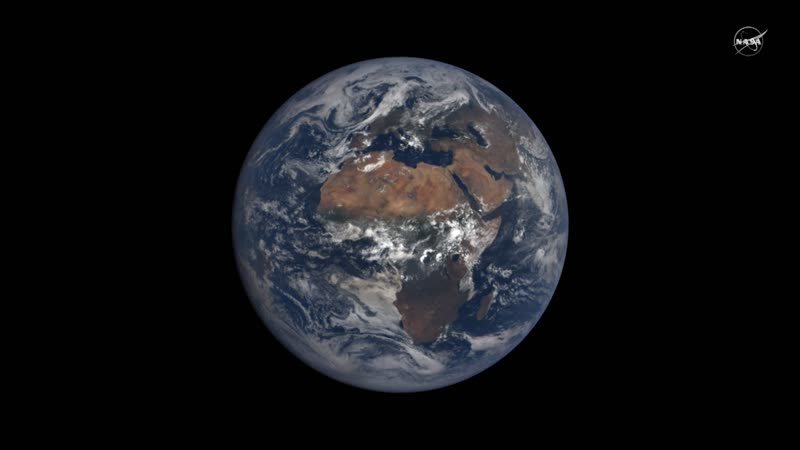
EPIC New Science from 1 Million Miles Away

NASA's Earth Polychromatic Imaging Camera (EPIC) sits onboard NOAA's Deep Space Climate Observatory (DSCOVR) satellite at the Lagrange point 1, a million miles away from Earth. EPIC has been imaging the sunlit side of Earth between 13 and 22 times a day since 2015. Now, scientists have developed ways to use these images to study specific elements of our home planet's atmosphere and plant life, like ozone in the strat

2018NASA Image and Video Library

Inside Hurricane Maria in 360°

Two days before Hurricane Maria devastated Puerto Rico, the NASA-Japan Global Precipitation Measurement Core Observatory satellite captured a 3-D view of the storm. At the time Maria was a Category 1 hurricane. The 3-D view reveals the processes inside the hurricane that would fuel the storm’s intensification to a category 5 within 24 hours. For the first time in 360-degrees, this data visualization takes you inside

2018NASA Image and Video Library

GEDI: Mapping Carbon in 3-D

NASA's new laser instrument, the Global Ecosystem Dynamics Investigation, or GEDI, has advanced laser technology that will reveal the makeup of remote forest ecosystems around the globe. GEDI will soar above Earth at 17,150 miles per hour onboard the International Space Station. Its measurements of the height of leaves, branches, trees, and shrubs below its path will help scientists map the structure of forests and b

2018NASA Image and Video Library

OSIRIS-REx Mission Design: Narrated Feature

OSIRIS-REx is the third mission in NASA’s New Frontiers Program. Its goal is to explore near-Earth asteroid Bennu, a remnant from the dawn of the solar system, and to return a sample of Bennu to Earth. OSIRIS-REx launched in September 2016 and arrived at asteroid Bennu on December 3, 2018. The spacecraft is spending more than a year surveying and mapping Bennu before collecting a sample, ensuring that it can safely d

2018NASA Image and Video Library

Cryosphere | Episode 8: The Launch

It’s 5 a.m. on a normal September day and #NASAExplorers have gathered in a California field to watch a rocket launch light up the pre-dawn sky. On board the rocket is a satellite more than 10 years in the making, with one single instrument that will revolutionize the study of ice on Earth. Join the team in the excitement and stress of watching ICESat-2 launch into space and begin its work measuring our home planet.

2018NASA Image and Video Library

AGU OSIRIS REx Arrives at Bennu Briefing

NASA’s OSIRIS-REx mission presented the science results gained during the spacecraft’s approach toward the asteroid Bennu at a press conference hosted during AGU’s Fall Meeting at 2 p.m. ET, Monday, Dec. 10. The Origins, Spectral Interpretation, Resource Identification, Security-Regolith Explorer (OSIRIS-REx) spacecraft, which launched on Sept. 8, 2016, started asteroid science operations on Aug. 17, 2018, while stil

2018NASA Image and Video Library

3-D Views of Puerto Rico's Forests After Hurricane Maria

In September 2017, Hurricane Maria struck Puerto Rico head-on as a Category 4 storm with winds topping 155 miles per hour. The storm damaged homes, flooded towns, devastated the island's forests and caused the longest electricity black-out in U.S. history. Hurricane Maria's lashing rain and winds transformed Puerto Rico's lush tropical rainforest landscape. Research scientist Doug Morton of Goddard was part of the te

2019NASA Image and Video Library

Moon Sheds Light on Earth's Impact History

By looking at the Moon, the most complete and accessible chronicle of the asteroid collisions that carved our young solar system, a group of scientists is challenging our understanding of a part of Earth’s history. The number of asteroid impacts to the Moon and Earth increased by two to three times starting around 290 million years ago, researchers reported in a January 18 paper in the journal Science. They could tel

2019NASA Image and Video Library

Magnetic Bubbles on the Moon Reveal Evidence of "Sunburn"

Every object, planet or person traveling through space has to contend with the Sun's damaging radiation — and the Moon has the scars to prove it. Research using data from NASA's ARTEMIS mission — short for Acceleration, Reconnection, Turbulence and Electrodynamics of the Moon’s Interaction with the Sun — suggests how the solar wind and the Moon's crustal magnetic fields work together to give the Moon a distinctive pa

2019NASA Image and Video Library

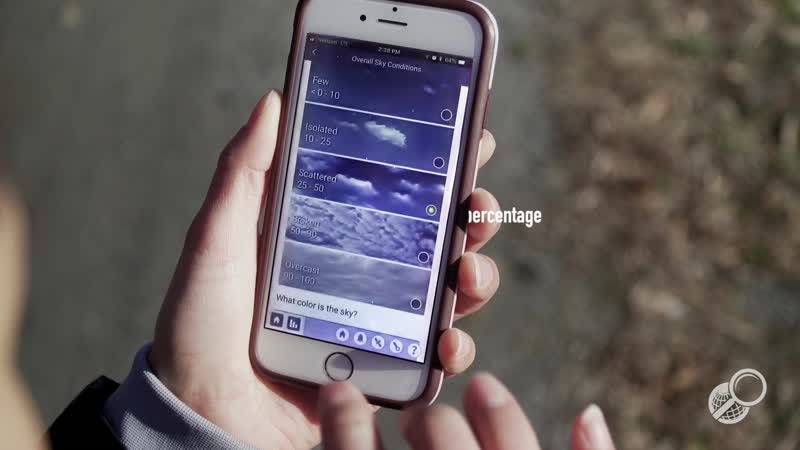
GLOBE Observer Clouds: Getting Started

Clouds are a major component of the Earth’s system that reflect, absorb, and scatter sunlight and infrared emissions from Earth. This affects how energy passes through the atmosphere. Different types of clouds have different effects, and the amount of cloud cover is also important. Clouds can change rapidly, so frequent observations are useful to track these changes. Such observations are able to see change over time

2019NASA Image and Video Library

Water Released from Moon During Meteor Showers

Scientists have discovered that water is being released from the Moon during meteor showers. When a speck of comet debris strikes the Moon it vaporizes on impact, creating a shock wave in the lunar soil. For a sufficiently large impactor, this shock wave can breach the soil’s dry upper layer and release water molecules from a hydrated layer below. The LADEE spacecraft detects these water molecules as they enter the t

2019NASA Image and Video Library

Hubble Tool Time Episode 1 - Astronaut Training

Retired NASA astronaut John Grunsfeld hosts this six-part mini-series about the tools used on the Hubble Space Telescope servicing missions. Hubble was uniquely designed to be serviced in space so that components could be repaired and upgraded. Astronauts using custom-designed tools performed challenging spacewalks on five servicing missions from 1993 to 2009 to keep Hubble operating so that it could change our funda

2019NASA Image and Video Library

Hubble Tool Time Episode 2 - Servicing Mission 1

Retired NASA astronaut John Grunsfeld hosts this six-part mini-series about the tools used on the Hubble Space Telescope servicing missions. Hubble was uniquely designed to be serviced in space so that components could be repaired and upgraded. Astronauts using custom-designed tools performed challenging spacewalks on five servicing missions from 1993 to 2009 to keep Hubble operating so that it could change our funda

2019NASA Image and Video Library

Hubble Tool Time Episode 3 - Servicing Mission 2

Retired NASA astronaut John Grunsfeld hosts this six-part mini-series about the tools used on the Hubble Space Telescope servicing missions. Hubble was uniquely designed to be serviced in space so that components could be repaired and upgraded. Astronauts using custom-designed tools performed challenging spacewalks on five servicing missions from 1993 to 2009 to keep Hubble operating so that it could change our funda

2019NASA Image and Video Library

Human Influence on Global Droughts Goes Back 100 Years

Human-generated greenhouse gases and atmospheric particles were affecting global drought risk as far back as the early 20th century, according to a study from NASA’s Goddard Institute for Space Studies (GISS) in New York City. The study, published in the journal Nature, compared predicted and real-world soil moisture data to look for human influences on global drought patterns in the 20th century. Climate models pred

2019NASA Image and Video Library

Hubble Tool Time Episode 4 - Servicing Mission 3A

Retired NASA astronaut John Grunsfeld hosts this six-part mini-series about the tools used on the Hubble Space Telescope servicing missions. Hubble was uniquely designed to be serviced in space so that components could be repaired and upgraded. Astronauts using custom-designed tools performed challenging spacewalks on five servicing missions from 1993 to 2009 to keep Hubble operating so that it could change our funda

2019NASA Image and Video Library

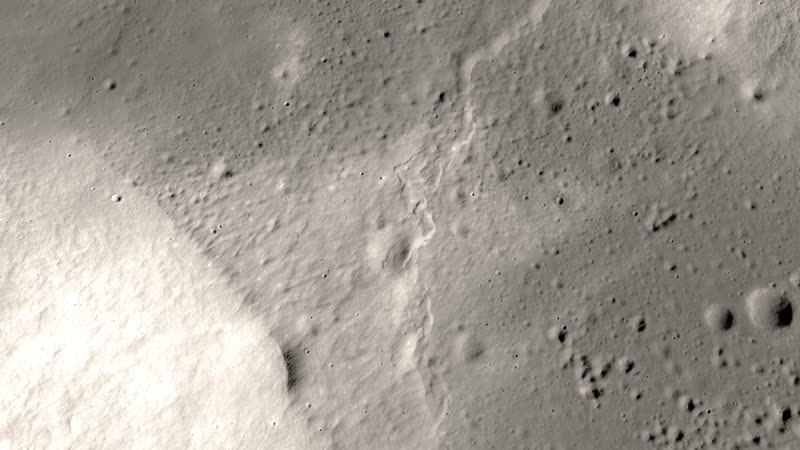
Lee Lincoln Scarp at the Apollo 17 Landing Site

The Lee Lincoln scarp is a low ridge or step about 80 meters high and running north-south through the western end of the Taurus-Littrow valley, site of the Apollo 17 Moon landing. This lobate scarp marks the location of a relatively young, low-angle thrust fault. The land west of the fault was forced up and over the eastern side as the lunar crust contracted. In a May 2019 paper published in Nature Geoscience, Thomas

2019NASA Image and Video Library

Servicing Mission 4 Overview

On May 11, 2009, the brave crew of Space Shuttle Atlantis lifted off to make NASA's Hubble Space Telescope more powerful than ever before. Hubble's Servicing Mission 4 (SM4) was the most ambitious and complicated to date. Changing out two major science instruments and repairing two others while in space helped to make this mission truly memorable. Thanks to the astronauts of SM4, the Hubble Space Telescope is at the

2019NASA Image and Video Library

Hubble Tool Time Episode 6 - Servicing Mission 4

Retired NASA astronaut John Grunsfeld hosts this six-part mini-series about the tools used on the Hubble Space Telescope servicing missions. Hubble was uniquely designed to be serviced in space so that components could be repaired and upgraded. Astronauts using custom-designed tools performed challenging spacewalks on five servicing missions from 1993 to 2009 to keep Hubble operating so that it could change our funda

2019NASA Image and Video Library

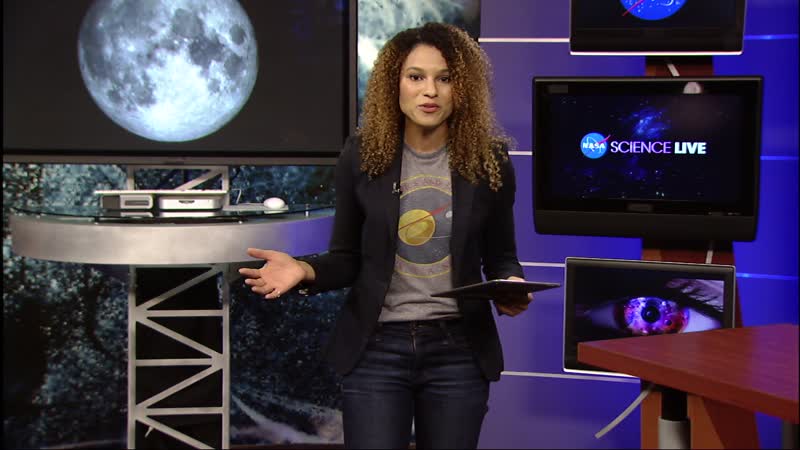
NASA Science Live: Storms Across the Solar System [Episode 4]

This episode of NASA Science Live talks about storms across the solar system. Starting with how storms form on Earth. Then, what conditions cause them to happen on other planets in a weather forecast from across the solar system. Finally, a look at how NASA studies storms on our own planet and with the release of a weather balloon.-------To download in higher resolution go to: http://svs.gsfc.nasa.gov/13212

2019NASA Image and Video Library

GLOBE Observer Land Cover: Getting Started

Nearly every aspect of our lives is fundamentally tied to the land on which we live. The homes that shelter us are resting on the land. Cities offer locations that bring people together; farms feed us; forests help to keep us cool, provide us with oxygen, building materials, and the joys of recreation; rivers and lakes yield fresh water to drink; and different kinds of land cover provide habitats for a diversity of w