العربية

NASA Image and Video Library

Records indexed under NASA Image and Video Library, with original identifiers, source links and item-level rights evidence. This is the imported selection, not the institution’s entire holdings. Verify the originating institution when the source is an aggregator.

4,093 matching records; original descriptions and titles are preserved. Search and filters →

Verify the evidence · Cite an item or clip · Rights

2019NASA Image and Video Library

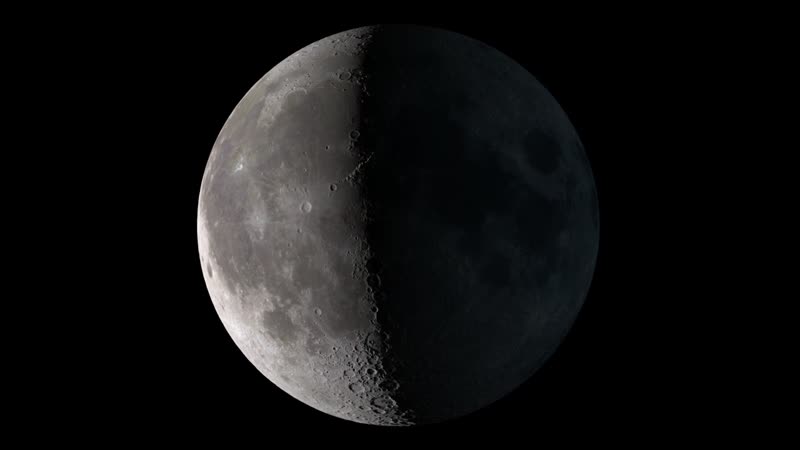
Hubble and Going Forward to the Moon

We are going forward to the Moon by 2024, but did you know that back in 2005, Dr. Jim Garvin and his team of scientists pointed the Hubble Space Telescope at our nearest celestial neighbor for a very important reason? The Hubble team used the telescope’s powerful instruments to work as a prospector for the Moon’s surface, searching for resources that would help future human-led missions mine and utilize those materia

2019NASA Image and Video Library

How NASA Will Protect Astronauts From Space Radiation

August 1972, as NASA scientist Ian Richardson remembers it, was hot. In Surrey, England, where he grew up, the fields were brown and dry, and people tried to stay out of the Sun, indoors and televisions on. But for several days that month, his TV picture kept breaking up. “Do not adjust your set,” he recalls the BBC announcing. “Heat isn’t causing the interference. It’s sunspots.” The same sunspots that disrupted the

2019NASA Image and Video Library

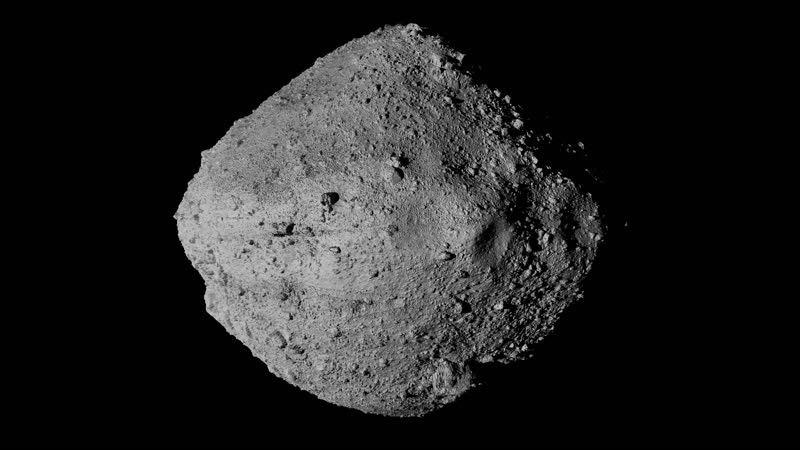
OSIRIS-REx - Asteroid Bennu Sample Site Finalists

OSIRIS-REx is a mission to study and map near-Earth asteroid Bennu. Its primary science objective is to collect a sample of Bennu in mid 2020 and return it to Earth in late 2023. In preparation, mission planners have identified four candidate sample sites on Bennu's rocky surface where OSIRIS-REx could briefly touch down to collect its sample. The mission will down-select to the final two sites – a primary and a back

2019NASA Image and Video Library

OSIRIS-REx Sample Site Selection Trailer

On September 8, 2016 in Cape Canaveral, Florida, OSIRIS-REx began its journey – the most ambitious sample collection mission since the Apollo Program. After two years, the spacecraft arrived at its destination, asteroid Bennu. As OSIRIS-REx drew near, Bennu grew in detail from a few tiny pixels to a surprisingly rugged world, littered with giant boulders. The spacecraft has used its instrumentation to map the asteroi

2019NASA Image and Video Library

Five Years of GPM Storms

On February 27, 2019, we celebrate five years in orbit for the NASA/JAXA Global Precipitation Measurement mission, or GPM. Launched from Japan on February 27, 2014, GPM has changed the way we see precipitation. It has provided unprecedented three-dimensional views of precipitation light rain to intense thunderstorms. To mark its five years, we’re looking back at five big moments in GPM’s history of observing storms.

2019NASA Image and Video Library

NASA Science Live: Next Steps to Science on the Moon [Episode 5]

Welcome to a special edition of NASA Science Live. NASA has selected three commercial Moon landing service providers that will deliver science and technology payloads under Commercial Lunar Payload Services (CLPS) as part of the Artemis program. Each commercial lander will carry NASA-provided payloads that will conduct science investigations and demonstrate advanced technologies on the lunar surface, paving the way f

2019NASA Image and Video Library

NASA Science Live: NASA's Next New Frontiers Mission [Episode 6]

NASA has announced that our next destination in the solar system is the unique, richly organic world Titan. Advancing our search for the building blocks of life, the Dragonfly mission will fly multiple sorties to sample and examine sites around Saturn’s icy moon. Dragonfly will launch in 2026 and arrive in 2034. The rotorcraft will fly to dozens of promising locations on Titan looking for prebiotic chemical processes

2010NASA Image and Video Library

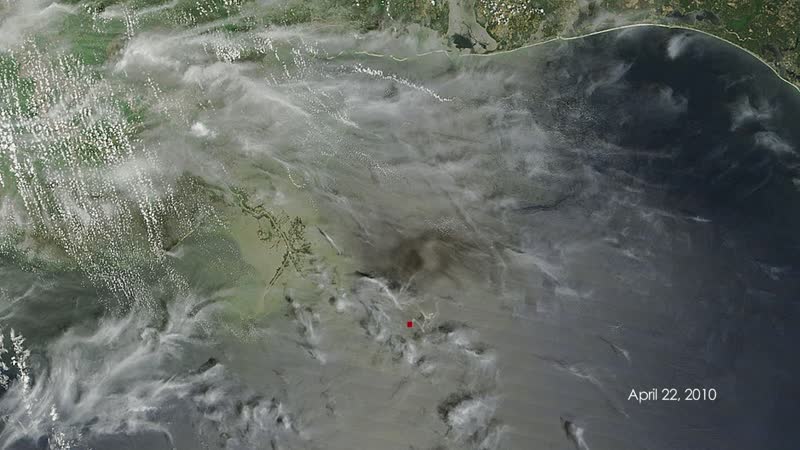
Gulf of Mexico Oil Spill Short Video

This short video reveals a space-based view of the burning oil rig (from the MODIS instrument on board NASA's Terra and Aqua satellites) and, later, the ensuing oil spill through May 24, 2010. The oil slick appears grayish-beige in the images and changes due to changing weather, ocean currents, and the use of oil dispersing chemicals. Images in the video time series were selected that show the spill most clearly.

2010NASA Image and Video Library

Gulf of Mexico Oil Spill

This short video reveals a space-based view of the burning oil rig, the spill, and the location through April 1, 2011. The MODIS instrument, on board NASA's Terra and Aqua satellites, captured images of the oil spill in the Gulf of Mexico. The spill began on April 20, 2010 with the explosion of the Deepwater Horizon oil rig. The oil slick appears grayish-beige in the images and changes due to changing weather, ocean

2010NASA Image and Video Library

Taking on Titan: An Interview With Carrie Anderson

Since she was a little girl, Carrie Anderson has wanted to be an astronomer. Now, as a space scientist at NASA Goddard Space Flight Center, Carrie studies the atmosphere on Titan, one of Saturn's moons and the second largest moon in the solar system. Titan is also a model for what the early Earth might have been like. To learn about Titan, she uses an instrument on the Cassini spacecraft called CIRS.