English

NASA Image and Video Library

السجلات المفهرسة تحت NASA Image and Video Library مع المعرّفات والروابط وبيانات الحقوق الأصلية. هذه المواد المستوردة وليست كامل مقتنيات المؤسسة. تحقق من المؤسسة الأصلية عندما يكون المصدر مجمّعًا للبيانات.

4,093 سجلًا مطابقًا؛ الأوصاف والعناوين الأصلية محفوظة. البحث والمرشحات →

التحقق من الأدلة · توثيق المادة والمقطع · الحقوق

2001مكتبة صور وفيديو ناسا

International Space Station (ISS)

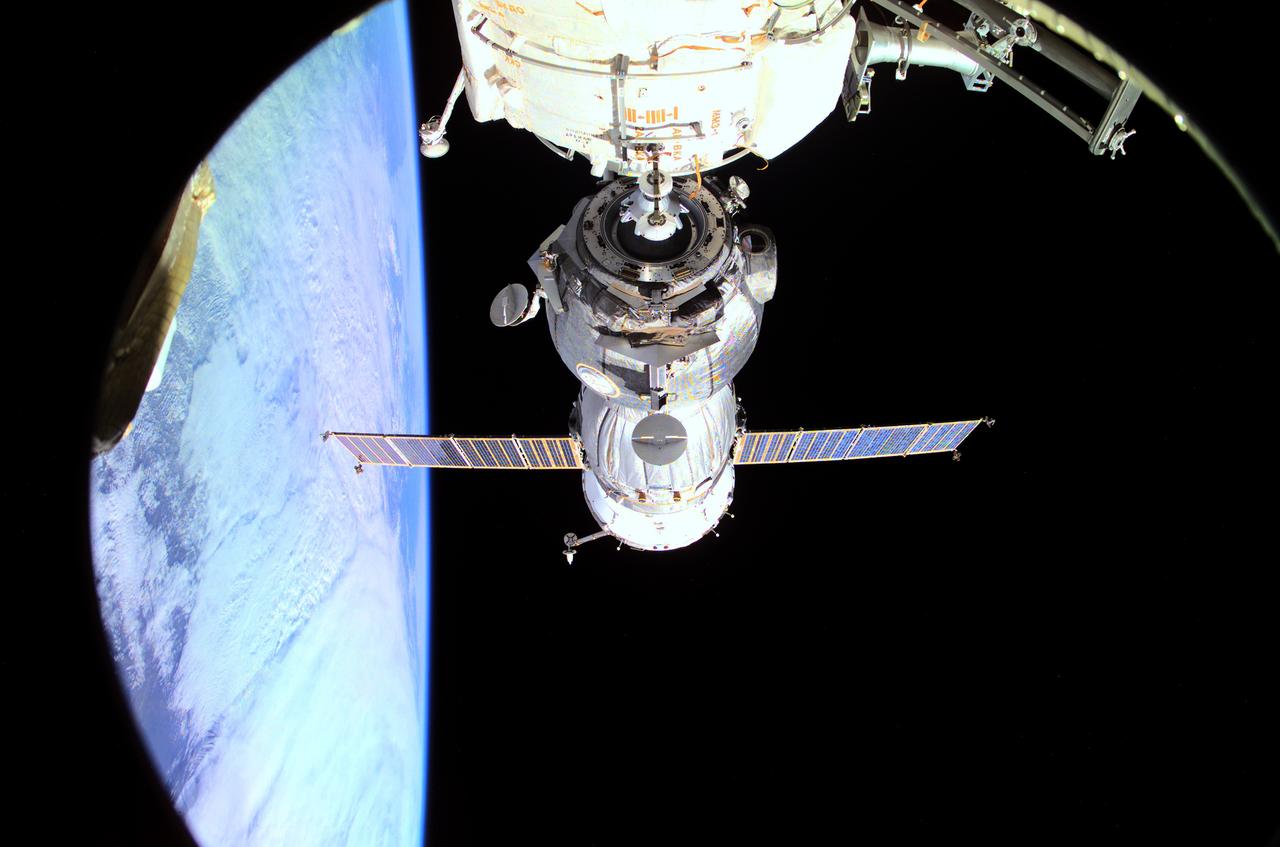
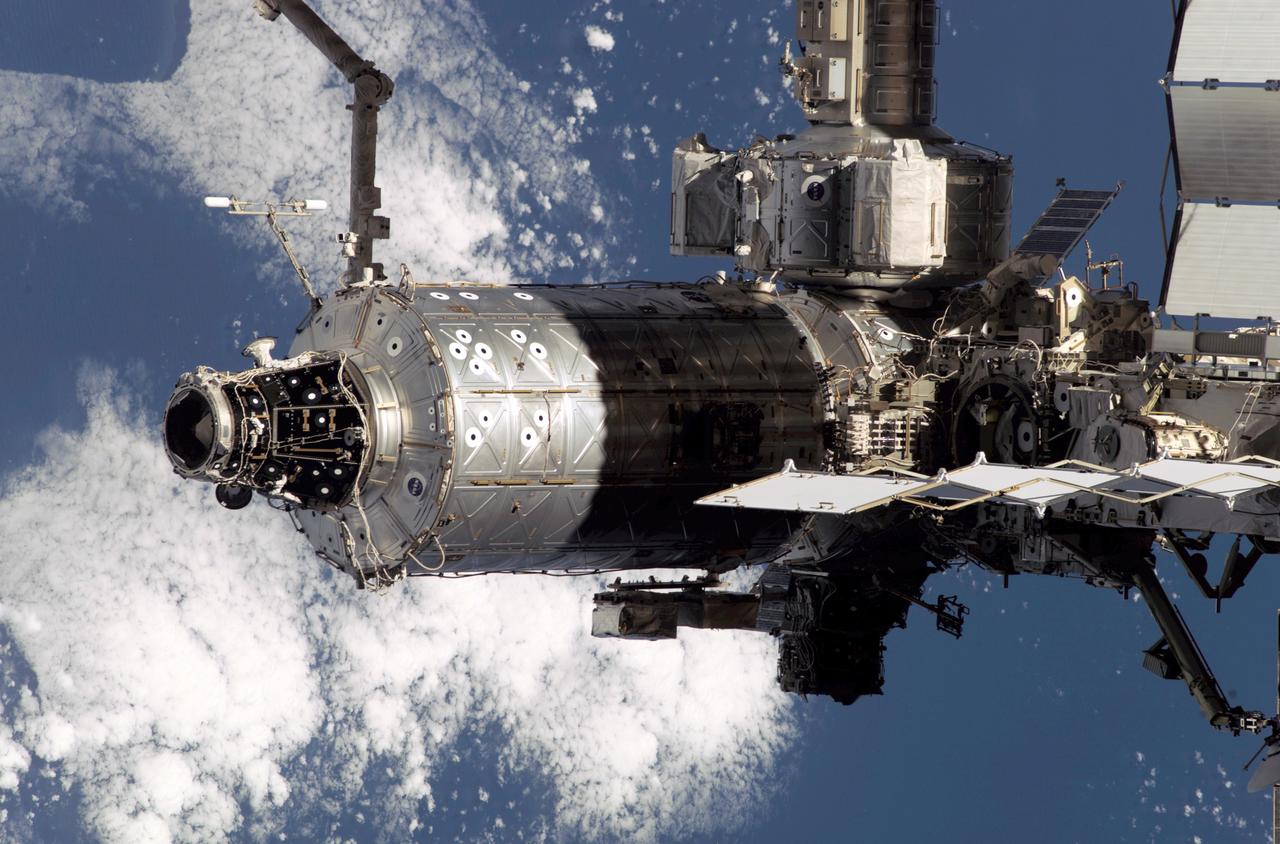
As seen through a window on the Space Shuttle Endeavor's aft flight deck, the International Space Station (ISS), with its newly-staffed crew of three, Expedition Four, is contrasted against a patch of the blue and white Earth. The Destiny laboratory is partially covered with shadows in the foreground. The photo was taken during the departure of the Earth-bound Endeavor, bringing to a close the STS-108 mission, the 12
2001مكتبة صور وفيديو ناسا

International Space Station (ISS)

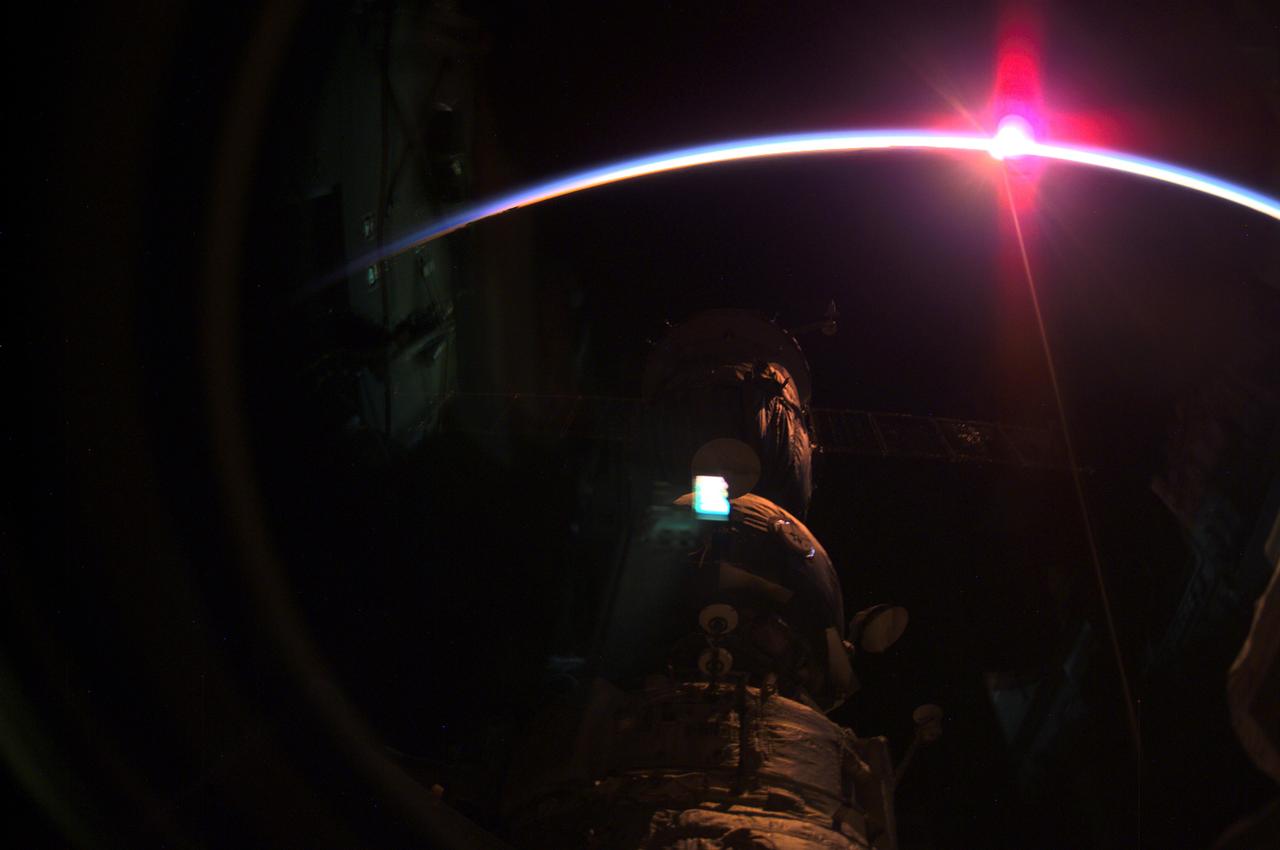
The setting sun and the thin blue airglow line at Earth's horizon was captured by the International Space Station's (ISS) Expedition Three crewmembers with a digital camera. Some of the Station's components are silhouetted in the foreground. The crew was launched aboard the Space Shuttle Orbiter Discovery STS-105 mission, on August 10, 2001, replacing the Expedition Two crew. After marning the orbiting ISS for 128 co

2001مكتبة صور وفيديو ناسا

International Space Station (ISS)

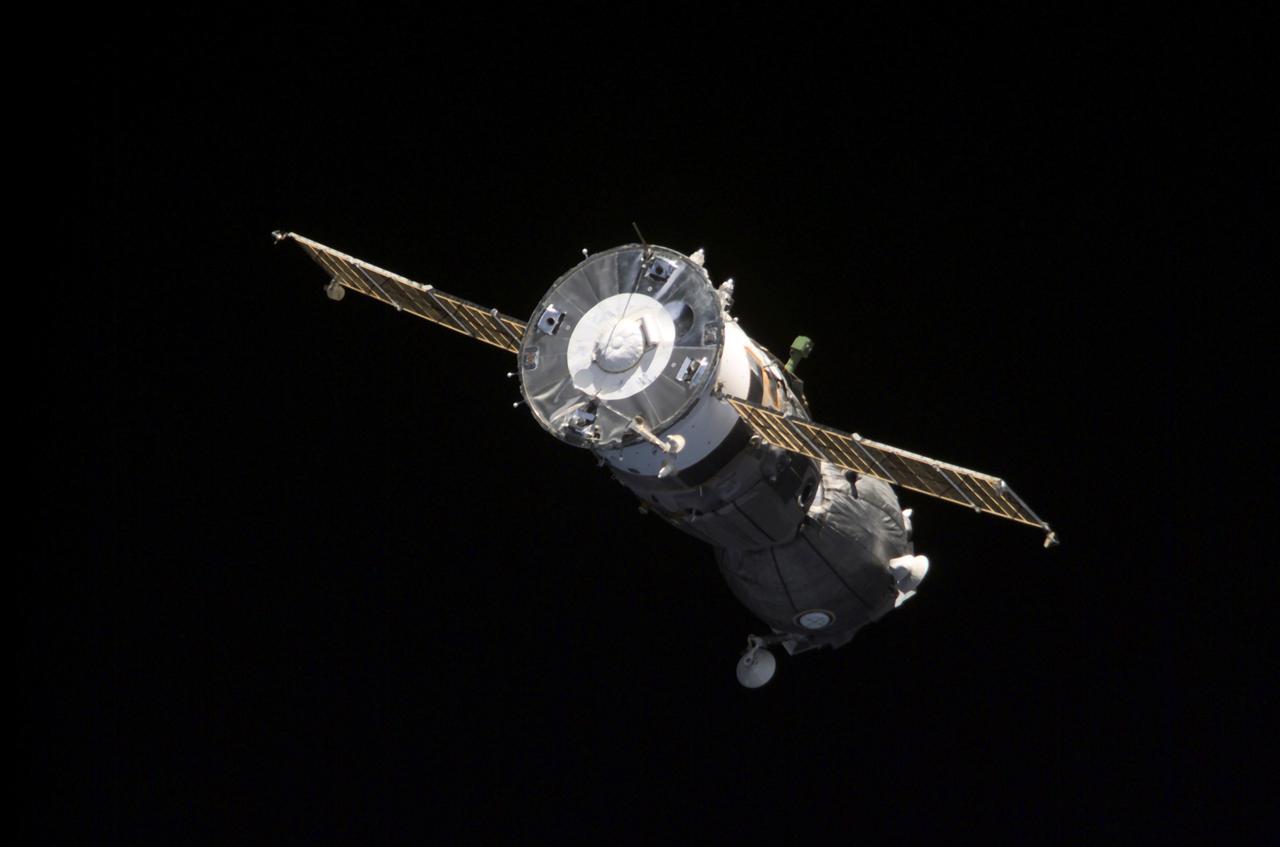
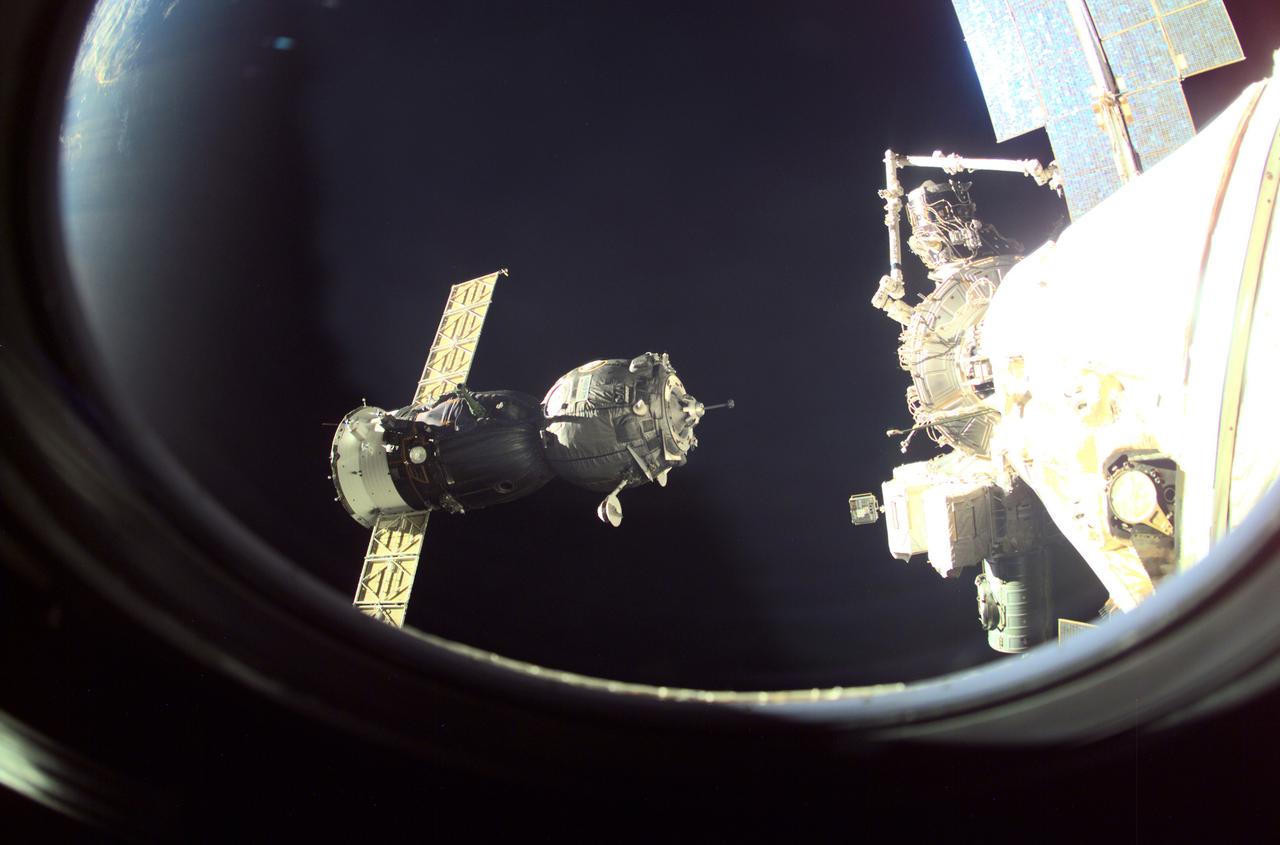
Carrying out a flight program for the French Space Agency (CNES) under a commerial contract with the Russian Aviation and Space Agency, a Russian Soyuz spacecraft approaches the International Space Station (ISS) delivering a crew of three for an eight-day stay. Aboard the craft are Commander Victor Afanasyev, Flight Engineer Konstantin Kozeev, both representing Rosaviakosmos, and French Flight Engineer Claudie Haigne

2001مكتبة صور وفيديو ناسا

International Space Station (ISS)

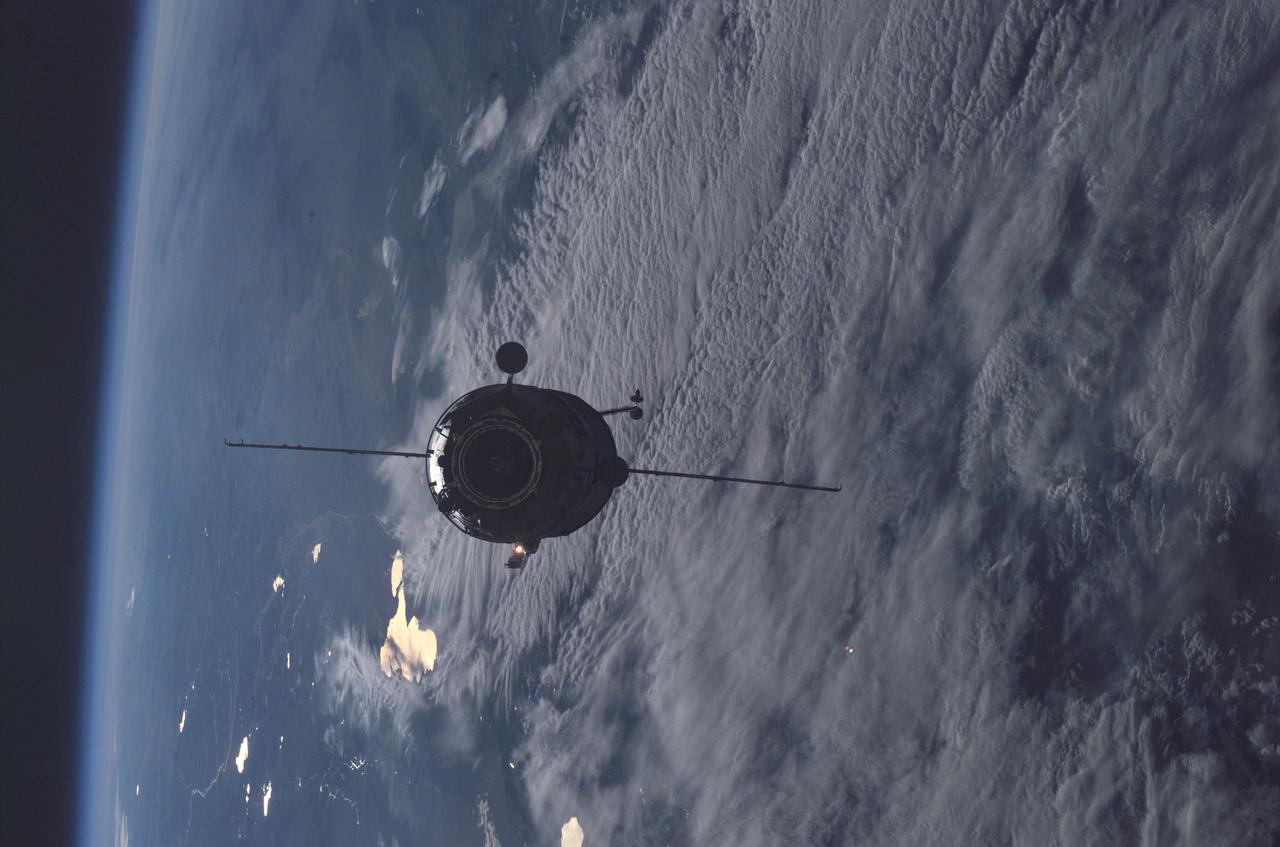
A Russian Soyuz spacecraft undocks from the International Space Station (ISS) with its crew of three ending an eight-day stay. Aboard the craft are Commander Victor Afanasyev, Flight Engineer Konstantin Kozeev, both representing Rosaviakosmos, and French Flight Engineer Claudie Haignere. Their mission was to carry out a flight program for the French Space Agency (CNES) under a commercial contract with the Russian Avi

2001مكتبة صور وفيديو ناسا

International Space Station (ISS)

A Russian Soyuz spacecraft departs from the International Space Station (ISS) with its crew of three ending an eight-day stay. Aboard the craft are Commander Victor Afanasyev, Flight Engineer Konstantin Kozeev, both representing Rosaviakosmos, and French Flight Engineer Claudie Haignere. Their mission was to carry out a flight program for the French Space Agency (CNES) under a commercial contract with the Russian Avi

2001مكتبة صور وفيديو ناسا

International Space Station (ISS)

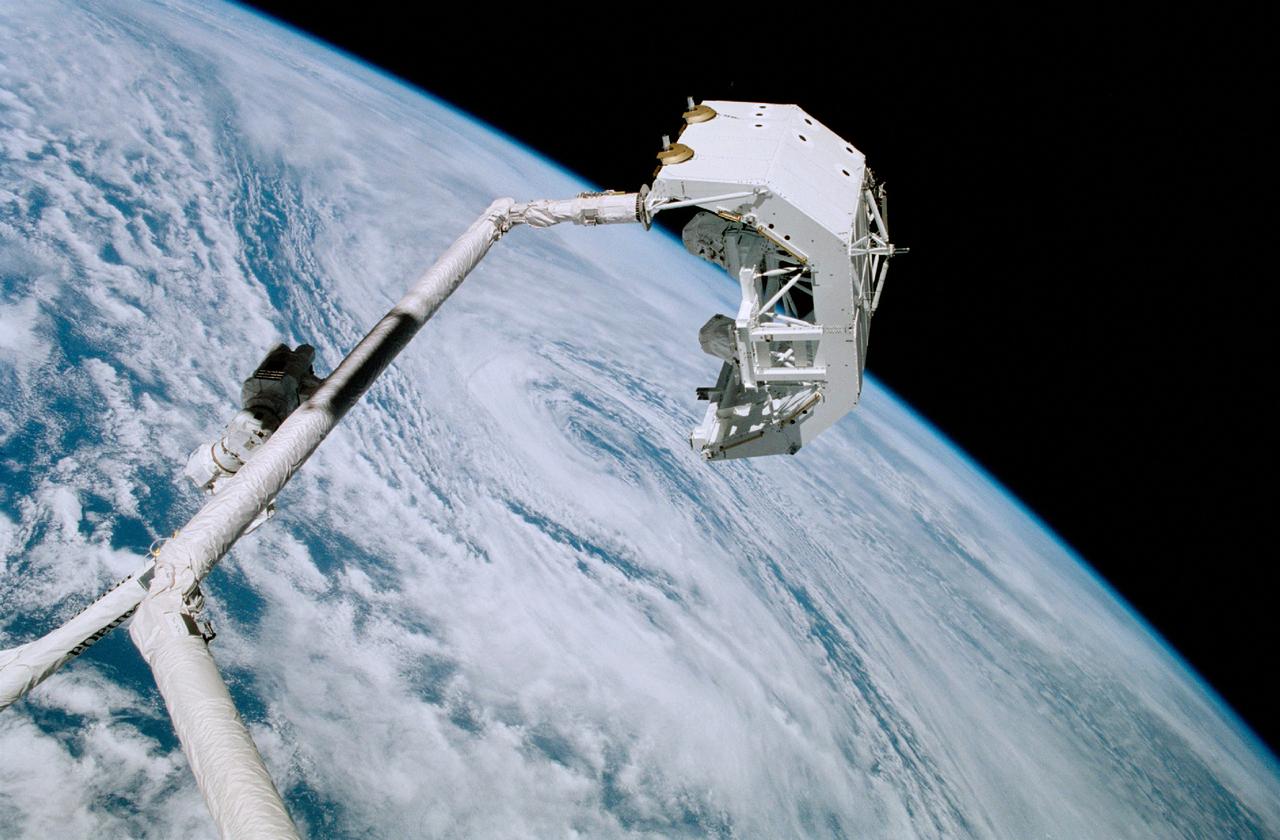
A Canadian "handshake" in space occurred on April 28, 2001, as the Canadian-built space station robotic arm (Canadarm-2) transferred its launch cradle over to Endeavor's robotic arm. Marning the controls from the shuttle's aft flight deck, Canadian Mission Specialist Chris A. Hadfield of the Canadian Space Agency (CSA) was instrumental in the activity. The Spacelab pallet that carried the Canadarm2 robotic arm to the

2001مكتبة صور وفيديو ناسا

International Space Station (ISS)

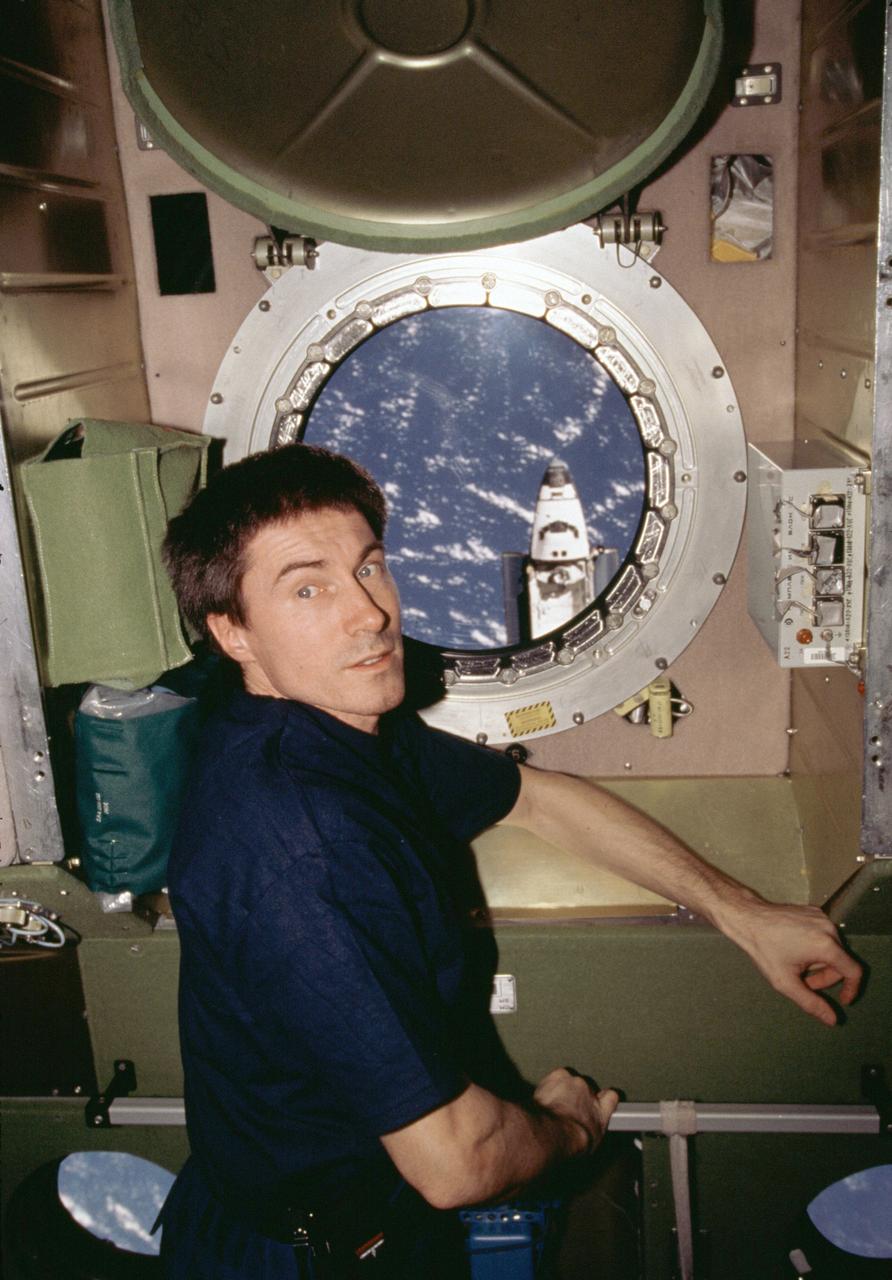
Cosmonaut Sergei K. Krikalev, flight engineer for Expedition One, is positioned by a porthole aboard the Zvezda Service Module of the International Space Station (ISS) as the Space Shuttle Atlantis approaches for docking to begin several days of joint activities between the two crews. Visible through the window are the crew cabin and forward section of the Shuttle amidst scattered clouds above the Western Pacific. Th

1997مكتبة صور وفيديو ناسا

International Space Station (ISS)

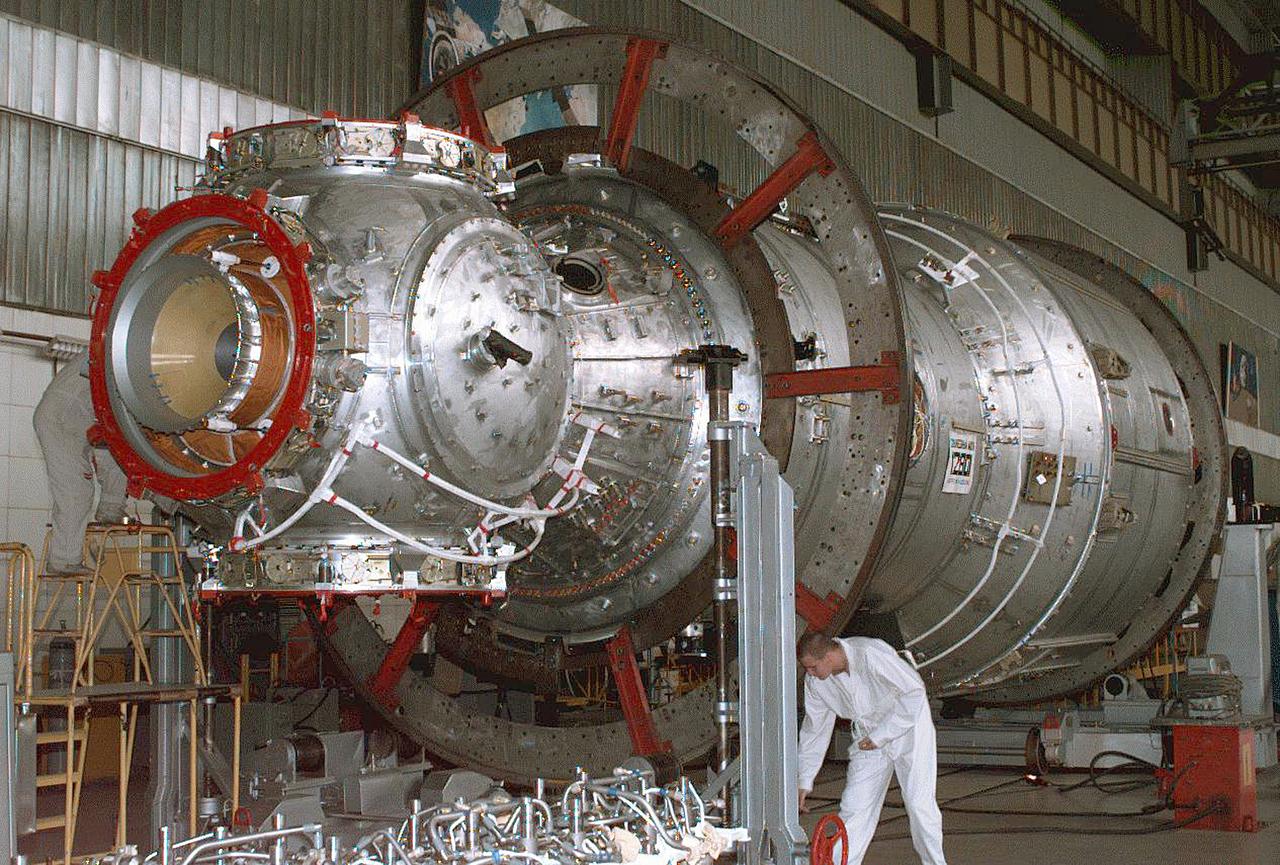
The Zvezda Service Module, the first Russian contribution and third element to the International Space Station (ISS), is shown under construction in the Krunichev State Research and Production Facility (KhSC) in Moscow. Russian technicians work on the module shortly after it completed a pressurization test. In the foreground is the forward portion of the module, including the spherical transfer compartment and its th

2001مكتبة صور وفيديو ناسا

International Space Station (ISS)

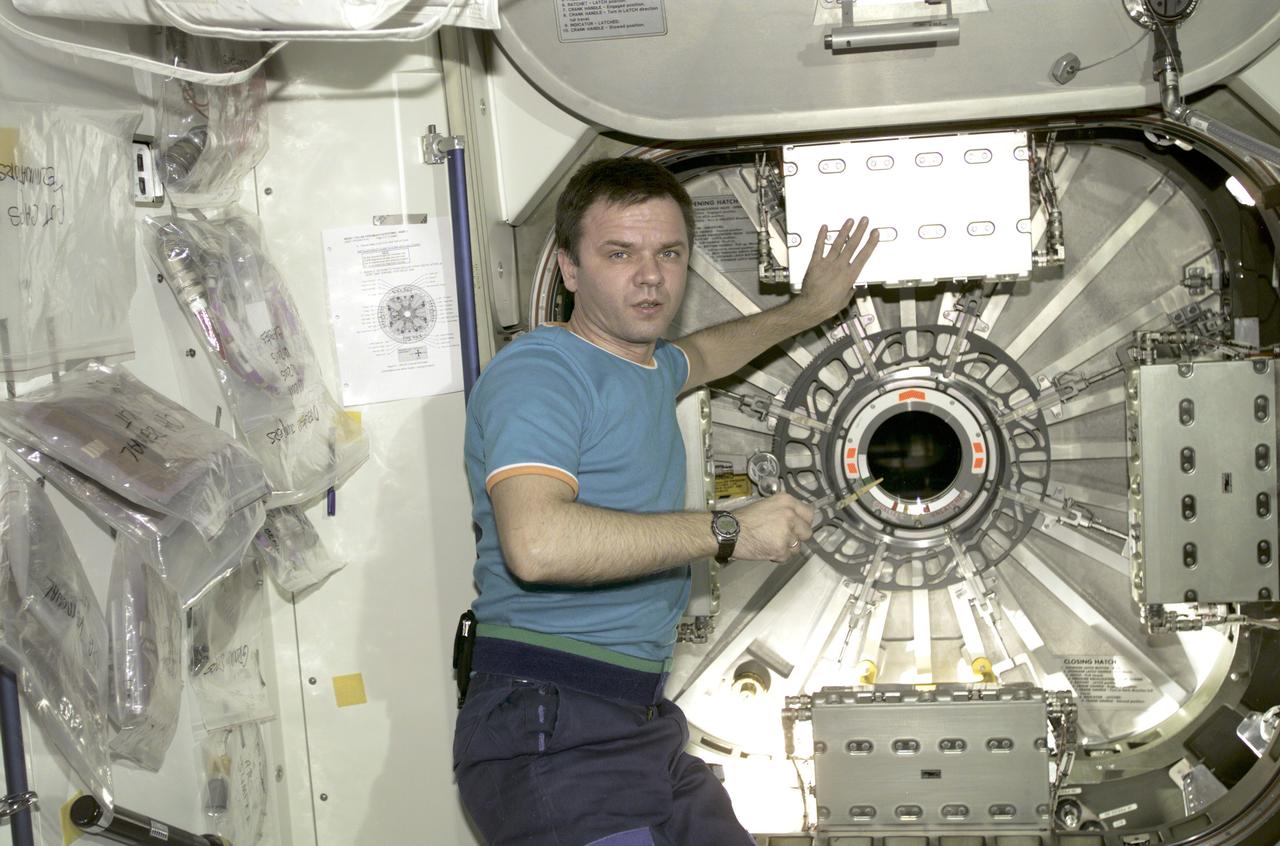
Cosmonaut Yuri P. Gidzenko, Expedition One Soyuz commander, stands near the hatch leading from the Unity node into the newly-attached Destiny laboratory aboard the International Space Station (ISS). The Node 1, or Unity, serves as a cornecting passageway to Space Station modules. The U.S.-built Unity module was launched aboard the Orbiter Endeavour (STS-88 mission) on December 4, 1998, and connected to Zarya, the Rus

2002مكتبة صور وفيديو ناسا

International Space Station (ISS)

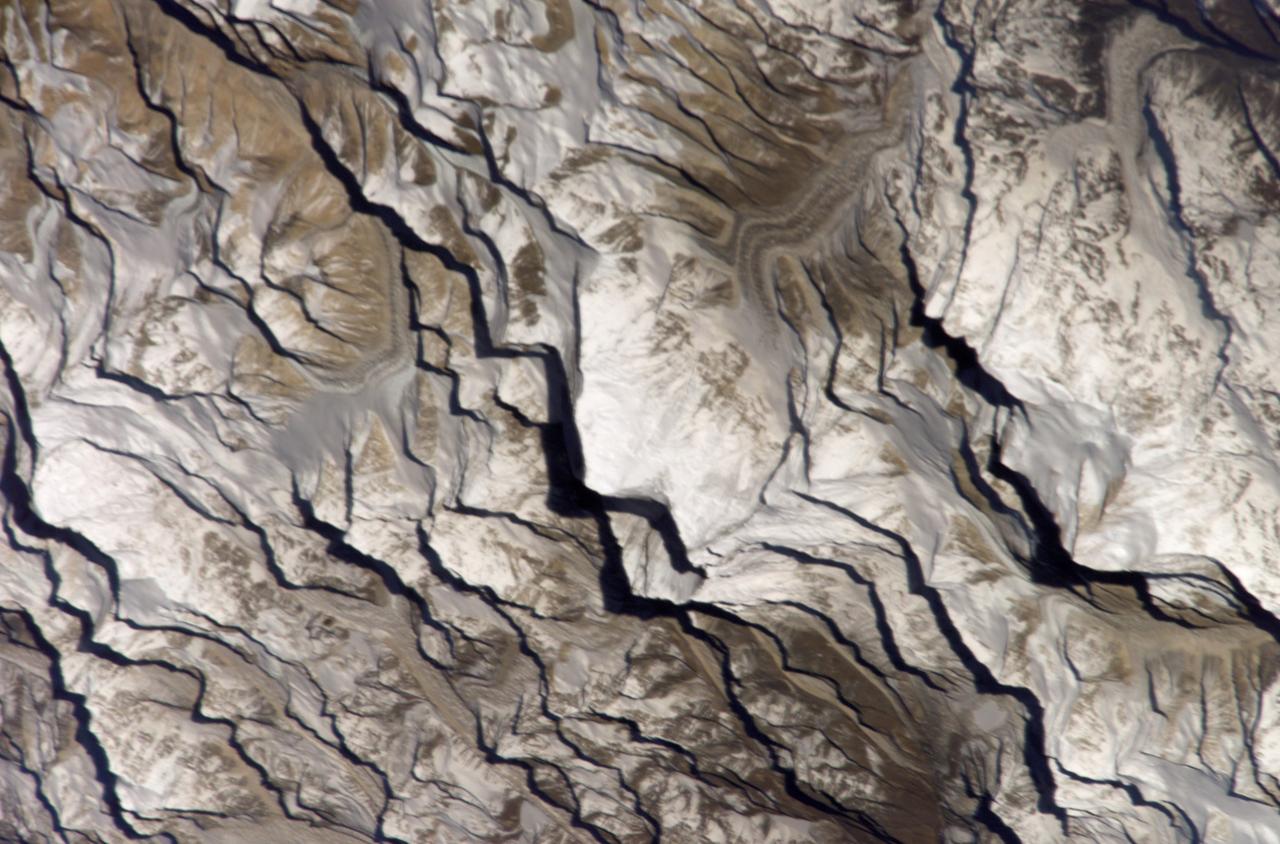
Astronaut Daniel W. Bursch, Expedition Four flight engineer, was delighted in capturing this image of Mt. Everest in the Himalayan Range from aboard the International Space Station (ISS). The mountain is near frame center. Because the photo was taken close to orbital sunrise, the low sun angle gave tremendous relief to the mountains. Named for Sir George Everest, the British surveyor-general of India, Mount Everest i

1994مكتبة صور وفيديو ناسا

Earth Science

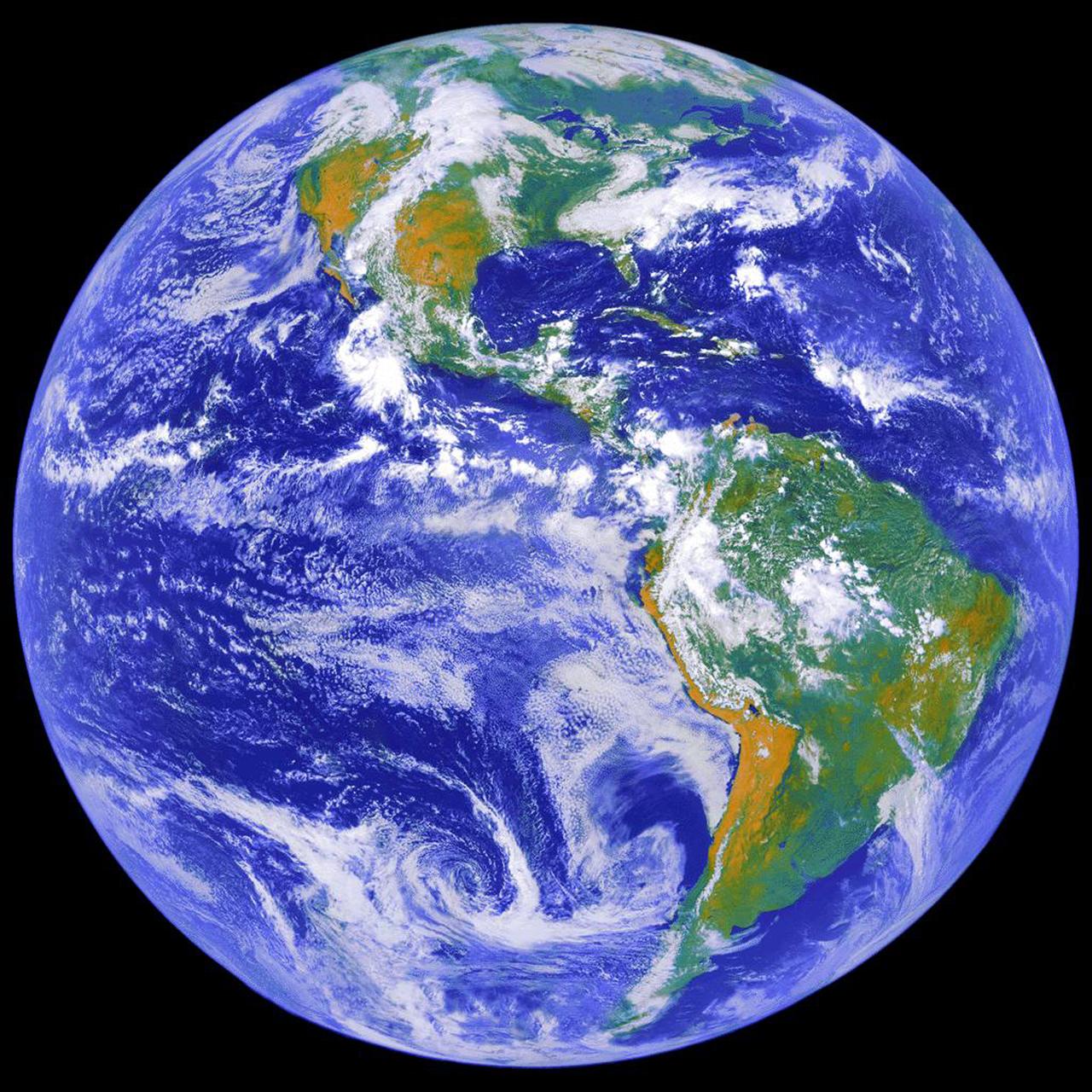
This image depicts a full view of the Earth, taken by the Geostationary Operational Environment Satellite (GOES-8). The red and green charnels represent visible data, while the blue channel represents inverted 11 micron infrared data. The north and south poles were not actually observed by GOES-8. To produce this image, poles were taken from a GOES-7 image. Owned and operated by the National Oceanic and Atmospheric A

2002مكتبة صور وفيديو ناسا

International Space Station (ISS)

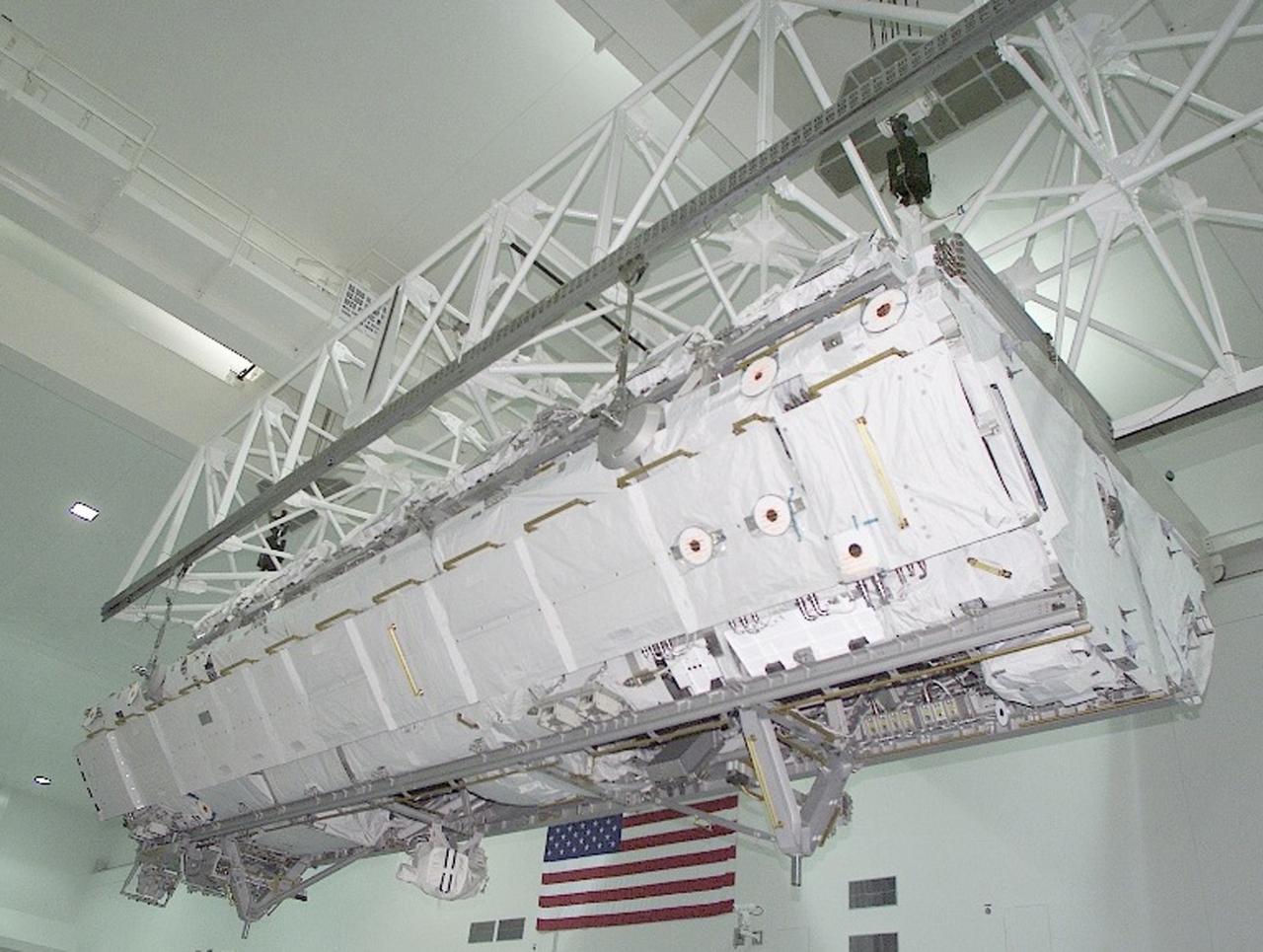
Shown here is the International Space Station (ISS) S1 Truss in preparation for installation in the payload bay of the Space Shuttle Atlantis at NASA's Kennedy Space Center )KSC)in Florida. The truss launched October 7, 2002 on the STS-112 mission and will be attached during three spacewalks. Constructed primarily of aluminum, it measures 45 feet long, 15 feet wide, 10 feet tall, and weighs over 27,000 pounds. It is

2002مكتبة صور وفيديو ناسا

Earth Science

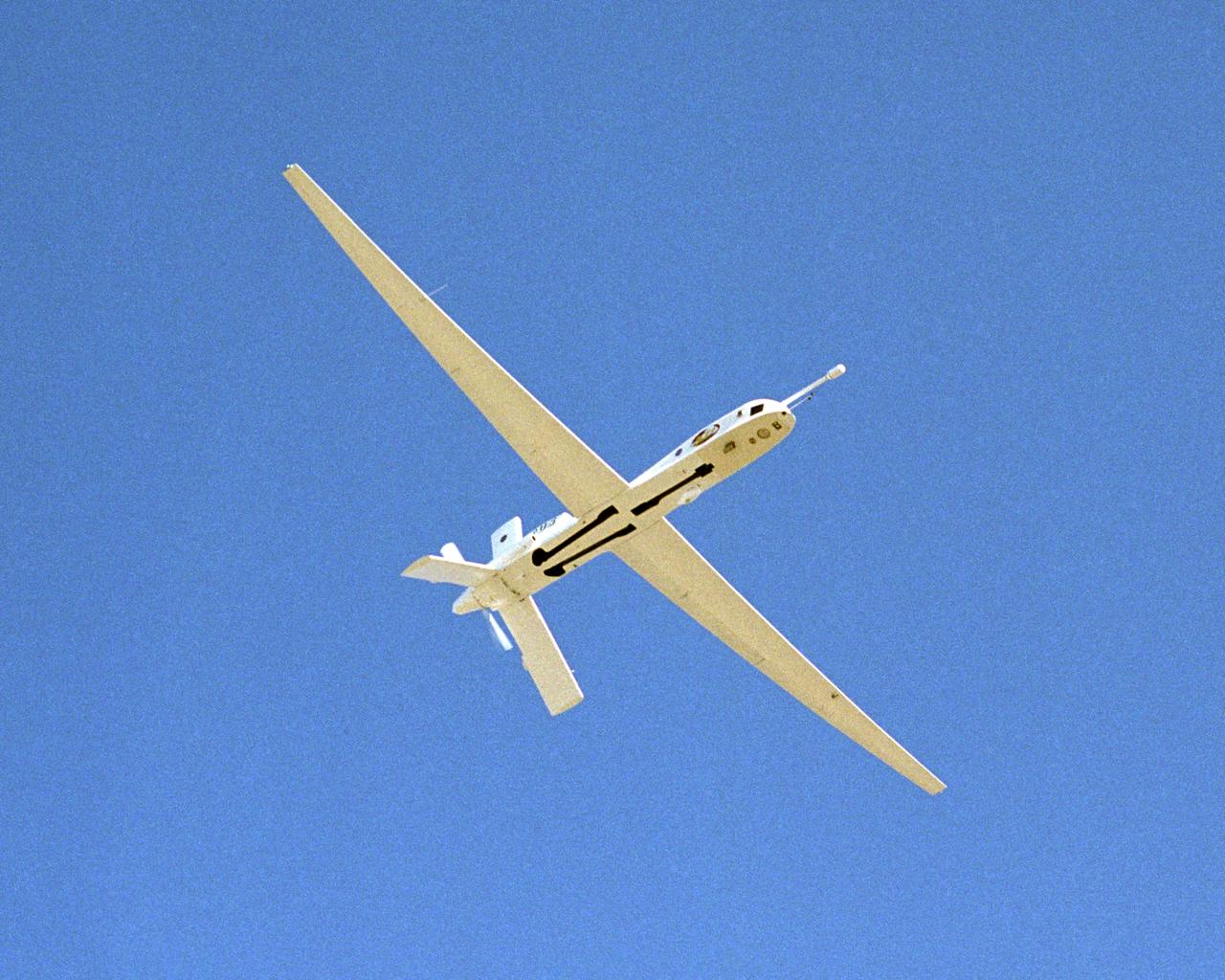
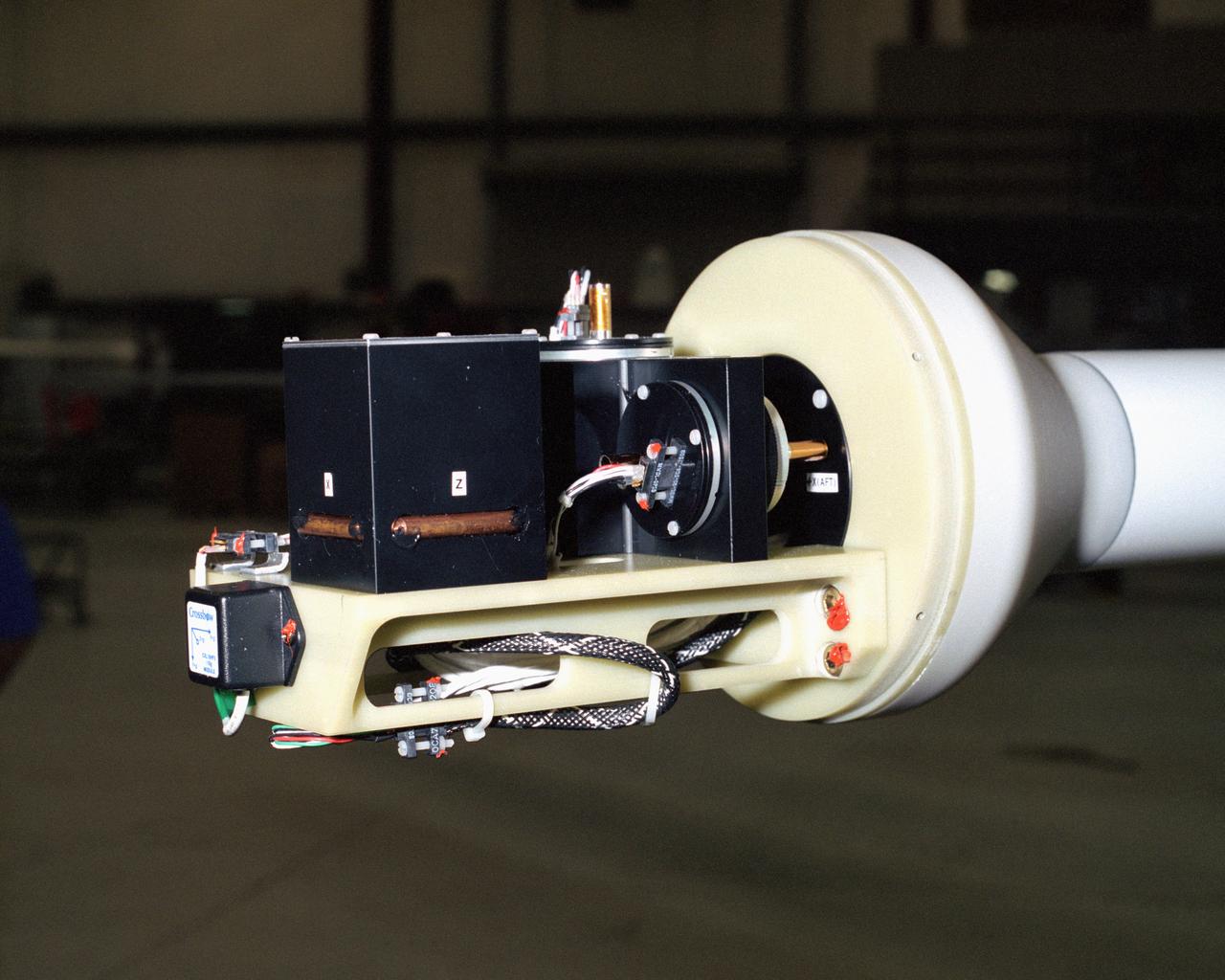
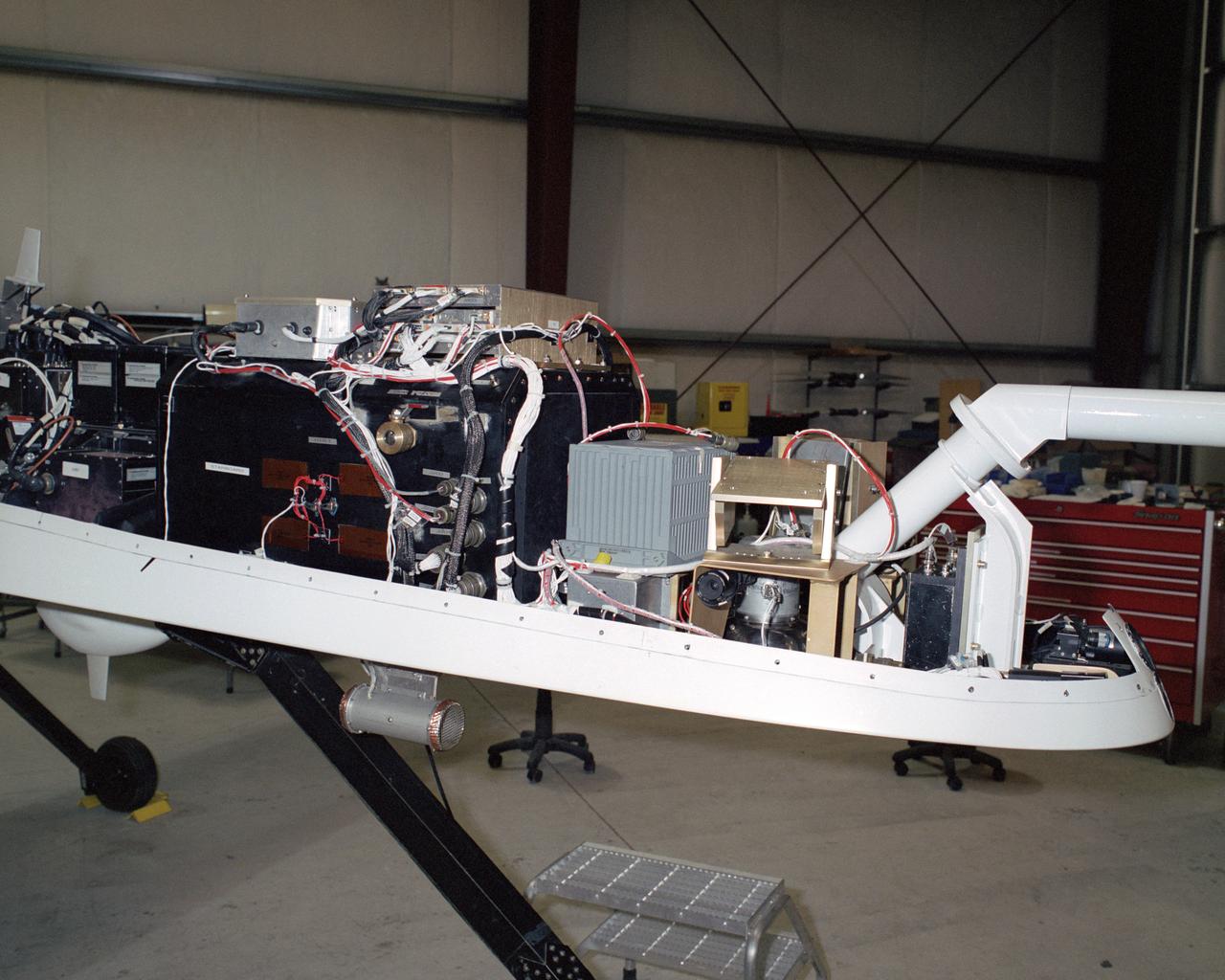
A NASA team studying the causes of electrical storms and their effects on our home planet achieved a milestone on August 21, 2002, completing the study's longest-duration research flight and monitoring four thunderstorms in succession. Based at the Naval Air Station Key West, Florida, researchers with the Altus Cumulus Electrification Study (ACES) used the Altus II remotely piloted aircraft to study thunderstorms in

2002مكتبة صور وفيديو ناسا

Earth Science

A NASA team studying the causes of electrical storms and their effects on our home planet achieved a milestone on August 21, 2002, completing the study's longest-duration research flight and monitoring four thunderstorms in succession. Based at the Naval Air Station Key West, Florida, researchers with the Altus Cumulus Electrification Study (ACES) used the Altus II remotely-piloted aircraft to study thunderstorms in

2002مكتبة صور وفيديو ناسا

International Space Station (ISS)

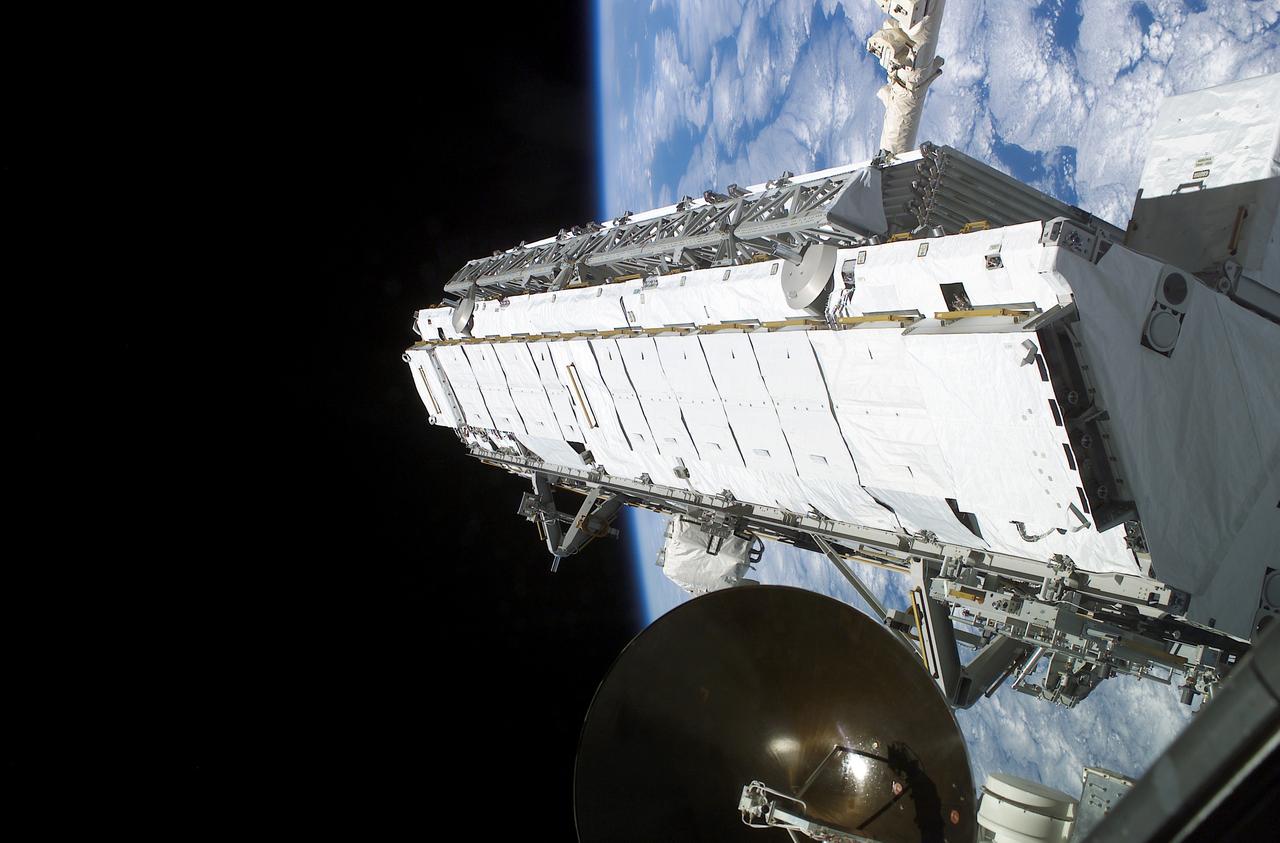
Being attached to the Canadarm2 on the International Space Station (ISS), the Remote Manipulator System arm built by the Canadian Space Agency, the Integrated Truss Assembly (S1) Truss is suspended over the Space Shuttle Orbiter Atlantis' cargo bay. Astronauts Sandra H. Magnus, STS-112 mission specialist, and Peggy A. Whitson, Expedition Five flight engineer, used the Canadarm2 from inside the Destiny laboratory on t

2002مكتبة صور وفيديو ناسا

International Space Station (ISS)

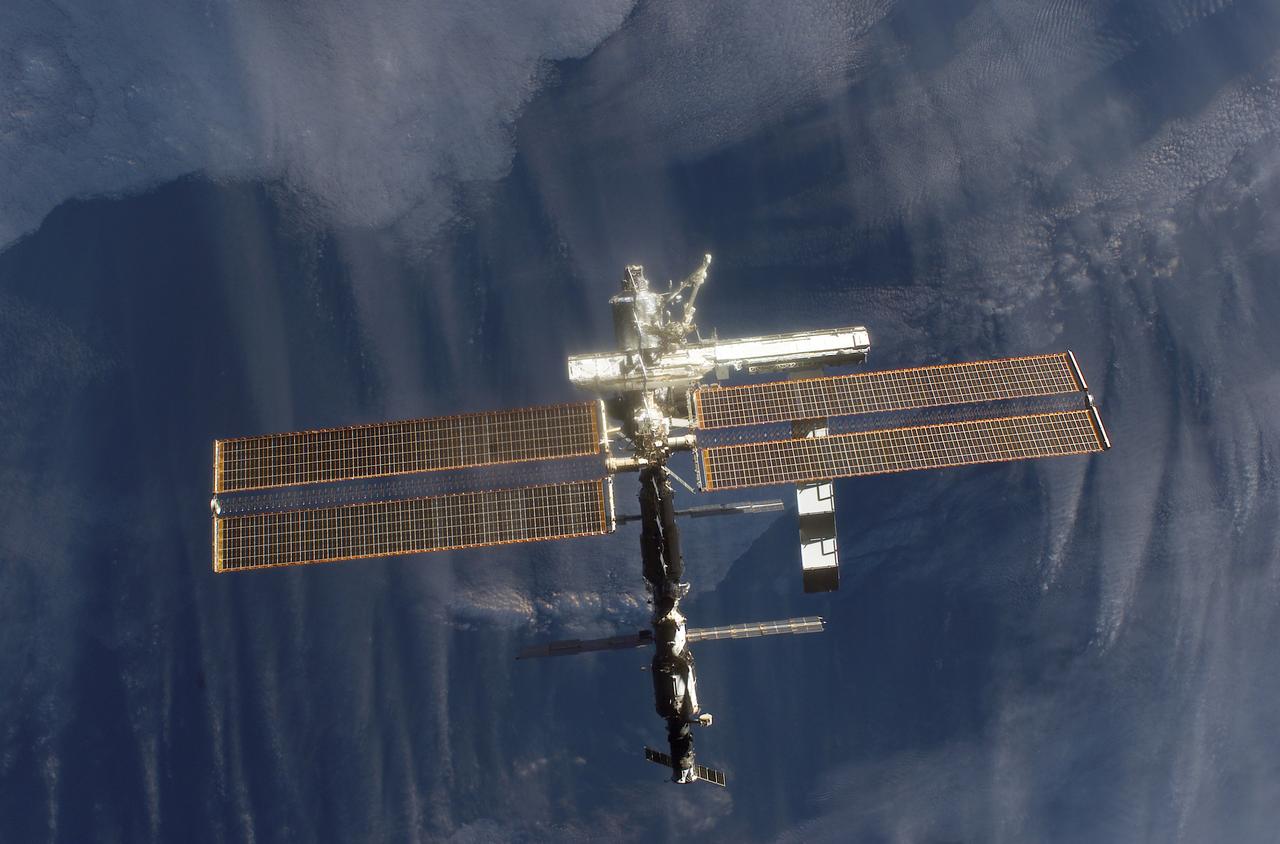
This image of the International Space Station (ISS) was photographed by one of the crewmembers of the STS-112 mission following separation from the Space Shuttle Orbiter Atlantis as the orbiter pulled away from the ISS. The newly added S1 truss is visible in the center frame. The primary payloads of this mission, International Space Station Assembly Mission 9A, were the Integrated Truss Assembly S-1 (S-One), the Star

2002مكتبة صور وفيديو ناسا

International Space Station (ISS)

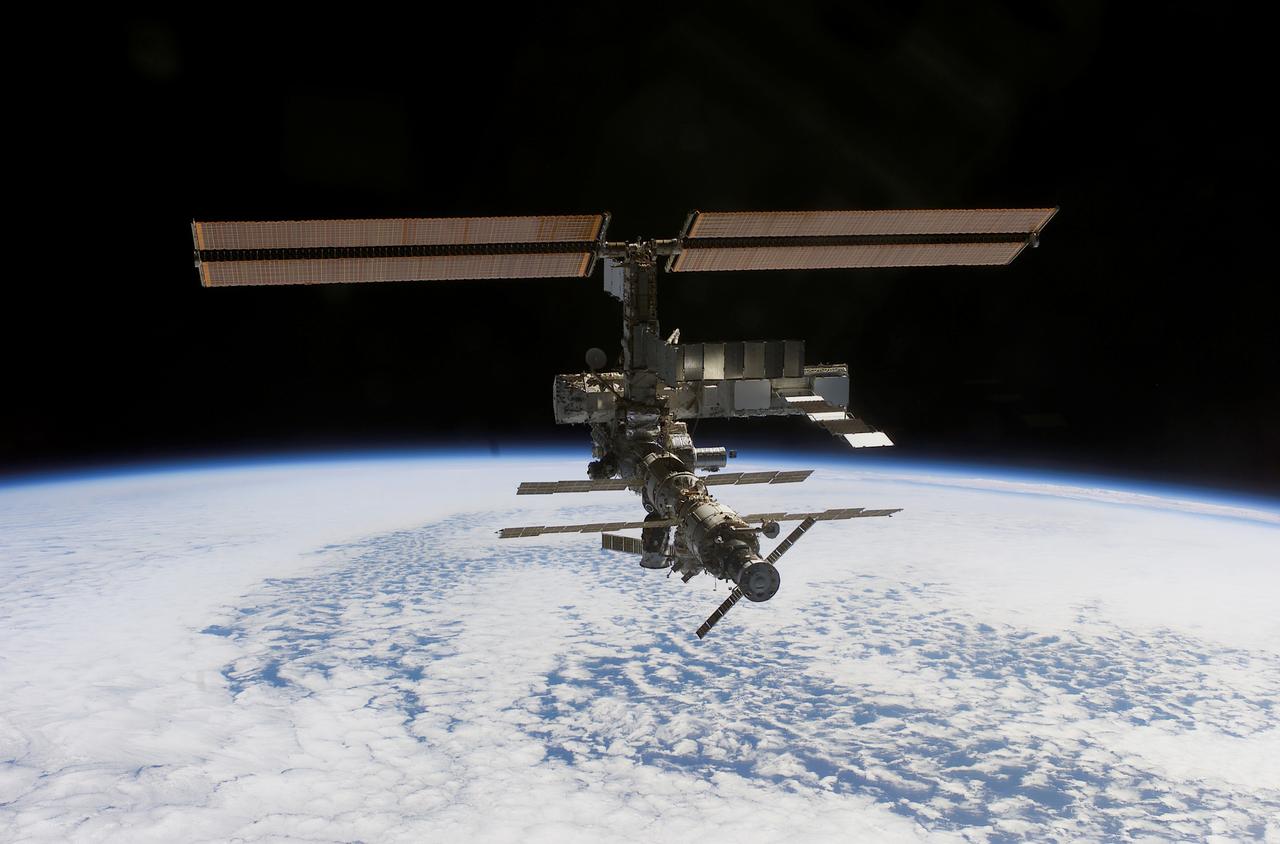
This image of the International Space Station (ISS) was photographed by one of the crewmembers of the STS-112 mission following separation from the Space Shuttle Orbiter Atlantis as the orbiter pulled away from the ISS. The primary payloads of this mission, International Space Station Assembly Mission 9A, were the Integrated Truss Assembly S1 (S-One), the Starboard Side Thermal Radiator Truss, and the Crew Equipment

2002مكتبة صور وفيديو ناسا

Earth Science

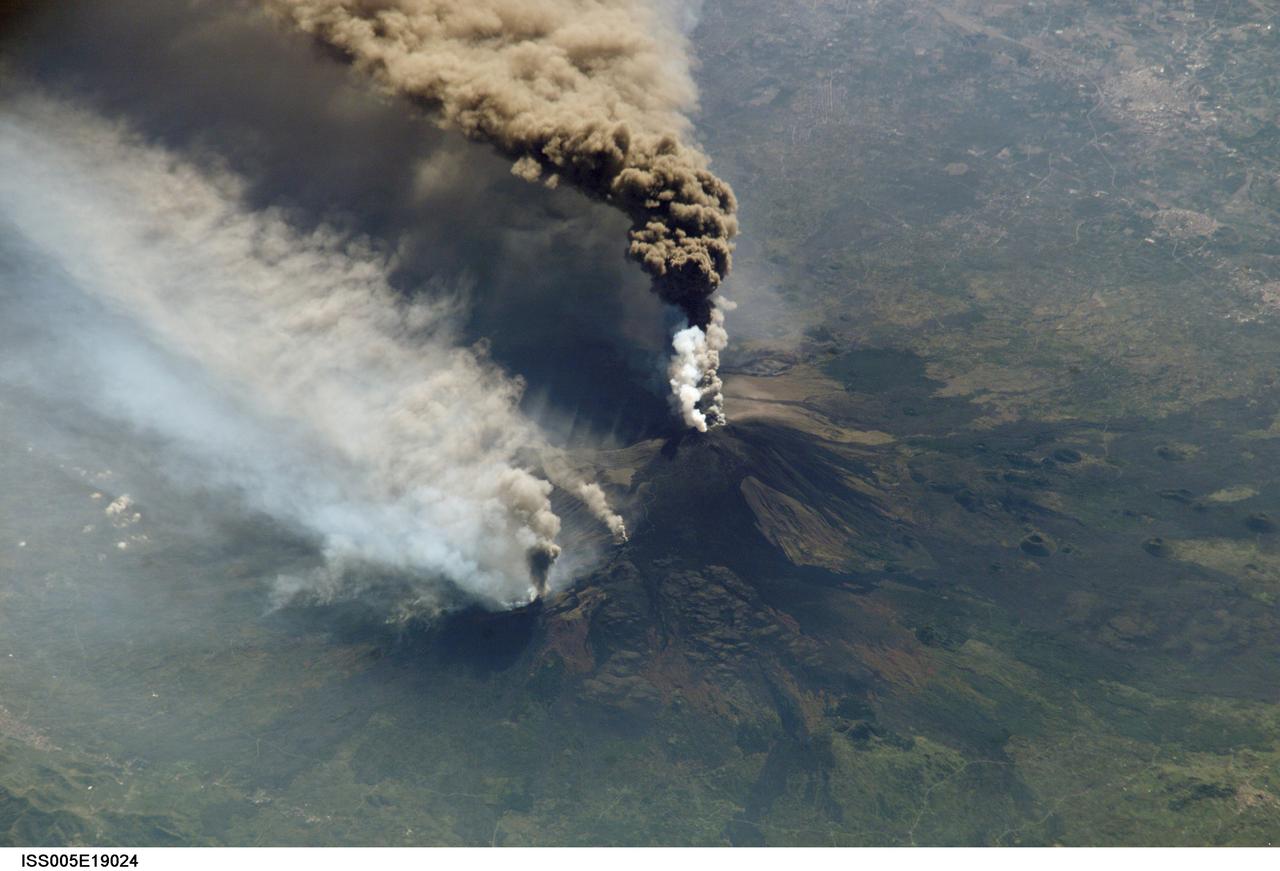
Expedition Five crew members aboard the International Space Station (ISS) captured this overhead look at the smoke and ash regurgitated from the erupting volcano Mt. Etna on the island of Sicily, Italy in October 2002. Triggered by a series of earthquakes on October 27, 2002, this eruption was one of Etna's most vigorous in years. This image shows the ash plume curving out toward the horizon. The lighter-colored plum

2002مكتبة صور وفيديو ناسا

International Space Station (ISS)

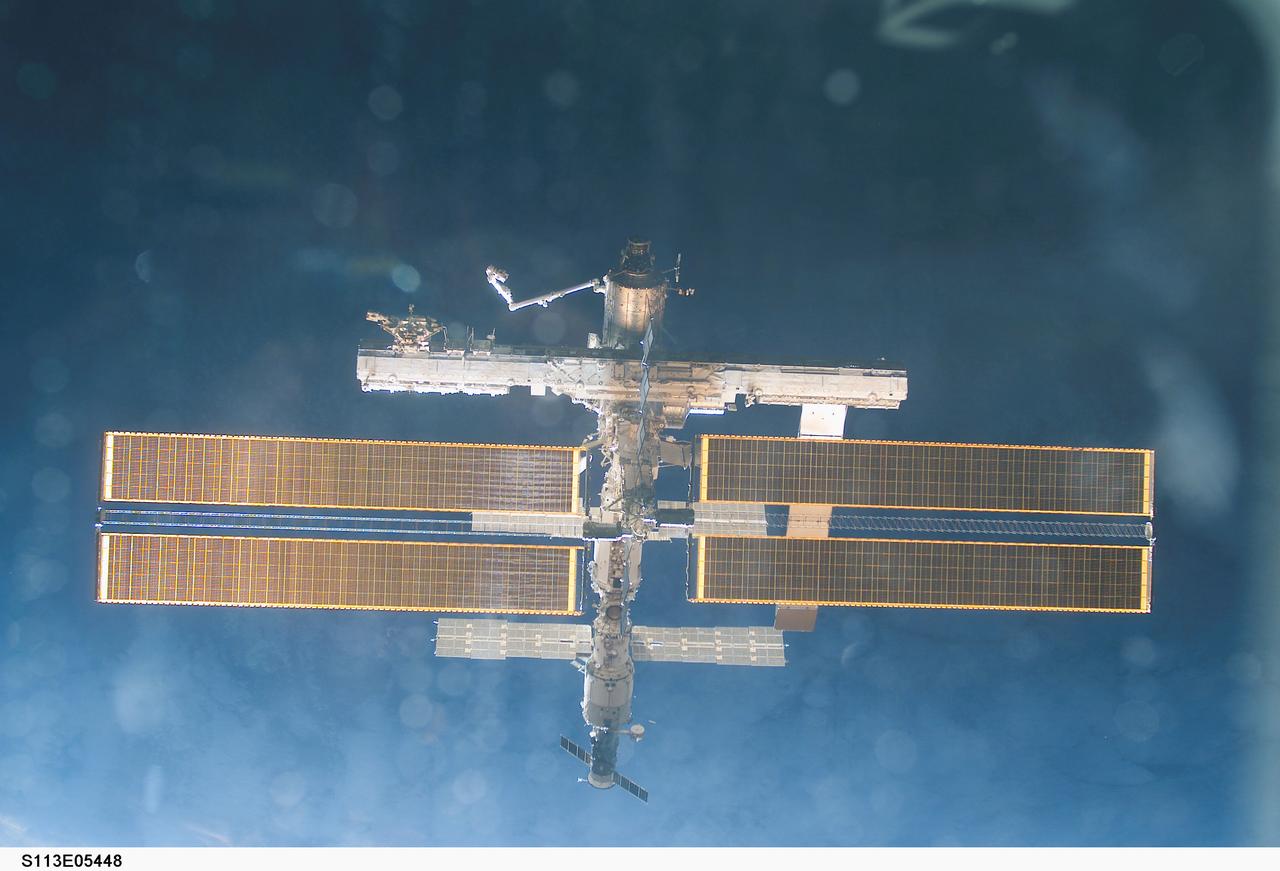
Back dropped against the blue hues of Earth, the International Space Station (ISS) sports its new Port One (P-1) Truss (center frame) as photographed by a crew member aboard the Space Shuttle Orbiter Endeavour following its undocking from the Station. Launched on November 23, 2002 from Kennedy's launch pad 39A, the STS-113 mission, the 16th American assembly flight and 112th overall American flight, installed and act

2002مكتبة صور وفيديو ناسا

Earth Science

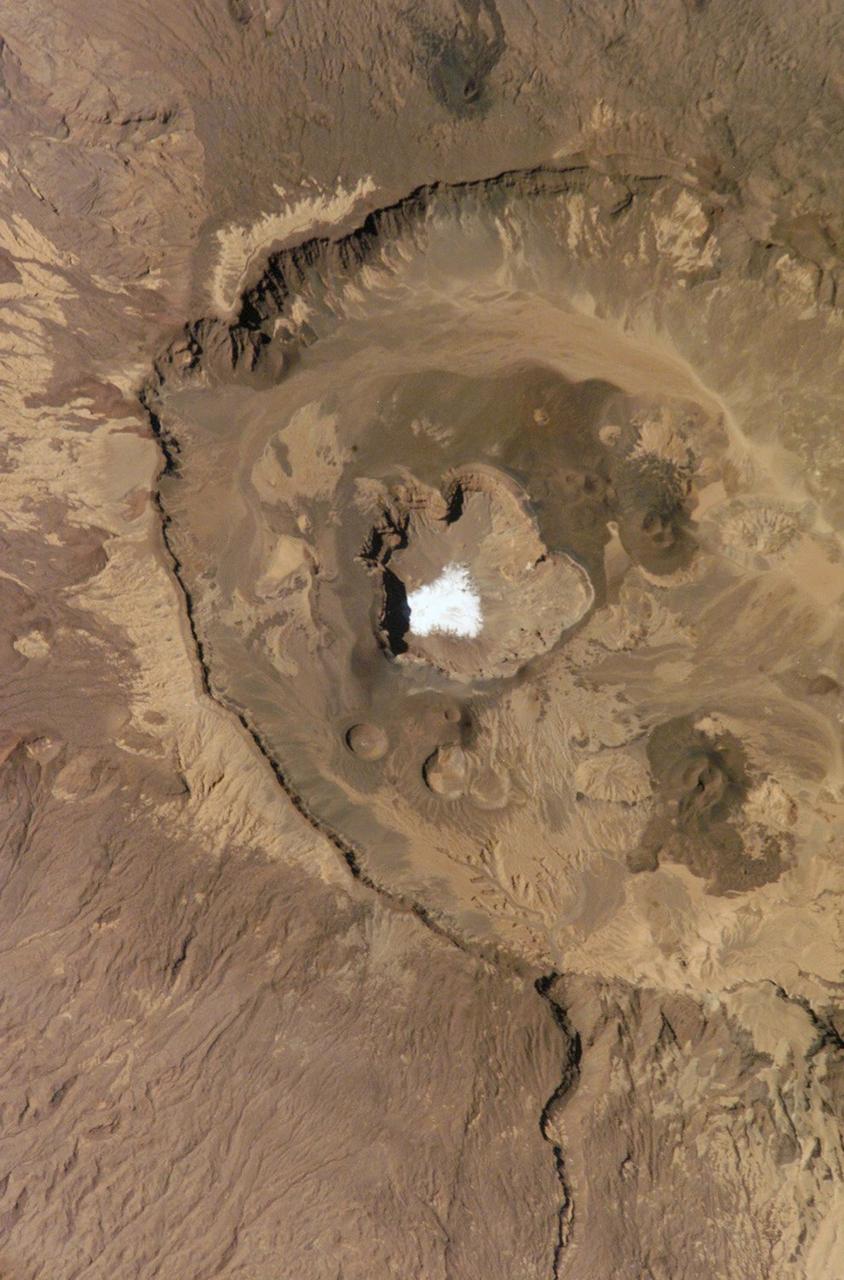
This is a view of the Emi Koussi Caldera captured by the Expedition Six Crew Observation (CEO) experiment aboard the International Space Station (ISS). Rising 2.3 km above the surrounding sandstone plains, Emi Koussi is a 6.5 km wide volcano located at the south end of the Tibesti Mountains in the central Sahara desert. The volcano is one of several in the Tibesti massif and has been used as a close analog to the fam

2002مكتبة صور وفيديو ناسا

Earth Science

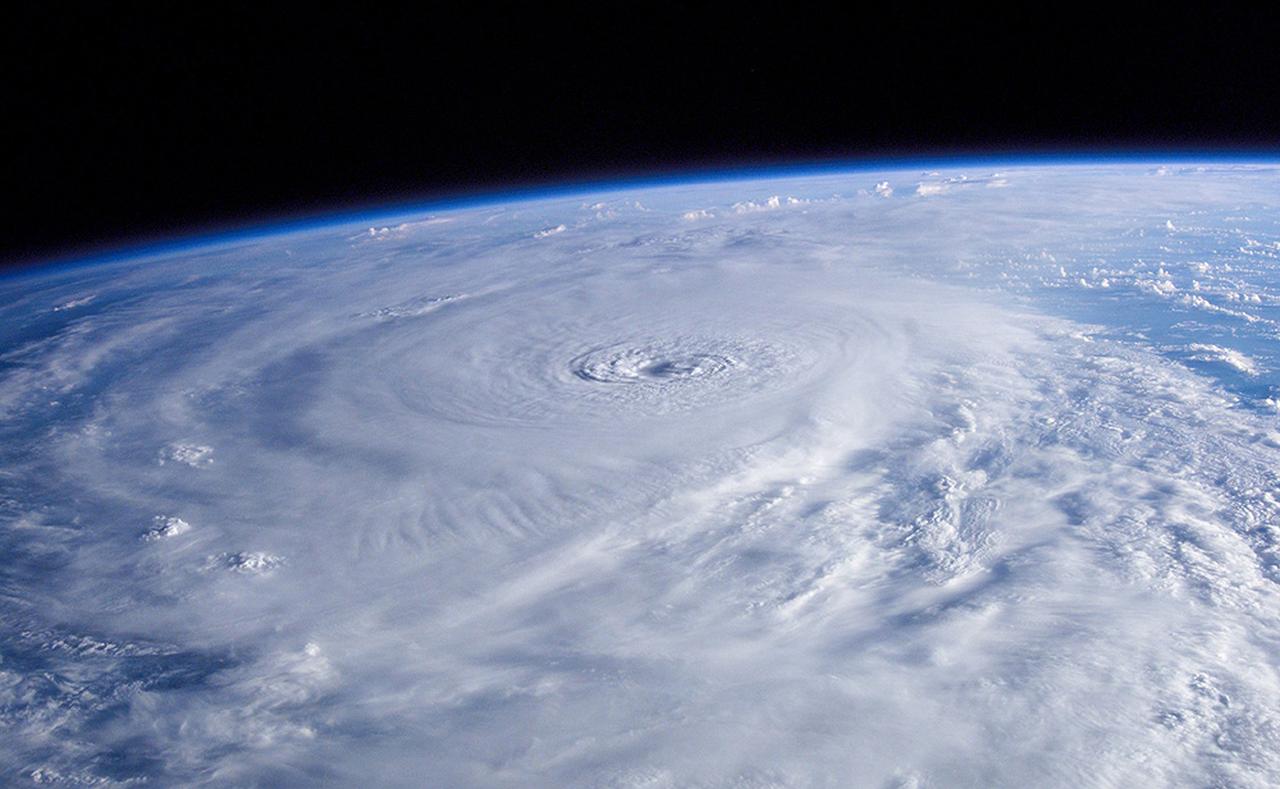
This photo of hurricane Lili, captured during the Expedition Five mission, shows the compact storm system and the structure of its estimated 15 nautical mile wide eye. After strengthening to a Category 4 storm (125 knots with the central pressure of 940 millibars), Lili weakened to a Category 2 before slamming into the central coast of Louisiana just south of Lafayette. This is one of many photos that stem form the C