العربية

NASA Image and Video Library

Records indexed under NASA Image and Video Library, with original identifiers, source links and item-level rights evidence. This is the imported selection, not the institution’s entire holdings. Verify the originating institution when the source is an aggregator.

4,093 matching records; original descriptions and titles are preserved. Search and filters →

Verify the evidence · Cite an item or clip · Rights

2001NASA Image and Video Library

International Space Station (ISS)

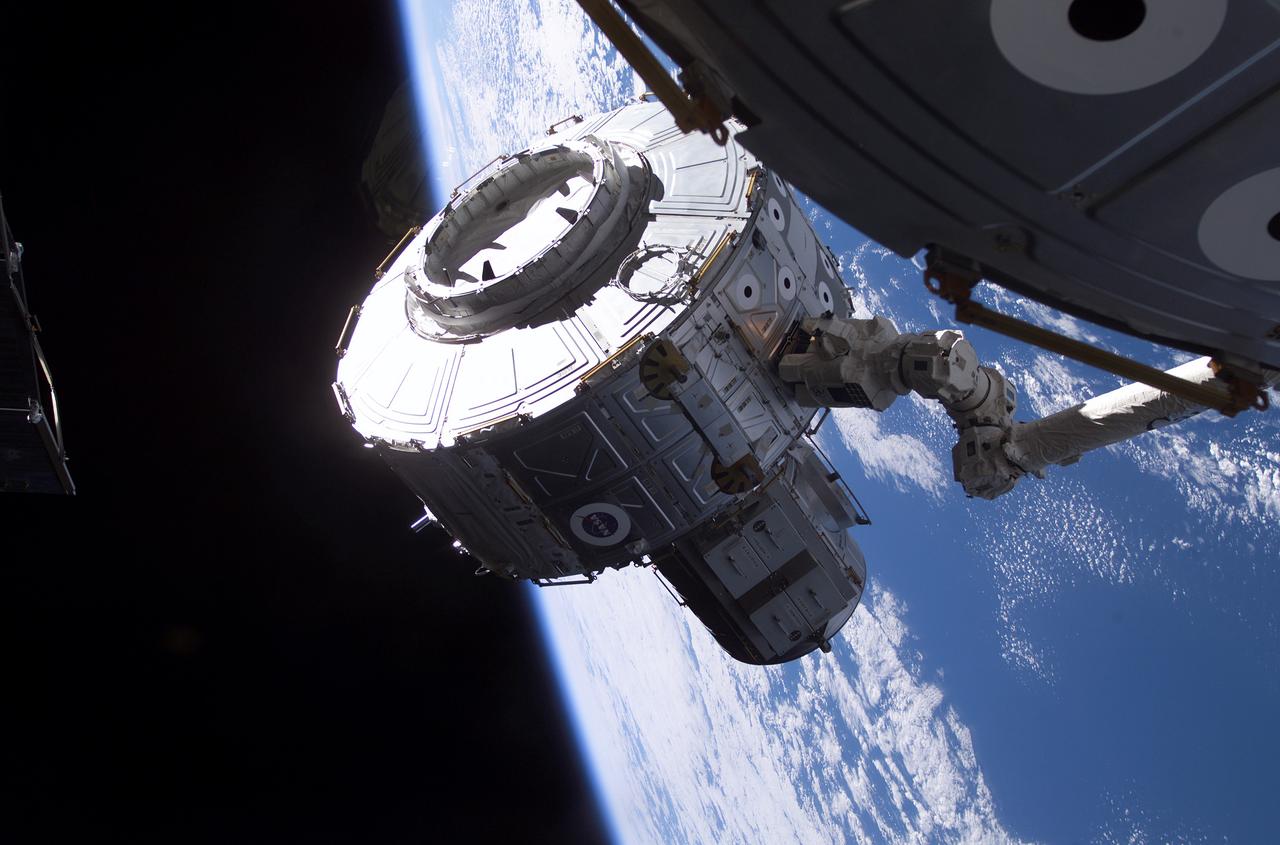
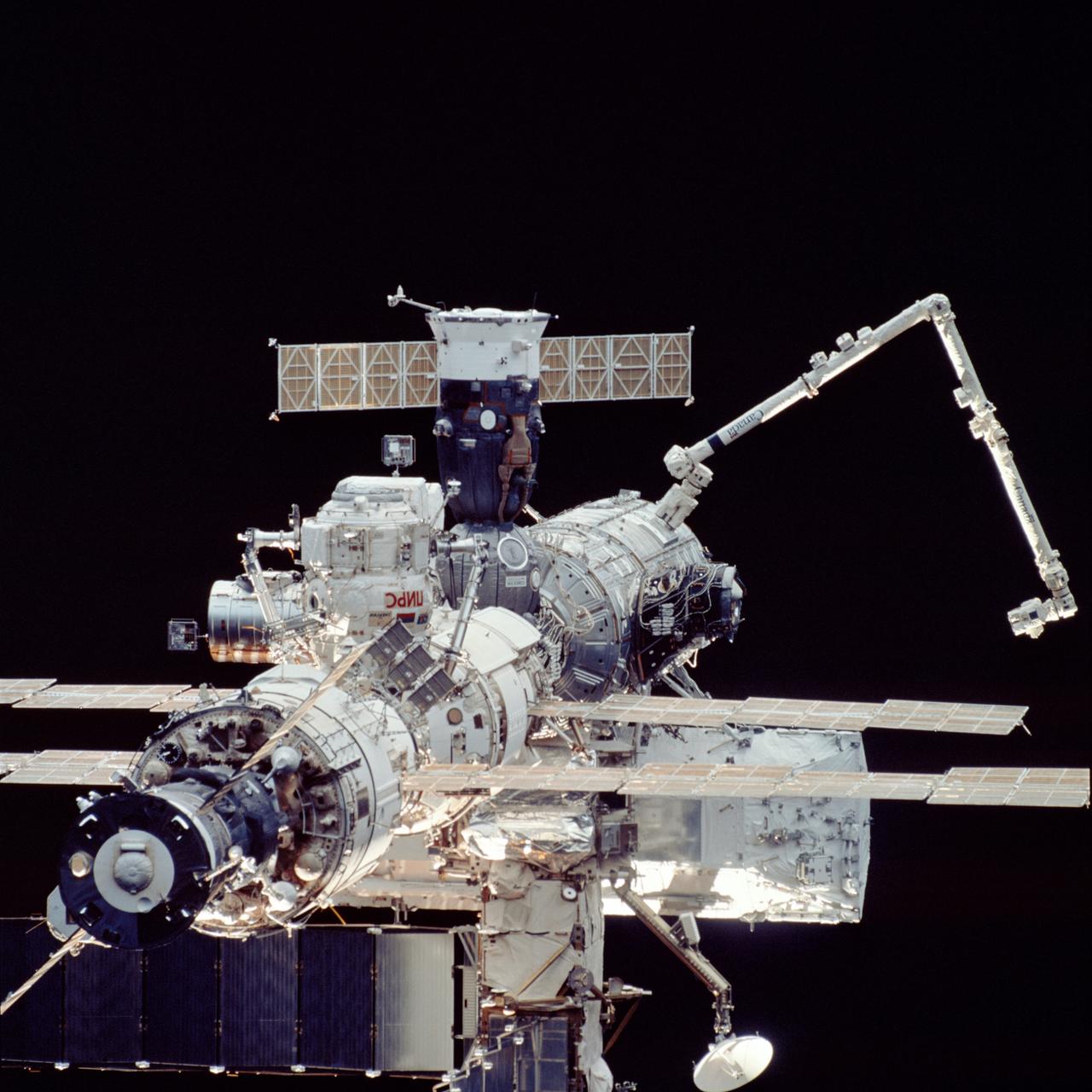
The Quest Airlock is in the process of being installed onto the starboard side of the Unity Node 1 of the International Space Station (ISS). Astronaut Susan J. Helms, Expedition Two flight engineer, used controls onboard the station to maneuver the Airlock into place with the Canadarm2, or Space Station Remote Manipulator System (SSRMS). The Joint Airlock is a pressurized flight element consisting of two cylindrical

2001NASA Image and Video Library

International Space Station (ISS)

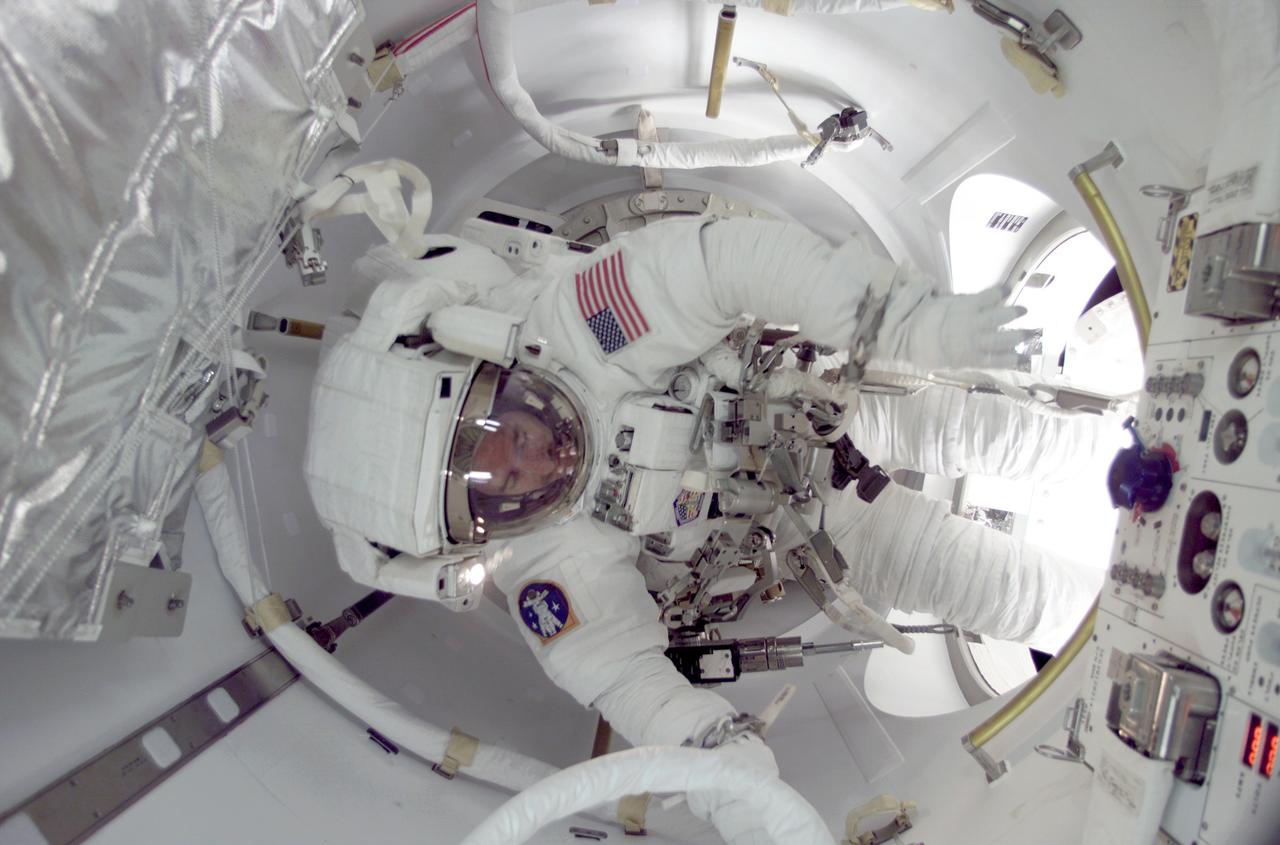
Astronaut James F. Reilly participated in the first ever space walk to egress from the International Space Station (ISS) by utilizing the newly-installed Joint Airlock Quest. The Joint Airlock is a pressurized flight element consisting of two cylindrical chambers attached end-to-end by a cornecting bulkhead and hatch. Once installed and activated, the ISS Airlock becomes the primary path for ISS space walk entry and

2000NASA Image and Video Library

International Space Station (ISS)

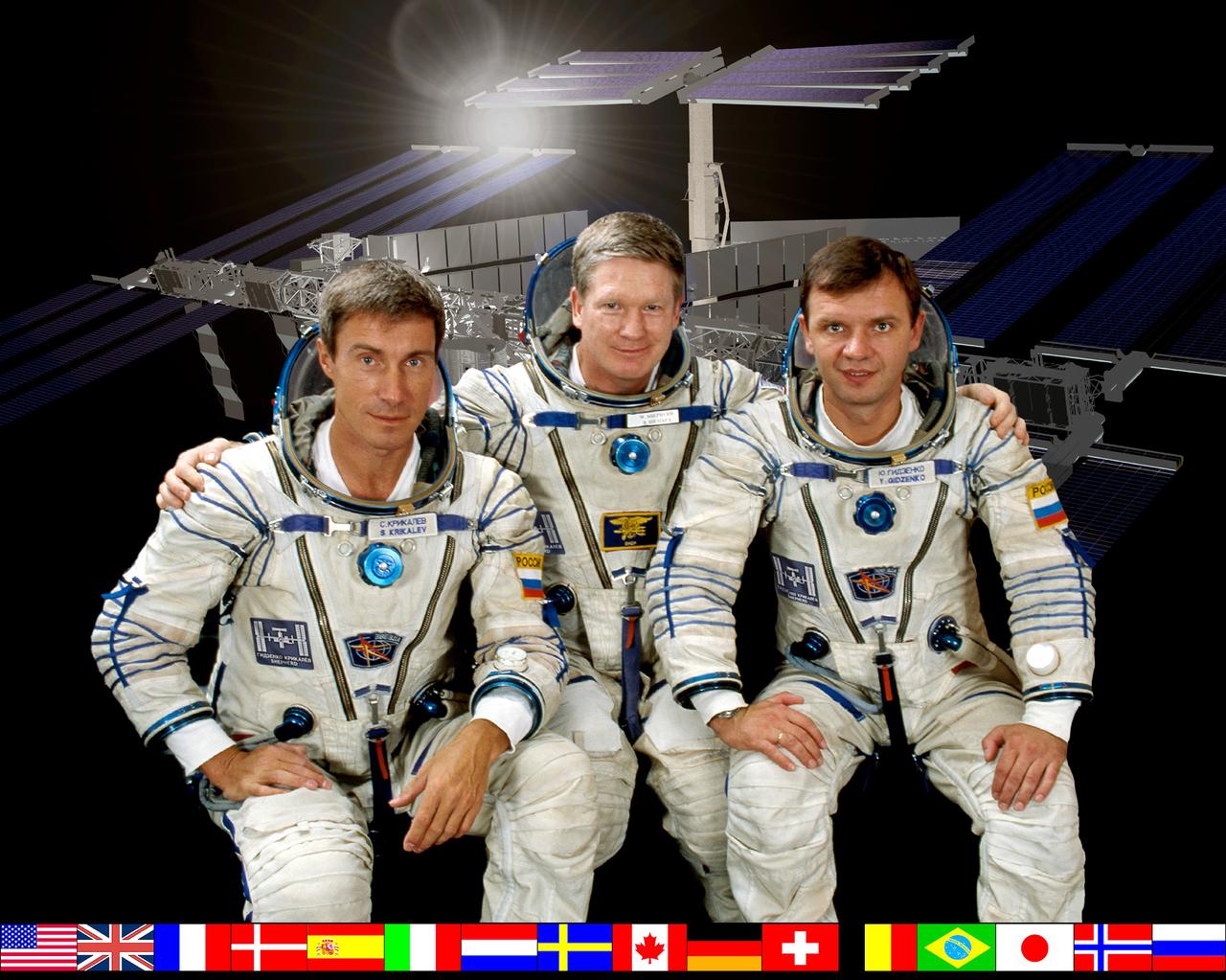
This is a crew portrait of the International Space Station (ISS) Expedition One. Left to right are flight engineer Sergei K. Krikalev, commander William M. (Bill) Shepherd, and Soyuz commander Yuri P. Gidzenko. They are wearing the Russian Sokol space suits. The Russian Soyuz rocket carrying the Expedition One crew was launched from the Baikonur Cosmodrome, Kazakhstan on October 31, 2000. The crew returned to the Ken

2001NASA Image and Video Library

International Space Station (ISS)

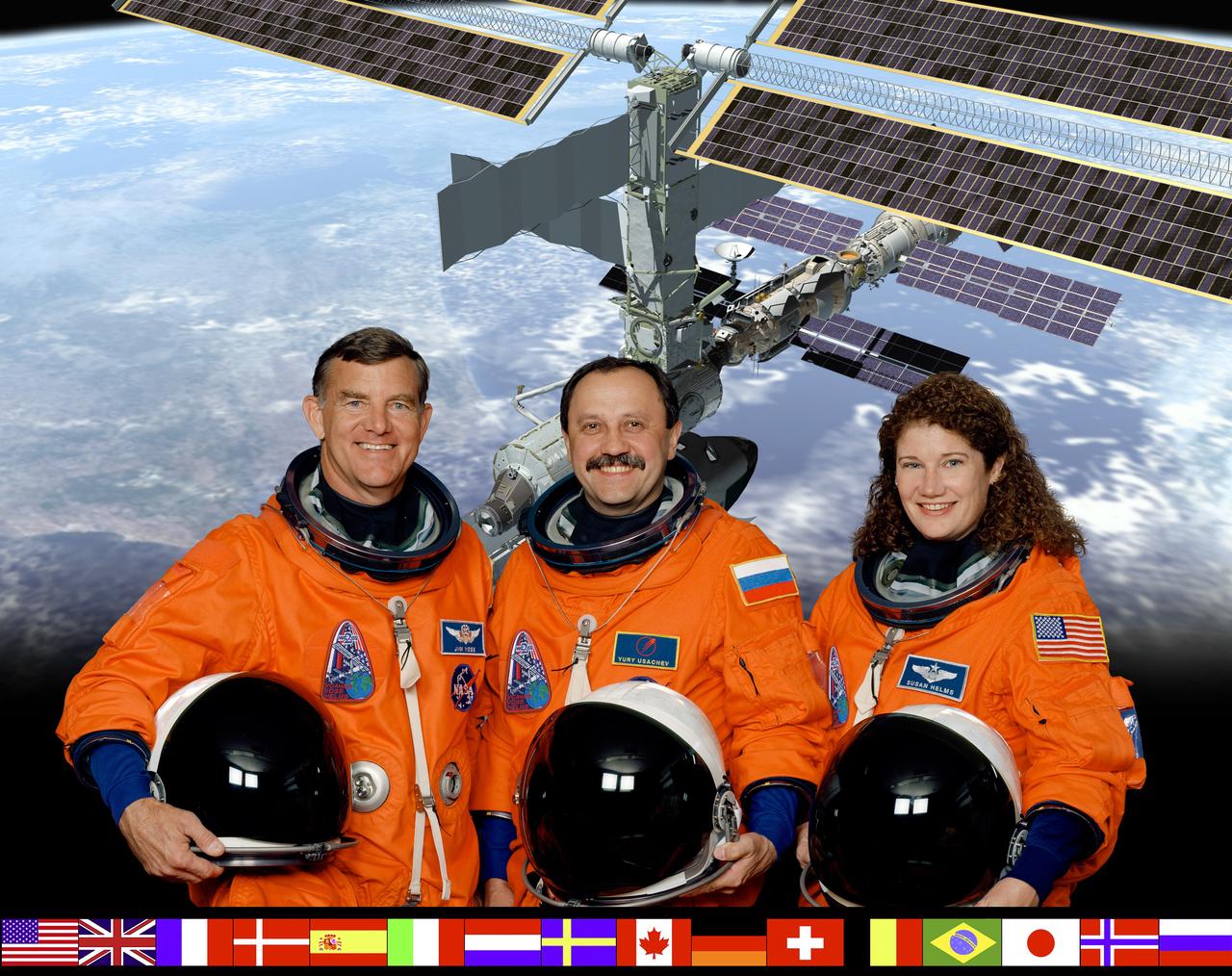
This is a crew portrait of the International Space Station (ISS) Expedition Two. Left to right are Astronaut James S. Voss, flight engineer; Cosmonaut Yury V. Usachev, commander; and Astronaut Susan J. Helms, flight engineer. The crew was launched on March 8, 2001 aboard the STS-102 mission Space Shuttle Orbiter Discovery for an extended stay on the ISS. After living and working on the ISS for the duration of 165 day

2001NASA Image and Video Library

International Space Station (ISS)

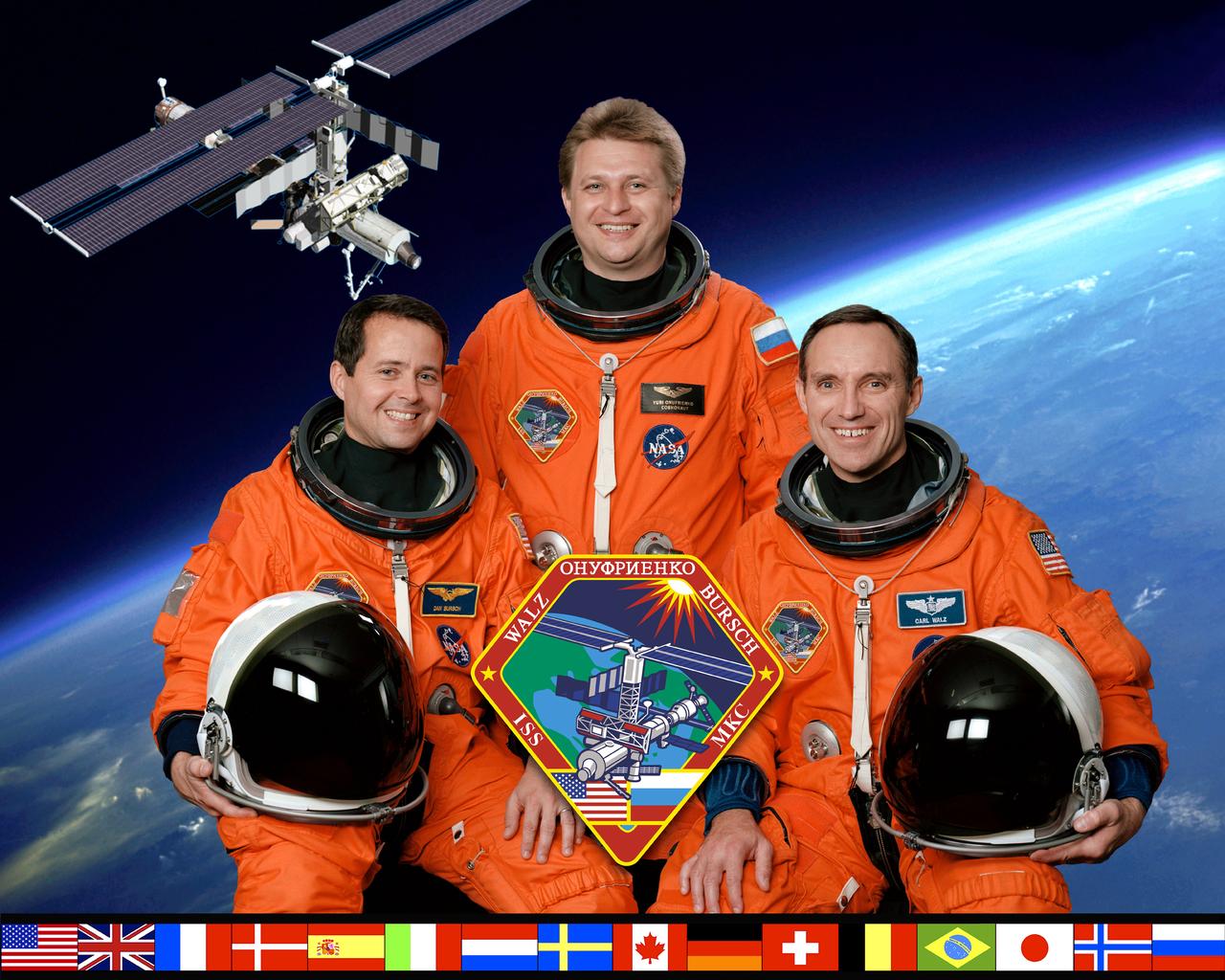
This is a crew portrait of the International Space Station (ISS) Expedition Four. Left to right are Astronaut Daniel W. Bursch, flight engineer; Cosmonaut Yuri I. Onufrienko, mission commander; and Astronaut Carl E. Walz, flight engineer. The crew was launched on December 5, 2001 aboard the STS-108 mission Space Shuttle Orbiter Endeavour, the 12th Shuttle mission to visit the ISS. The crew returned to Earth on June 1

2001NASA Image and Video Library

International Space Station (ISS)

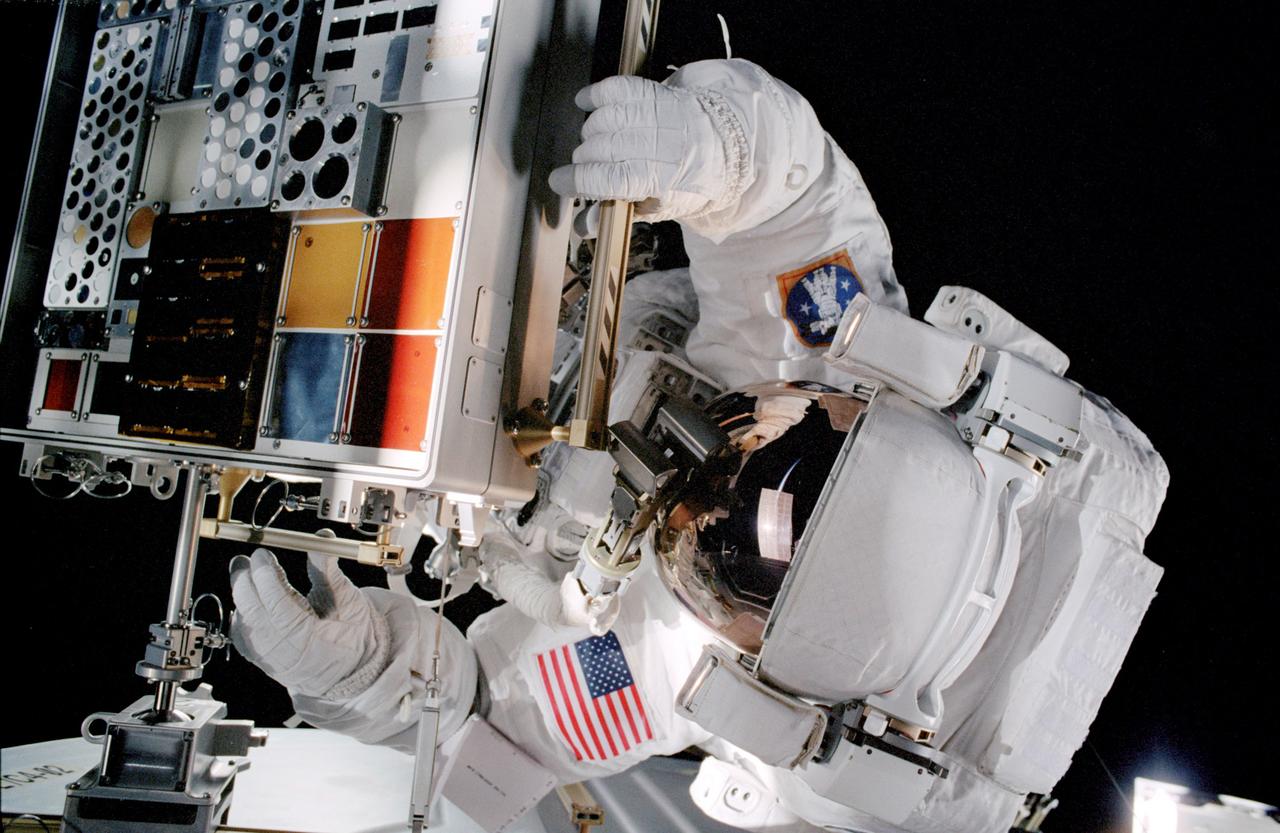
Astronaut Patrick G. Forrester works with the the Materials International Space Station Experiment (MISSE) during extravehicular activity (EVA). MISSE would expose 750 material samples for about 18 months and collect information on how different materials weather the space environment The objective of MISSE is to develop early, low-cost, non-intrusive opportunities to conduct critical space exposure tests of space ma

2001NASA Image and Video Library

International Space Station (ISS)

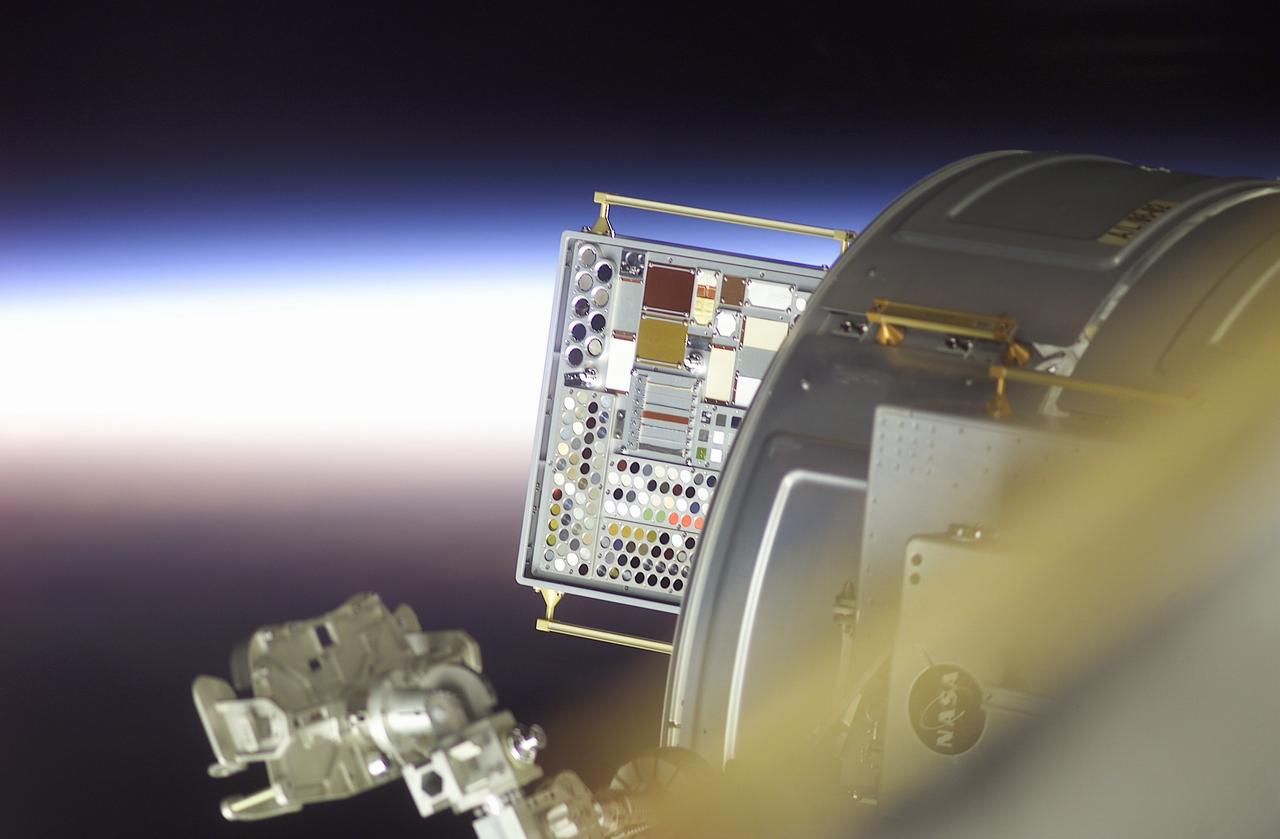
Backdropped by a sunrise, the newly installed Materials International Space Station Experiment (MISSE) is visible on this image. MISSE would expose 750 material samples for about 18 months and collect information on how different materials weather the space environment. The objective of MISSE is to develop early, low-cost, non-intrusive opportunities to conduct critical space exposure tests of space materials and com

2001NASA Image and Video Library

International Space Station (ISS)

This image of the International Space Station (ISS) was photographed by one of the crewmembers of the STS-105 mission from the Shuttle Orbiter Discovery after separating from the ISS. The STS-105 mission was the 11th ISS assembly flight and its goals were the rotation of the ISS Expedition Two crew with Expedition Three crew, and the delivery of supplies utilizing the Italian-built Multipurpose Logistic Module (MPLM)

2001NASA Image and Video Library

International Space Station (ISS)

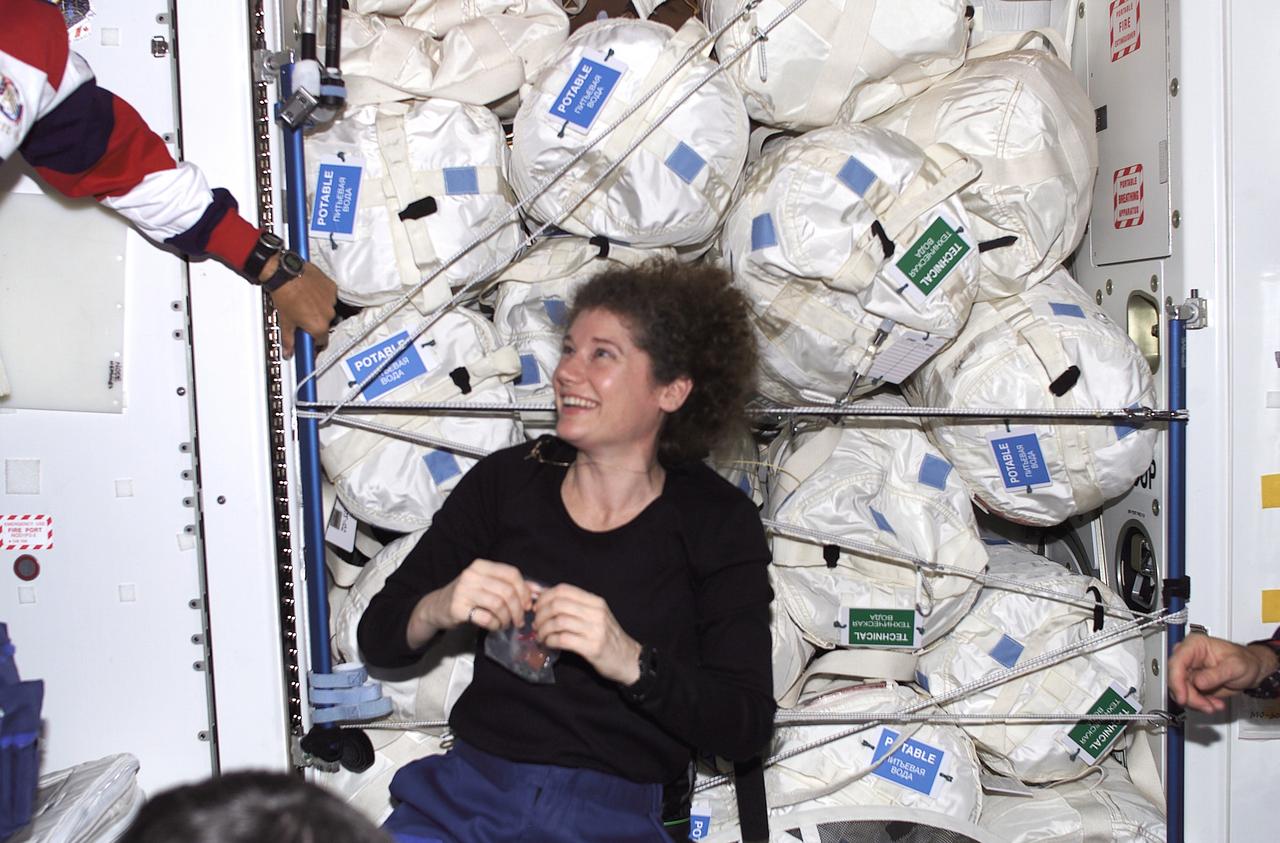
In this photograph, Astronaut Susan Helms, Expedition Two flight engineer, is positioned near a large amount of water temporarily stored in the Unity Node aboard the International Space Station (ISS). Astronaut Helms accompanied the STS-105 crew back to Earth after having spent five months with two crewmates aboard the ISS. The 11th ISS assembly flight, the Space Shuttle Orbiter Discovery STS-105 mission was launched

2001NASA Image and Video Library

International Space Station (ISS)

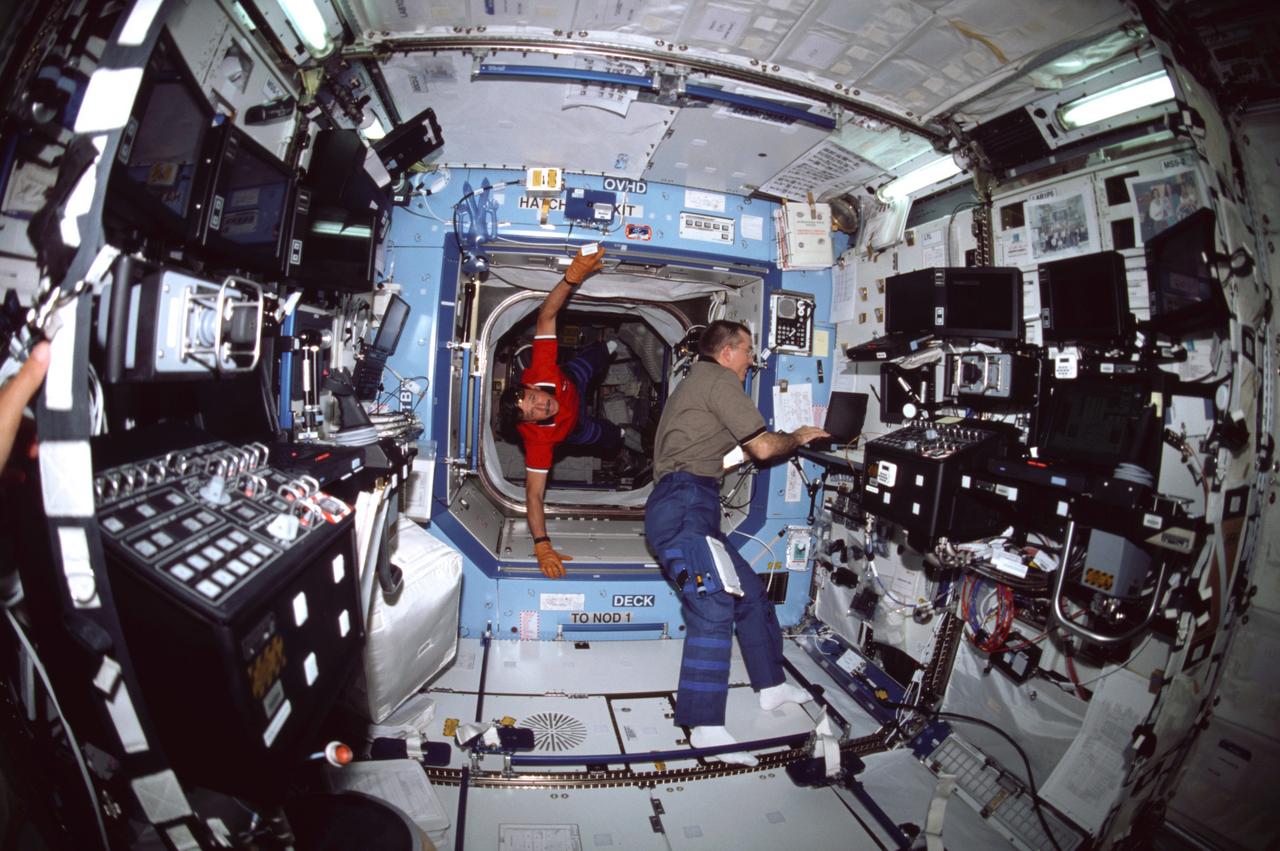
In this photograph, Astronaut James Voss, flight engineer of Expedition Two, performs a task at a work station in the International Space Station (ISS) Destiny Laboratory, or U.S. Laboratory, as Astronaut Scott Horowitz, STS-105 mission commander, floats through the hatchway leading to the Unity node. After spending five months aboard the orbital outpost, the ISS Expedition Two crew was replaced by Expedition Three a

1999NASA Image and Video Library

International Space Station (ISS)

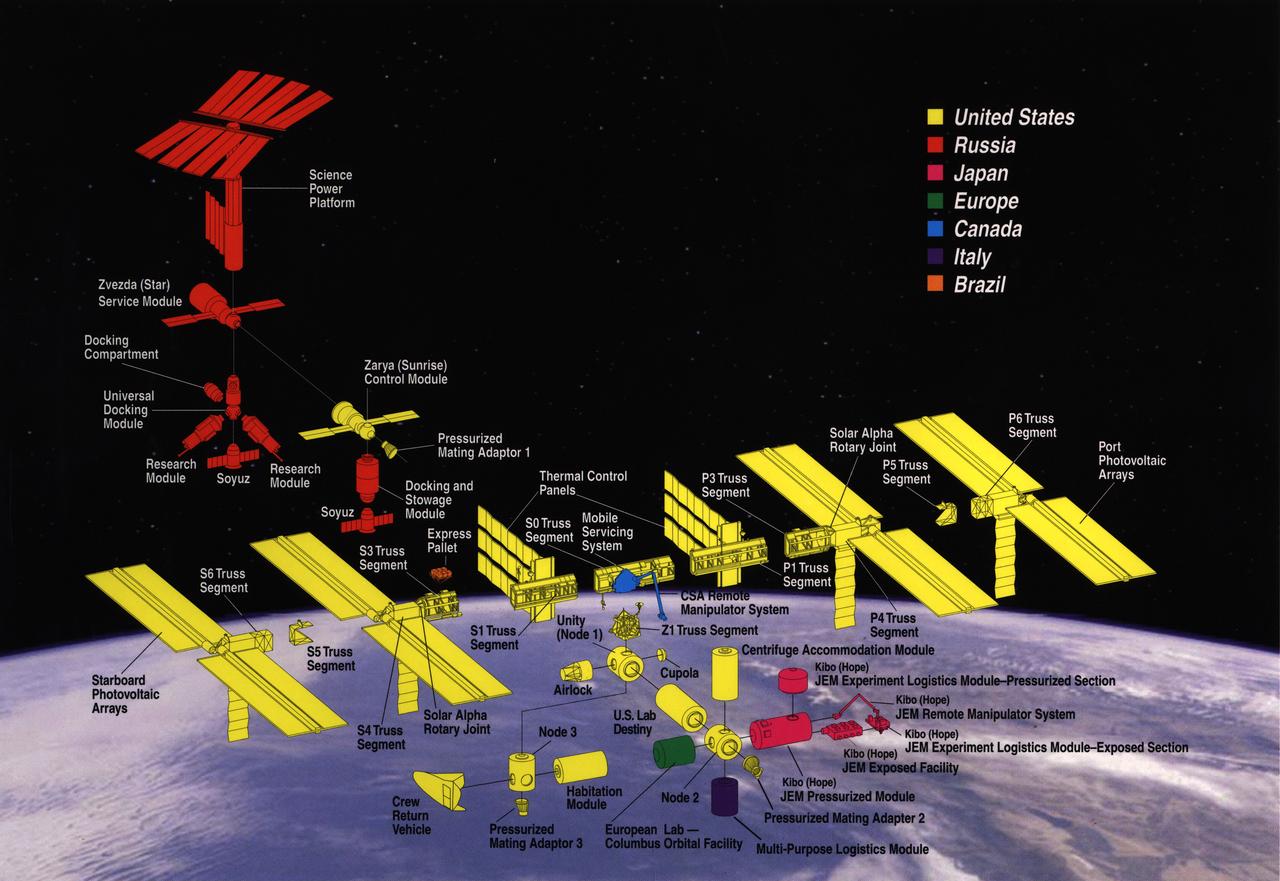
The International Space Station (ISS) is an unparalleled international scientific and technological cooperative venture that will usher in a new era of human space exploration and research and provide benefits to people on Earth. On-Orbit assembly began on November 20, 1998, with the launch of the first ISS component, Zarya, on a Russian Proton rocket. The Space Shuttle followed on December 4, 1998, carrying the U.S.

2002NASA Image and Video Library

International Space Station (ISS)

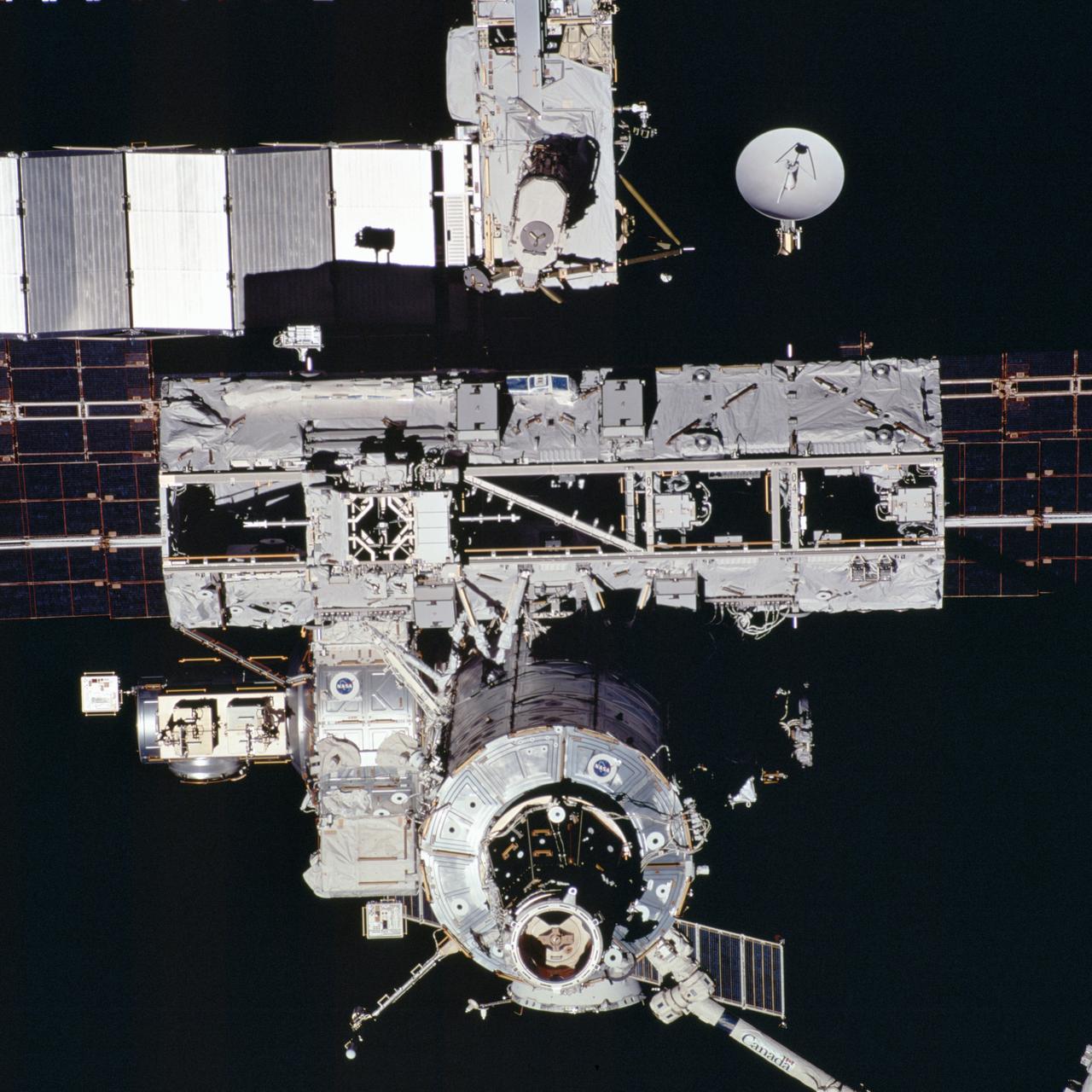
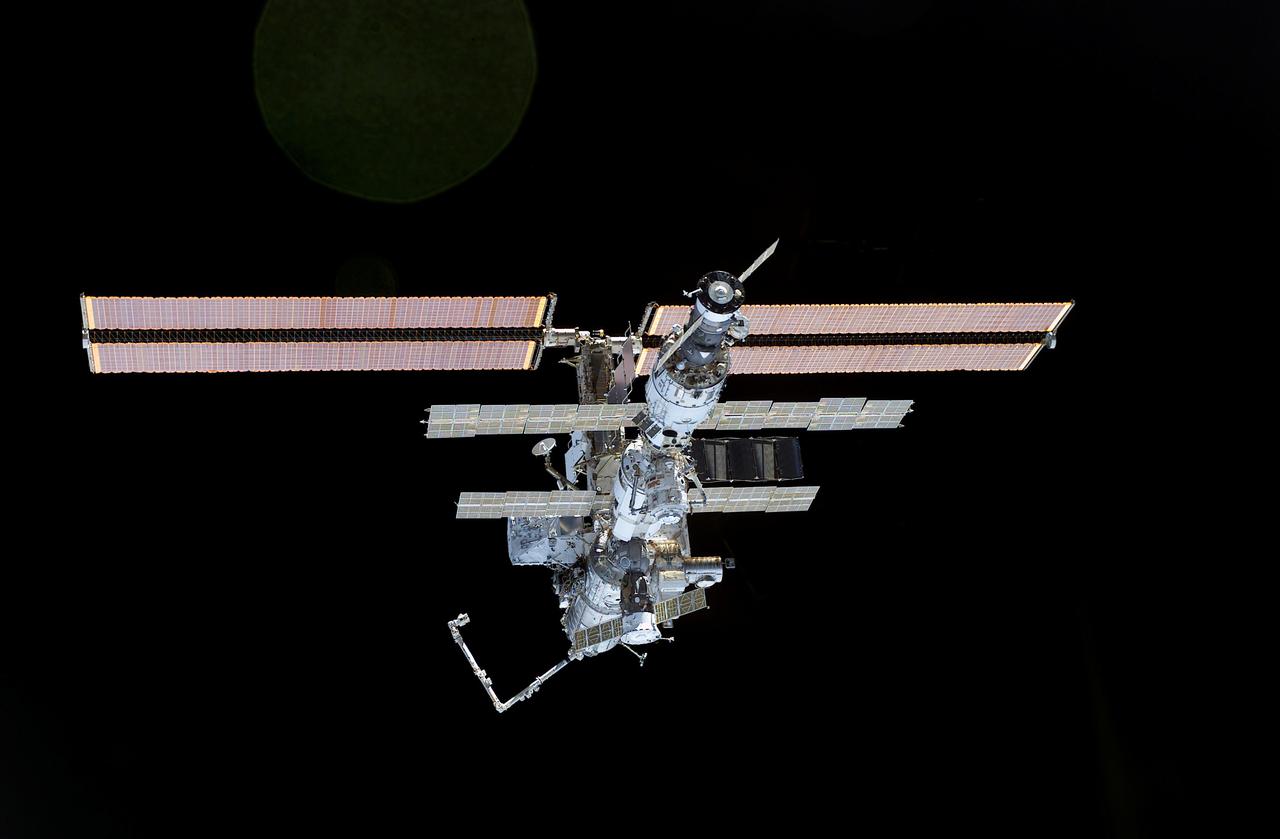
This close-up view of the International Space Station (ISS), newly equipped with its new 27,000-pound S0 (S-zero) truss, was photographed by an astronaut aboard the Space Shuttle Atlantis STS-110 during its ISS flyaround mission while pulling away from the ISS. The STS-110 mission prepared the Station for future spacewalks by installing and outfitting the 43-foot-long S0 truss and preparing the first railroad in spac

2002NASA Image and Video Library

International Space Station (ISS)

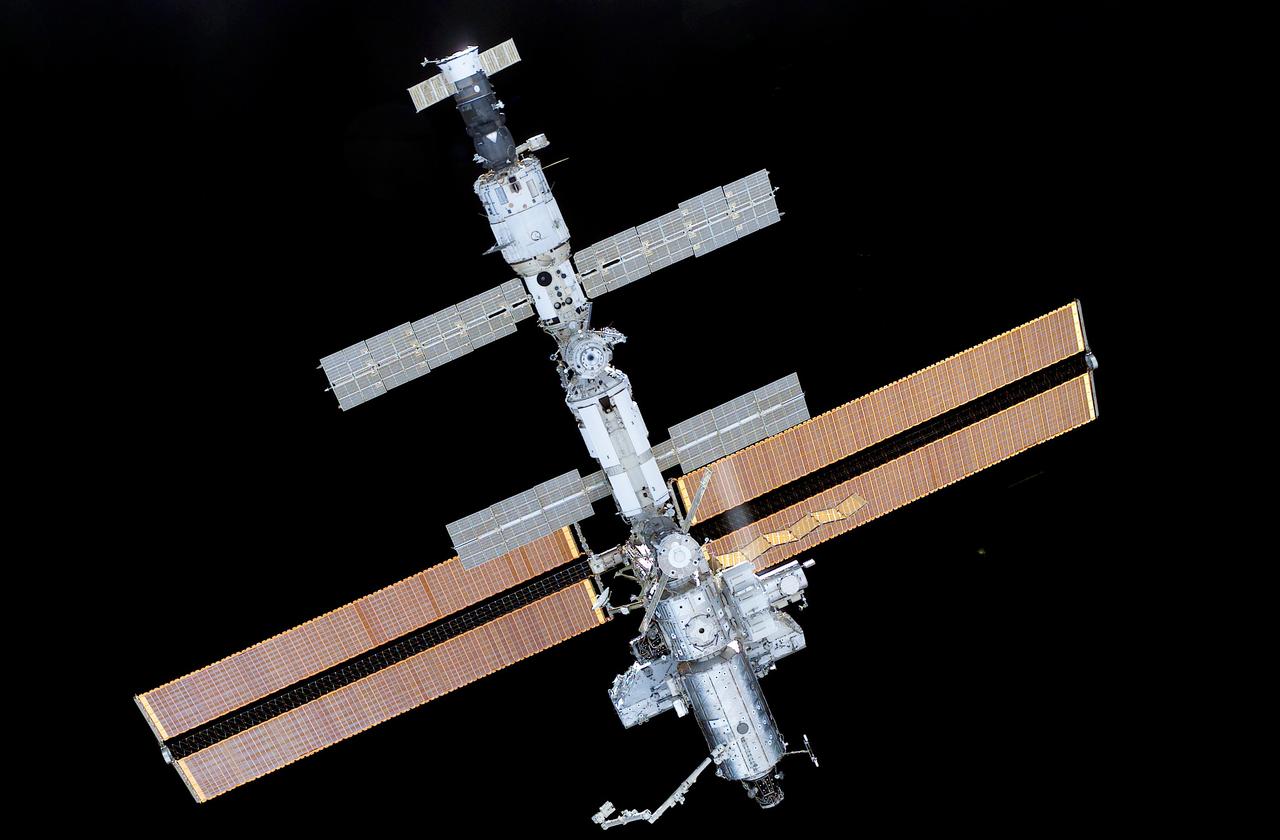
This close-up view of the International Space Station (ISS), newly equipped with its new 27,000 pound S0 (S-zero) truss, was photographed by an astronaut aboard the Space Shuttle Atlantis STS-110 during its ISS fly-around mission while pulling away from the ISS. The STS-110 mission prepared the Station for future spacewalks by installing and outfitting the 43-foot-long S0 truss and preparing the first railroad in spa

2002NASA Image and Video Library

International Space Station (ISS)

This close-up view of the International Space Station (ISS), newly equipped with its new 27,000-pound S0 (S-zero) truss, was photographed by an astronaut aboard the Space Shuttle Atlantis STS-110 upon its ISS flyaround mission while pulling away from the ISS. The STS-110 mission prepared the Station for future spacewalks by installing and outfitting the 43-foot-long S0 truss and preparing the first railroad in space,

2002NASA Image and Video Library

International Space Station (ISS)

This close-up view of the International Space Station (ISS), newly equipped with its new 27,000- pound S0 (S-zero) truss, was photographed by an astronaut aboard the Space Shuttle Atlantis STS-110 mission following its undocking from the ISS. The STS-110 mission prepared the Station for future spacewalks by installing and outfitting the 43-foot-long S0 truss and preparing the first railroad in space, the Mobile Trans

2002NASA Image and Video Library

International Space Station (ISS)

This close-up view of the International Space Station (ISS), newly equipped with its new 27,000-pound S0 (S-zero) truss, was photographed by an astronaut aboard the Space Shuttle Atlantis STS-110 mission following its undocking from the ISS. The STS-110 mission prepared the Station for future spacewalks by installing and outfitting the 43-foot-long S0 truss and preparing the first railroad in space, the Mobile Transp

2001NASA Image and Video Library

International Space Station (ISS)

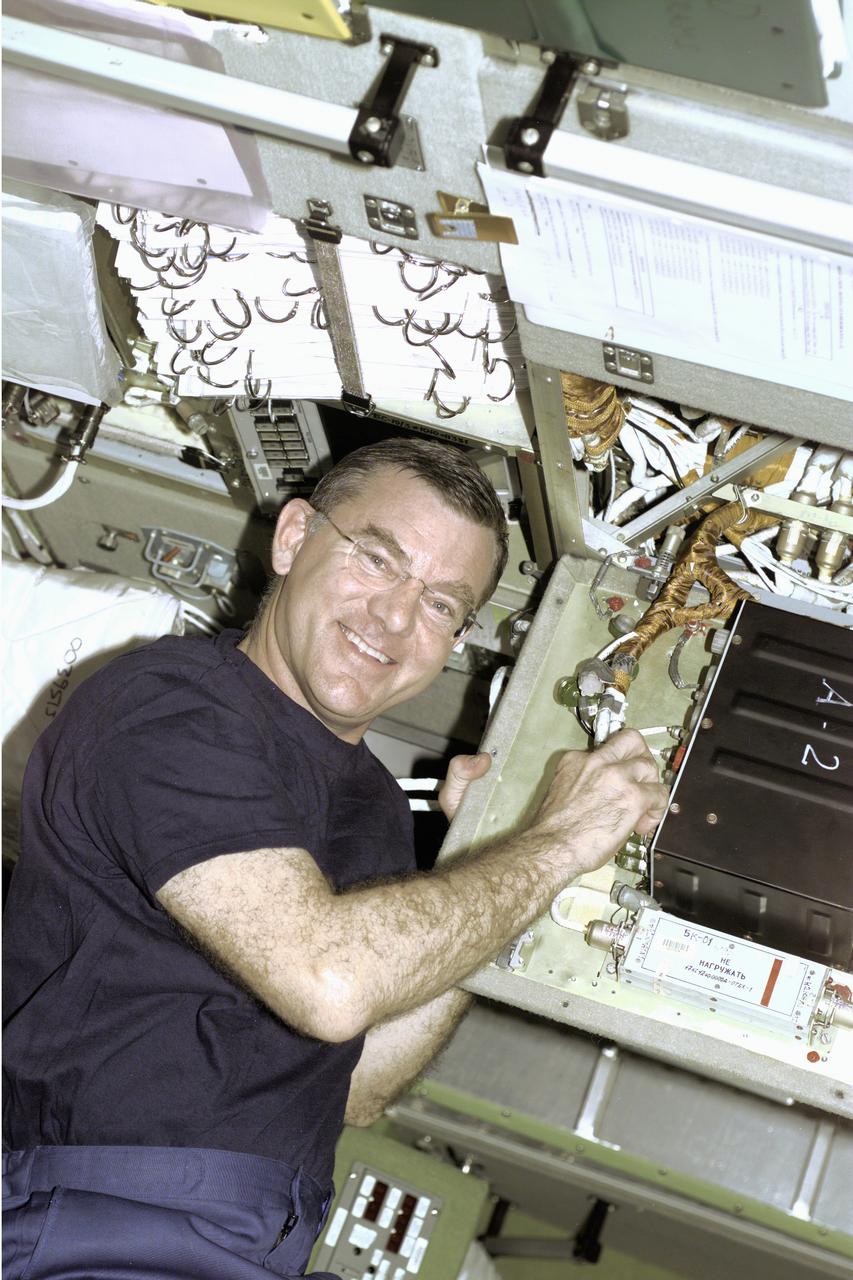
Astronaut James S. Voss, Expedition Two flight engineer, performs an electronics task in the Russian Zvezda Service Module on the International Space Station (ISS). Zvezda is linked to the Russian-built Functional Cargo Block (FGB), or Zarya, the first component of the ISS. Zarya was launched on a Russian Proton rocket prior to the launch of Unity, the first U.S.-built component to the ISS. Zvezda (Russian word for s

2002NASA Image and Video Library

International Space Station (ISS)

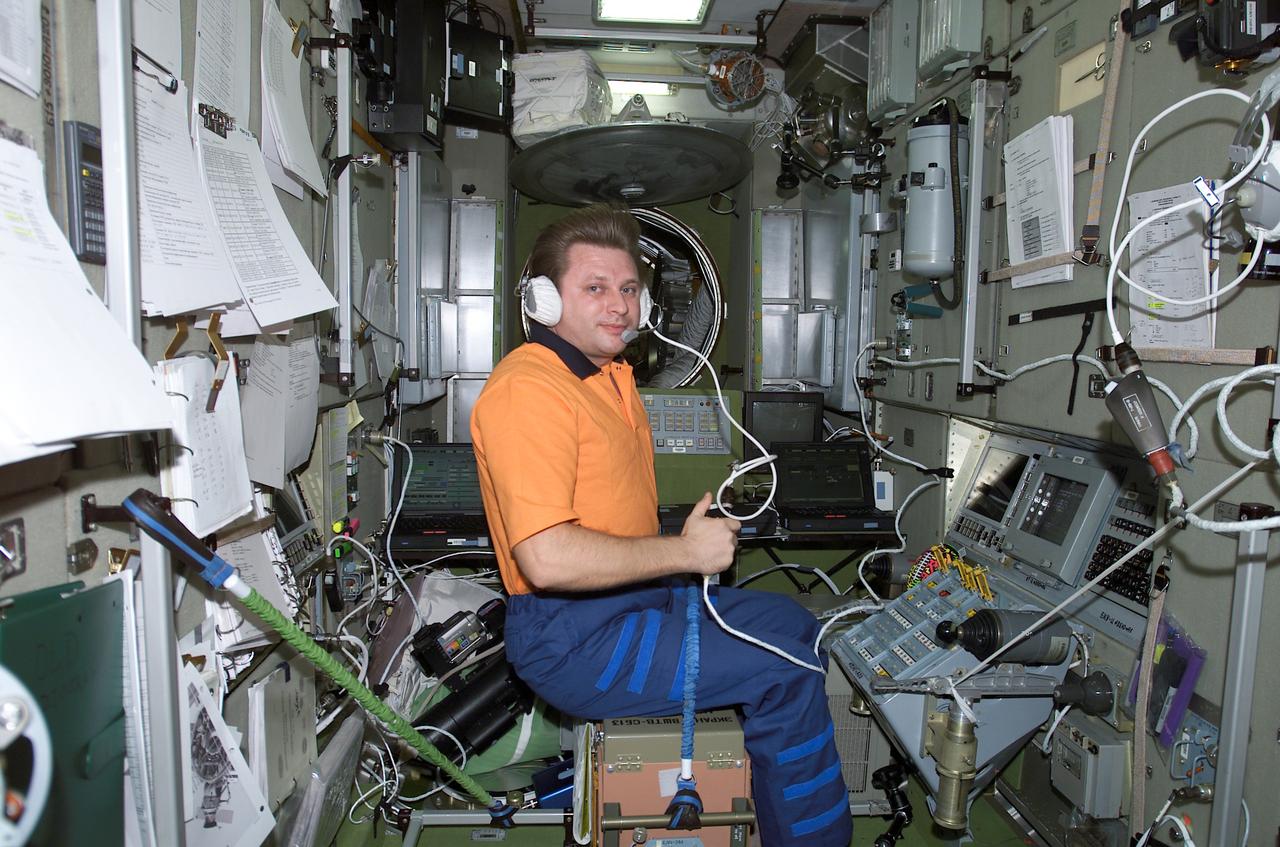
Cosmonaut Yury I. Onufrienko, Expedition Four mission commander, uses a communication system in the Russian Zvezda Service Module on the International Space Station (ISS). The Zvezda is linked to the Russian-built Functional Cargo Block (FGB) or Zarya, the first component of the ISS. Zarya was launched on a Russian Proton rocket prior to the launch of Unity. The third component of the ISS, Zvezda (Russian word for st

2001NASA Image and Video Library

International Space Station (ISS)

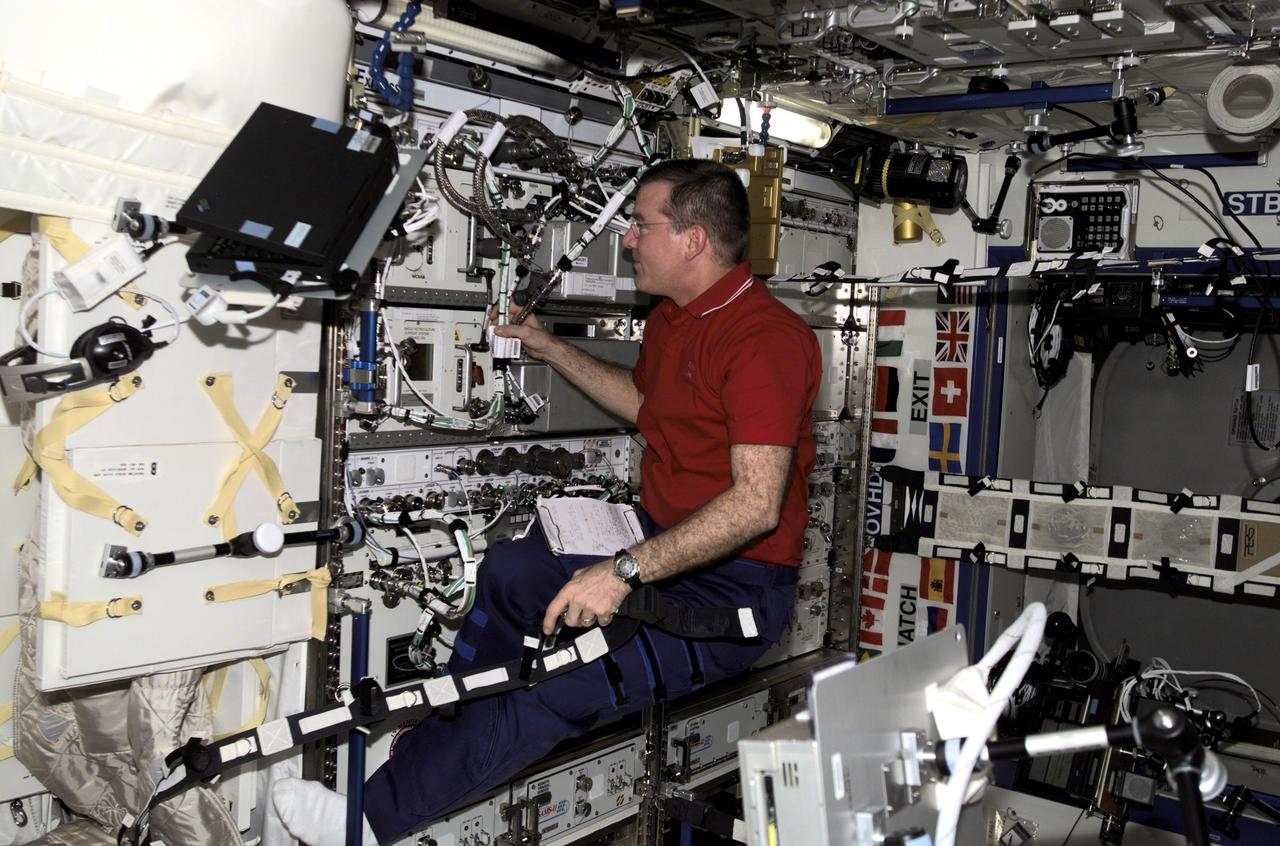
Astronaut James S. Voss, Expedition Two flight engineer, works with a series of cables on the EXPRESS Rack in the United State's Destiny laboratory on the International Space Station (ISS). The EXPRESS Rack is a standardized payload rack system that transports, stores, and supports experiments aboard the ISS. EXPRESS stands for EXpedite the PRocessing of Experiments to the Space Station, reflecting the fact that this

2001NASA Image and Video Library

International Space Station (ISS)

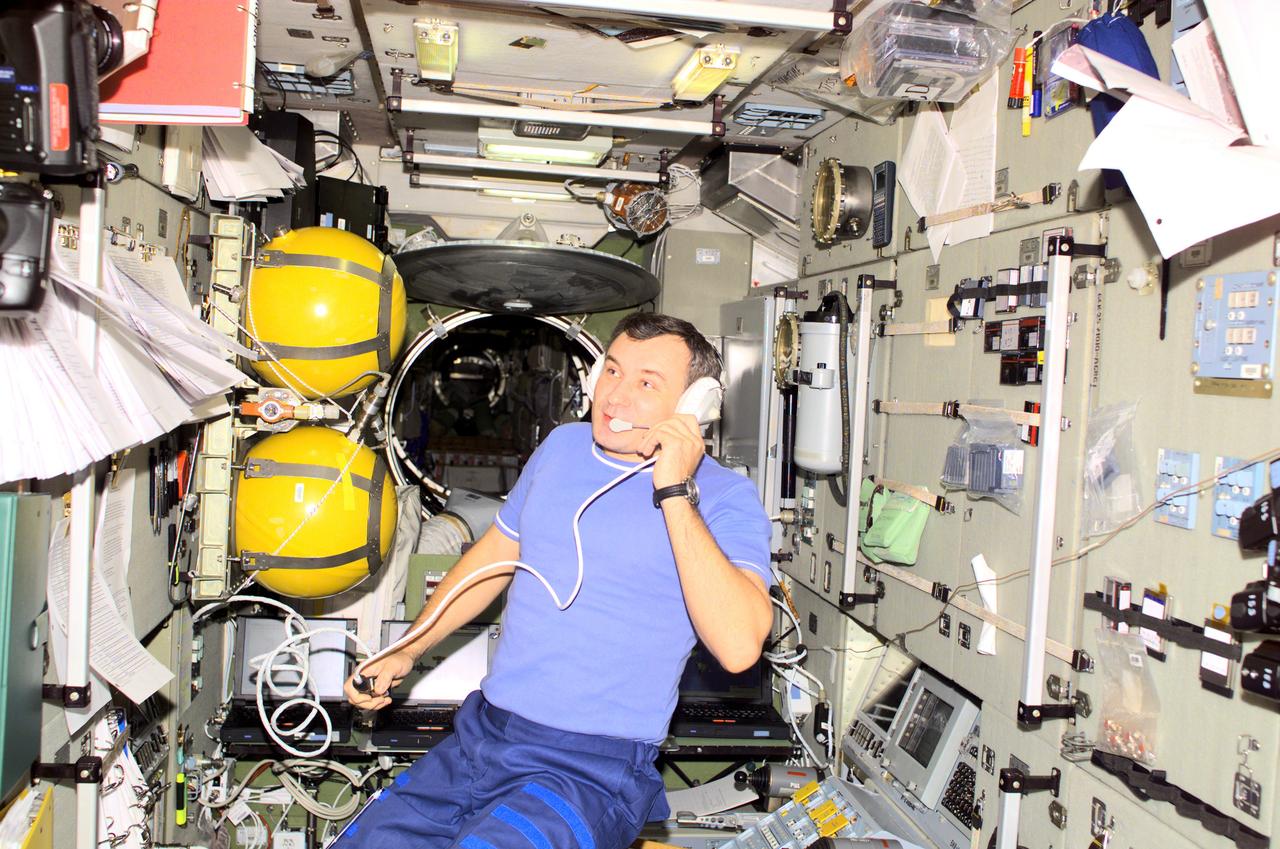
Aboard the International Space Station (ISS), Cosmonaut and Expedition Three flight engineer Vladimir N. Dezhurov, representing Rosaviakosmos, talks with flight controllers from the Zvezda Service Module. Russian-built Zvezda is linked to the Functional Cargo Block (FGB), or Zarya, the first component of the ISS. Zarya was launched on a Russian Proton rocket prior to the launch of Unity. The third component of the IS

2001NASA Image and Video Library

International Space Station (ISS)

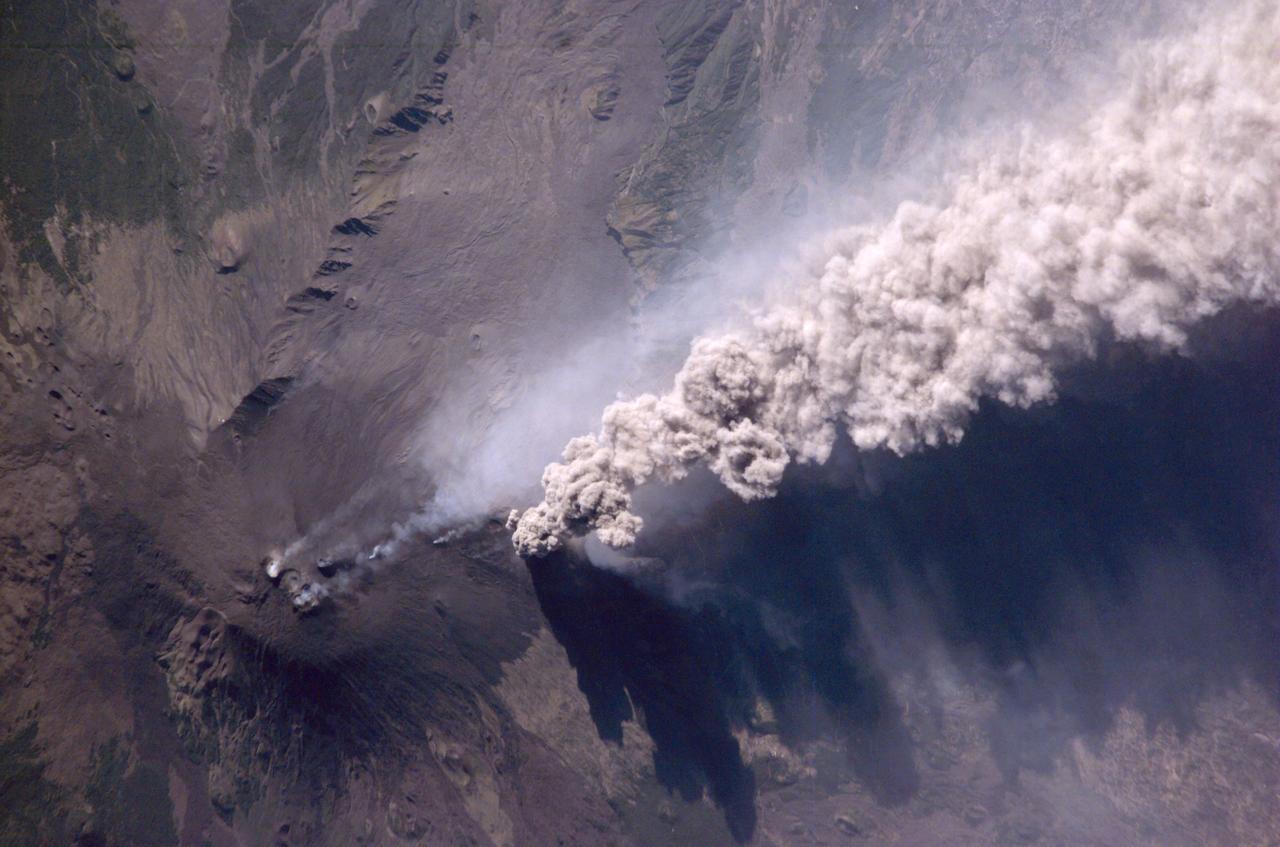
An Expedition Two crewmember aboard the International Space Station (ISS) captured this overhead look at the smoke and ash regurgitated from the erupting volcano Mt. Etna on the island of Sicily, Italy. At an elevation of 10,990 feet (3,350 m), the summit of the Mt. Etna volcano, one of the most active and most studied volcanoes in the world, has been active for a half-million years and has erupted hundreds of times