العربية

NASA Image and Video Library

Records indexed under NASA Image and Video Library, with original identifiers, source links and item-level rights evidence. This is the imported selection, not the institution’s entire holdings. Verify the originating institution when the source is an aggregator.

4,093 matching records; original descriptions and titles are preserved. Search and filters →

Verify the evidence · Cite an item or clip · Rights

2024NASA Image and Video Library

What's Up: March 2024 Skywatching Tips from NASA

What are some skywatching highlights in March 2024? Jupiter plows through the Pleiades on March 14, a chance to spot Mercury at month's end along with a subtle lunar eclipse, and a comet worth keeping an eye on! Additional information about topics covered in this episode of What's Up, along with still images from the video, and the video transcript, are available at https://science.nasa.gov/skywatching/whats-up.
2024NASA Image and Video Library

JPL-20240311-CLIPPRf-0001-NASA Unveils Design for Message Heading to Jupiters Moon Europa

When it launches in October, the agency’s Europa Clipper spacecraft will carry a richly layered dispatch that includes more than 2.6 million names submitted by the public. Following in NASA’s storied tradition of sending inspirational messages into space, the agency has special plans for Europa Clipper, which later this year will launch toward Jupiter’s moon Europa. The moon shows strong evidence of an ocean under it

2024NASA Image and Video Library

How Solar Storms This Year Will Help Mars Astronauts in the Future (Mars Report - April 2024)

The Sun’s activity will be at its peak in 2024, providing a rare opportunity to study how solar storms and radiation could affect future astronauts and robots on Mars. This peak period – called solar maximum – will be observed by NASA’s MAVEN (Mars Atmospheric and Volatiles EvolutioN) orbiter and Curiosity rover. Learn how both spacecraft have a big year ahead in this video featuring MAVEN Principal Investigator Shan

2024NASA Image and Video Library

Mars Helicopter Team’s Final Gathering for Ingenuity Data Downlink

B-roll for media and public use. On April 16, 2024, NASA’s Ingenuity team gathered in mission control at the agency’s Jet Propulsion Laboratory to celebrate the Mars helicopter’s accomplishments and complete one final “downlink poll,” a group opportunity to monitor a transmission from the helicopter. Ingenuity became the first vehicle to achieve powered, controlled flight on another planet when it took to the Martian

2023NASA Image and Video Library

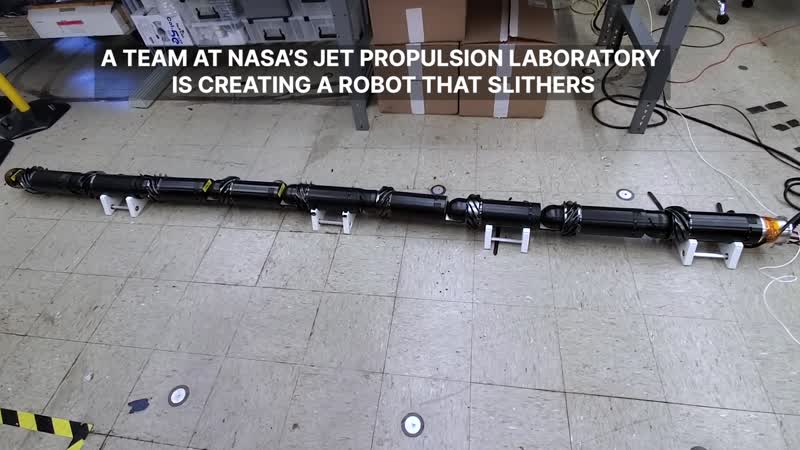
Testing Out JPL’s New Snake Robot

A team at NASA’s Jet Propulsion Laboratory is creating and testing a snake-like robot called EELS (Exobiology Extant Life Surveyor). Inspired by a desire to descend vents on Saturn’s icy moon Enceladus and enter the subsurface ocean, this versatile robot is being developed to autonomously map, traverse, and explore previously inaccessible destinations on Earth, the Moon, and other worlds in our solar system. The robo

2024NASA Image and Video Library

What's Up: May 2024 Skywatching Tips from NASA

What are some skywatching highlights in May 2024? Mars and Saturn tussle with the Moon, Mercury makes a brief a.m. appearance, East Coasters can see red giant star Antares emerge from behind the Moon, and the eta Aquariid meteors peak on May 6th. Additional information about topics covered in this episode of What's Up, along with still images from the video, and the video transcript, are available at https://science.

2024NASA Image and Video Library

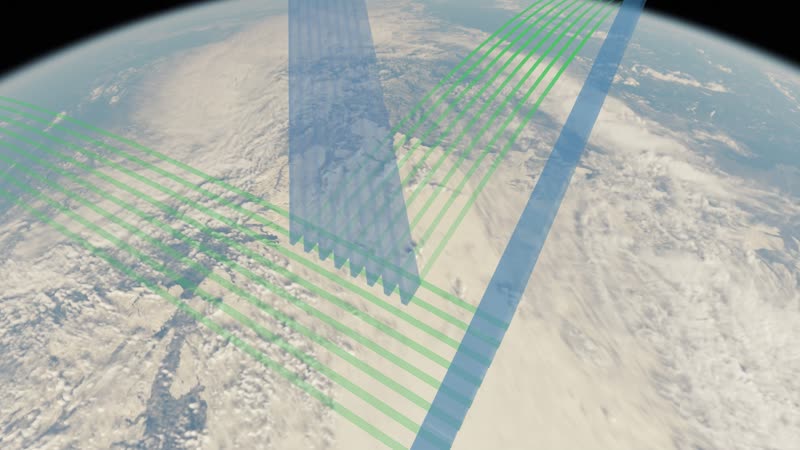
NASA’s Tiny PREFIRE Satellites to Study Earth’s Polar Regions

B-roll images, animations and sound bites for media and public use. NASA’s Polar Radiant Energy in the Far-InfraRed Experiment (PREFIRE) will measure the amount of heat the planet emits into space from Earth’s polar regions. This information is key to understanding the balance of energy coming into and out of Earth and how that affects the planet’s climate. Two shoebox-size satellites will orbit the planet and take t

2024NASA Image and Video Library

Perseverance Explores Ancient River Channel (Mars Report)

As NASA’s Perseverance rover prepares to ascend to the rim of Jezero Crater, its team is investigating a rock unlike any that they’ve seen so far on Mars. Deputy project scientist Katie Stack Morgan explains why this rock, found in an ancient channel that funneled water into the crater, could be among the oldest that Perseverance has investigated – or the youngest. Plus, learn how the rover is equipped to determine w

2024NASA Image and Video Library

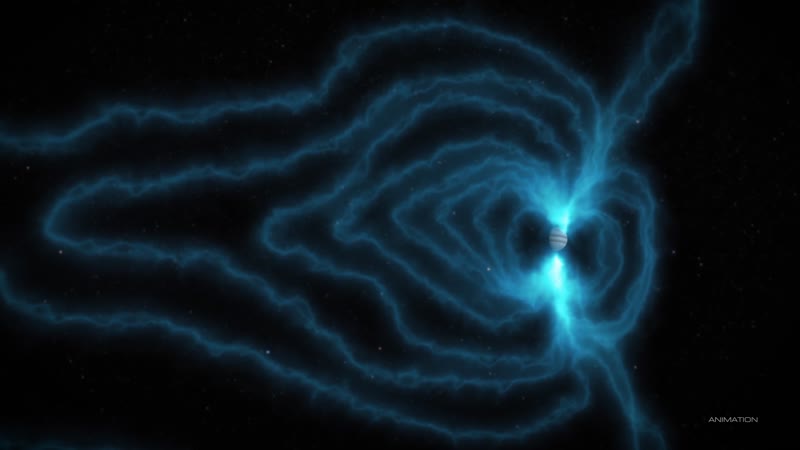
Europa Clipper: Exploring Jupiter’s Ocean Moon (Mission Overview)

NASA’s Europa Clipper is the first mission dedicated to studying Jupiter’s icy moon Europa, one of the most promising places in our solar system to find an environment suitable for life outside of Earth. Evidence suggests that beneath Europa’s frozen surface is a global ocean of water, and scientists want to find out if there’s also the right chemistry and energy to sustain life. Europa Clipper is equipped with nine

2024NASA Image and Video Library

Earth to Mars: How NASA Keeps Curiosity Connected (Mars Report)

NASA’s Curiosity rover is exploring a scientifically exciting area on Mars, but communicating with the mission team on Earth has recently been a challenge due to both the current season and the surrounding terrain. In this Mars Report, Curiosity engineer Reidar Larsen takes you inside the uplink room where the team talks to the rover. See why Curiosity’s location in Gediz Vallis channel makes it difficult to send dir

2024NASA Image and Video Library

NASA Detects Possible Volcanic Moon 635 Light-Years Away

The existence of exomoons (moons around planets outside our solar system) has long been theorized, but their detection has remained elusive due to their small size and faintness. A new study, however, suggests that a potential exomoon may be orbiting the WASP-49 b, a gas giant planet around another star (also known as an exoplanet). WASP-49 b is located 635 light-years from Earth. Its possible moon is believed to be

2024NASA Image and Video Library

NASA Tests Swimming Robots for Exploring Oceans on Icy Moons

A futuristic NASA mission concept envisions a swarm of dozens of self-propelled, cellphone-size robots exploring the oceans beneath the icy shells of moons like Jupiter’s Europa and Saturn’s Enceladus, looking for chemical and temperature signals that could point to life. A series of prototypes for the concept, called SWIM (Sensing With Independent Micro-swimmers), braved the waters of a competition swim pool at Calt

2024NASA Image and Video Library

What's Up: January 2025 Skywatching Tips from NASA

What are some skywatching highlights in January 2025? This month, four bright planets greet you in the early evening. Venus and Saturn cozy up on the 17th and 18th, while Mars is at its brightest in the past two years. The Moon occults Mars for those in the U.S. and Eastern Canada on Jan. 13. Plus, the Quadrantid meteors peak on the morning of Jan. 3 before dawn. Additional information about topics covered in this ep

2025NASA Image and Video Library

February 2025 Skywatching Tips from NASA

What are some skywatching highlights in February 2025? Venus blazes at its brightest in the early evening, despite being only a slim crescent through the telescope eyepiece. Mars and Jupiter to rule the night sky after Venus sets, amid the menagerie of bright winter stars in Orion, Taurus, and Gemini. And enhance your astronomy IQ by knowing the difference between a conjunction and an appulse. Additional information

2025NASA Image and Video Library

What's Up: March 2025 Skywatching Tips from NASA

What are some skywatching highlights in March 2025? March has great opportunities to spy fast-moving Mercury, stay up late to enjoy a total eclipse of the Moon, and learn about the dark side of the Moon! Additional information about topics covered in this episode of What's Up, along with still images from the video, and the video transcript, are available at https://science.nasa.gov/skywatching/whats-up.

2025NASA Image and Video Library

What's Up: April 2025 Skywatching Tips from NASA

What are some skywatching highlights in April 2025? Following a planet-free morning sky in March, April brings planets back to your mornings, as well as the evening sky. Also look for Lyrid meteors, and hunt for the "faint fuzzy" wonder that is the distant and ancient city of stars known as globular cluster M3. Additional information about topics covered in this episode of What's Up, along with still images from the

2025NASA Image and Video Library

Media Reel: Mariner 4 Anniversary - 60 years at Mars

B-roll for media and public use. NASA in 2025 is marking the 60th anniversary of the agency’s first successful flyby of Mars. Mariner 4 flew by the Red Planet on July 14, 1965, and took 21 complete black-and-white photos. These were the first close-up images ever captured of a planet beyond Earth. Mariner 4 opened the age of Mars exploration, laying a path for orbiters, landers, and rovers that continues to this day.

2026NASA Image and Video Library

What's Up: February 2026 Skywatching Tips from NASA

What are some skywatching highlights in February 2026? NASA's Artemis II mission has its first opportunity to launch to the moon, Orion the Hunter takes center stage, and a planetary parade marches across the night sky. Additional information about topics covered in this episode of What's Up, along with still images from the video, and the video transcript, are available at https://science.nasa.gov/skywatching/whats-

2026NASA Image and Video Library

What's Up: April 2026 Skywatching Tips from NASA

Mercury shines at its brightest for the year, the Lyrid meteor shower peaks, and a bright new comet makes an appearance in April’s night sky. Catch Mercury low in the eastern sky before sunrise on April 3 at its greatest elongation. Then look up late April 21 into the 22nd for the Lyrids, with “shooting stars” radiating near the bright star Vega. Also this month, Comet C/2025 R3 (Pan-STARRS) may be visible with binoc

2026NASA Image and Video Library

What's Up: May 2026 Skywatching Tips from NASA

The Eta Aquarid meteor shower brings shooting stars before dawn, the Moon meets brilliant Venus after sunset, and May wraps up with a rare Blue Moon. Look to the early morning sky around May 5 to 6 for meteors from Halley’s Comet, though bright moonlight may wash out some of the fainter streaks. Then on May 18, spot the crescent Moon near Venus low in the western sky just after sunset.May ends with a Full Moon on May

2026NASA Image and Video Library

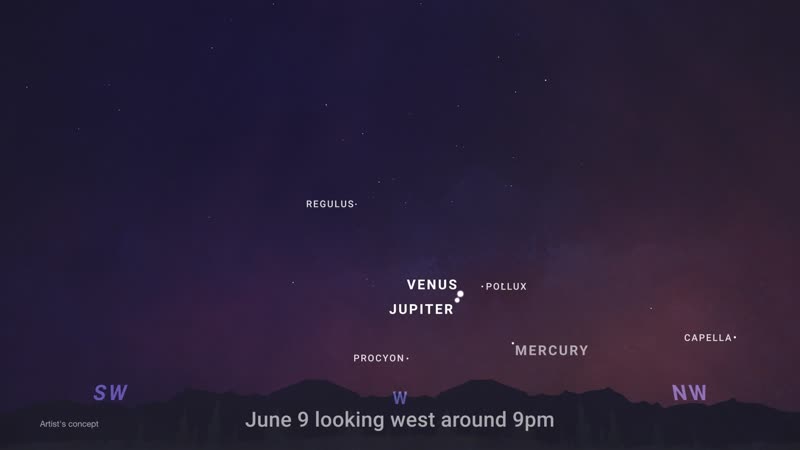
What's Up: June 2026 Skywatching Tips from NASA

Venus and Jupiter meet after sunset, the Moon passes in front of Venus, summer begins, and deep-sky treasures rise into view. To start June, look west after sunset to spot Venus and Jupiter shining close together, with Mercury joining the view low in the sky. Around June 9, Venus and Jupiter appear especially close in a planetary conjunction. From June 11 through 15, Mercury joins the scene, creating a mini-parade of

2020NASA Image and Video Library

NASA Science Live: Perseverance Mars Rover & the Search for Ancient Life [Episode 20]

Millions of miles from Earth lies a dusty, cold, desert world with a very thin atmosphere. You know this planet as Mars…but it hasn’t always been this way. There’s evidence that the Red Planet was much wetter and warmer, with a thicker atmosphere, billions of years ago. Could it also have supported life? NASA’s Perseverance rover launches next week and will explore the Red Planet to collect rock and soil samples, whi