العربية

NASA Image and Video Library

Records indexed under NASA Image and Video Library, with original identifiers, source links and item-level rights evidence. This is the imported selection, not the institution’s entire holdings. Verify the originating institution when the source is an aggregator.

4,093 matching records; original descriptions and titles are preserved. Search and filters →

Verify the evidence · Cite an item or clip · Rights

2022NASA Image and Video Library

Advancing Human Health: Space Station Benefits

Researchers from around the world use the International Space Station to address complex human health problems on Earth, such as studying disease formation, testing drugs and diagnostic tools, and examining the inner workings of the human body. Much of this work employs unique microgravity tools including protein crystals and tissue chips, as well as devices designed specifically for space but that also have been ada

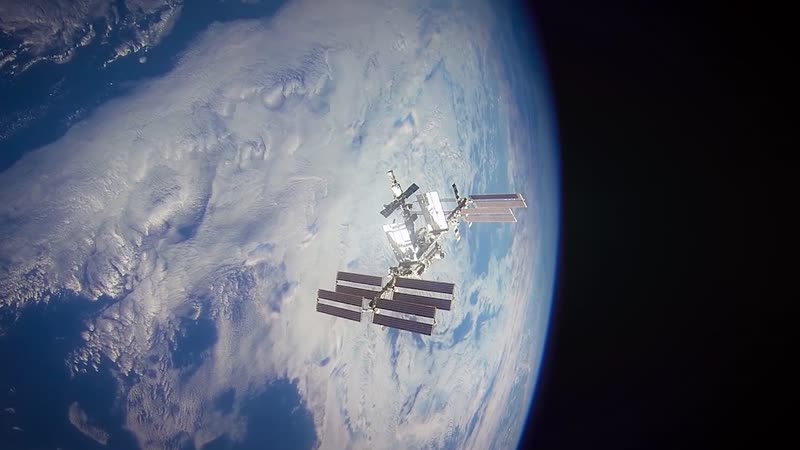
2022NASA Image and Video Library

ISS 2030 NASA Extends Operations of the International Space Station

NASA announced the Biden-Harris Administration’s commitment to extend International Space Station (ISS) operations through 2030. Over the past two decades, the United States has maintained a continuous human presence in orbit around the Earth to test technologies, conduct scientific research, and develop skills needed to explore farther than ever before. The unique microgravity laboratory has hosted more than 3,000 r

2018NASA Image and Video Library

International Space Station Benefits for Humanity, 3rd Edition

How does research on the International Space Station benefit life on Earth? Read the stories of innovative science in low-Earth orbit in a new book. More: https://www.nasa.gov/stationbenefits The International Space Station Program Science Forum (PSF) third edition of “International Space Station Benefits for Humanity” complies the benefits of research on an orbiting microgravity laboratory. The book provides example

2019NASA Image and Video Library

International Space Station Benefits for Humanity, 3rd Edition

How does research on the International Space Station benefit life on Earth? Read the stories of innovative science in low-Earth orbit in a new book. More: https://www.nasa.gov/stationbenefits The International Space Station Program Science Forum (PSF) third edition of “International Space Station Benefits for Humanity” complies the benefits of research on an orbiting microgravity laboratory. The book provides example

2024NASA Image and Video Library

International Space Station: Humanity’s Lab in Space

Orbiting more than 200 miles above Earth, the International Space Station is a powerhouse of cutting-edge science that is unlocking discoveries not possible on Earth. We’re testing technologies that are critical to our return to the Moon and contributing to medical and social breakthroughs that improve life on our home planet. After more than two decades of results, we continue to inspire future generations from a pl

2022NASA Image and Video Library

International Space Station Benefits for Humanity 2022

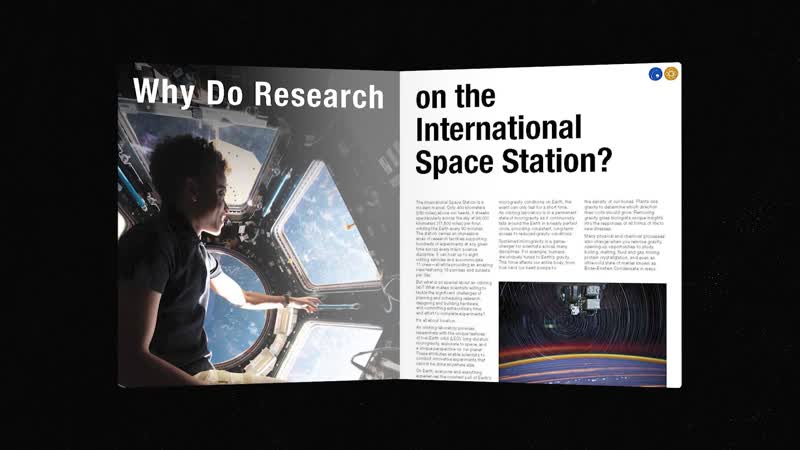
The 2022 edition of the International Space Station Benefits for Humanity publication is now available. This updated edition is packed with numerous benefits of the microgravity laboratory highlighting the groundbreaking discoveries helping society, technologies tested for future space exploration, new scientific breakthroughs, and contributions to the growing low-Earth orbit (LEO) economy.View the full Benefits for

2021NASA Image and Video Library

The International Space Station: A Laboratory in Space

We're doing science at 17,500 miles per hour! The International Space Station is a state-of-the-art microgravity laboratory that is unlocking discoveries not possible on Earth, and helping us push farther into deep space. We’re testing technologies that are critical to our return to the Moon and great leap to Mars. Station research has contributed to medical and social benefits on our home planet, allowing us to find

2019NASA Image and Video Library

Space Station Research: Intersecting the Magical and the Technical

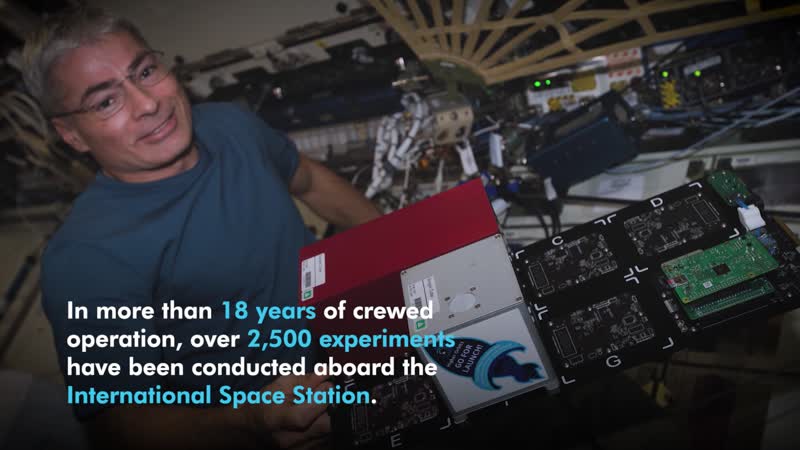
At any given time, we have about 300 experiments being conducted aboard the International Space Station. Anne McClain shares an inspiring perspective on the research she's helped conduct. Learn more about the research being conducted on Station: https://www.nasa.gov/iss-science Follow Twitter updates on the science conducted aboard the space station: https://twitter.com/iss_research

2026NASA Image and Video Library

Is There Weather on the Moon

Is there weather on the Moon? Yes, but not the weather you’re used to. The Sun’s solar wind is a type of “space weather” that can have a big impact on the Moon due to its lack of atmosphere. It can also affect all sorts of things like satellites, electronics and communications. Better understanding how space weather interacts with the Moon will be critical as we send #Artemis astronauts to the lunar surface. https://

2020NASA Image and Video Library

NASA Administrator Highlights Space Launch System Rocket Booster Test

NASA Administrator, Jim Bridenstine, explains why the upcoming Space Launch System (SLS) rocket Flight Support Booster-1 (FSB-1) test is a milestone for NASA, the Artemis program and future deep space exploration. The flight support booster being tested at Northrop Grumman’s test facility in Promontory, Utah. on Sept. 2, 2020, is structurally identical to each of the five-segment solid rocket boosters on SLS. Despite

2019NASA Image and Video Library

JPL-20190326-TECHf-0001-Mars Helicopter VF

In January 2019, NASA's Mars Helicopter technology demonstration was put through rigorous tests to verify it is ready for the Red Planet. While flying helicopters is commonplace here on Earth, flying one, hundreds of millions of miles (kilometers) away in the thin Martian atmosphere, is something else entirely. The team recreated the gravity and flying conditions at Mars in JPL's Space Simulator, a 25-foot wide vacuu

2019NASA Image and Video Library

Crazy Engineering: Making Oxygen on Mars with MOXIE

Crazy Engineering explores a technology demonstration riding aboard NASA’s Mars 2020 rover that's straight out of science fiction novels like "The Martian." It's an oxygen generator called MOXIE, designed to convert carbon dioxide — which constitutes about 96% of the Martian atmosphere — into breathable oxygen. For more about MOXIE and Mars 2020, visit: https://mars.nasa.gov/mars2020/

2019NASA Image and Video Library

NASA Chopper Ready for a Spin on Mars

The laws of physics may say it's near impossible to fly on Mars, but actually flying a heavier-than-air vehicle on the Red Planet is much harder than that. NASA’s Mars 2020 mission will deliver a technology demonstration that will put the idea to the test -- a helicopter that will perform controlled flight on Mars. For more about NASA's Mars missions, visit https://nasa.gov/mars and https://mars.nasa.gov

2019NASA Image and Video Library

Video file: NASA’s Deep Space Atomic Clock to Launch on SpaceX Falcon Heavy Rocket

Video file for media and public use. Four NASA missions will launch on a SpaceX Falcon Heavy rocket no earlier than June 24, 2019. The Deep Space Atomic Clock is one NASA technology demonstration aboard the U.S. Air Force Space and Missile Systems Center-managed Space Test Program-2 mission. The Deep Space Atomic Clock will change the way we navigate spacecraft and even how we send astronauts to Mars and beyond. Buil

2019NASA Image and Video Library

Landing NASA’s Mars 2020 Rover with Terrain Relative Navigation

The Mars 2020 mission is facing the most challenging landing yet on the Red Planet. It will touch down on Feb. 18, 2021, in Jezero Crater, a 28-mile-wide (45-kilometer-wide) expanse full of steep cliffs, boulder fields and other things that could boobytrap the landing. A new technology called Terrain Relative Navigation (TRN) will allow the spacecraft to avoid hazards autonomously. It's the closest thing to having an