العربية

NASA Image and Video Library

Records indexed under NASA Image and Video Library, with original identifiers, source links and item-level rights evidence. This is the imported selection, not the institution’s entire holdings. Verify the originating institution when the source is an aggregator.

4,093 matching records; original descriptions and titles are preserved. Search and filters →

Verify the evidence · Cite an item or clip · Rights

2026NASA Image and Video Library

NASA's SLS Rocket and Orion Spacecraft Rollout to Launch Pad 39B

This image shows NASA’s SLS (Space Launch System) and Orion spacecraft rolling out of the Vehicle Assembly Building at NASA’s Kennedy Space Center. NASA's massive Crawler-Transporter, upgraded for the Artemis program, carries the powerful SLS rocket and Orion spacecraft on the Mobile Launcher from the Vehicle Assembly Building to Launch Pad 39B at Kennedy Space Center in preparation for the Artemis II mission.

2025NASA Image and Video Library

NASA, Army National Guard Partner on Artemis Lander Training

These photos and videos show how NASA certified a new lander flight training course using helicopters in the mountains of northern Colorado. NASA is partnering with the Colorado Army National Guard at its High-Altitude Army National Guard Aviation Training Site near Gypsum, Colorado, to develop the foundational flight training course that will help astronauts practice flight and landing procedures for the Moon. The c

2025NASA Image and Video Library

NASA, Army National Guard Partner on Artemis Lander Training

These photos and videos show NASA astronauts Bob Hines and Raja Chari practicing landing procedures in the Rocky Mounts of Colorado in April 2025. The astronauts were participating in a NASA-specific course at the HAATS (High-Altitude Army National Guard Aviation Training Site) in Gypsum, Colorado. NASA and the Colorado Army National Guard are using military helicopters to develop a foundational lunar lander simulate

2019NASA Image and Video Library

Mercury Gemini Apollo Resource Reel 1 SILENT

Untitled 01:00:15 – Mercury Program astronauts: Original Seven astronauts at press conference, in classroom training, in front of fighter jet and ingressing/egressing aircraft, planes taxi; desert survival training; zero-g training, MASTIF (?) trainer. 01:07:19 – Mercury Program spacecraft: workers assembling spacecraft, moving spacecraft into hangar, Grissom, Glen, Shepard checking out interior controls. 01:08:57 –

2020NASA Image and Video Library

HD_Silent President Kennedy Tours Cape Canaveral

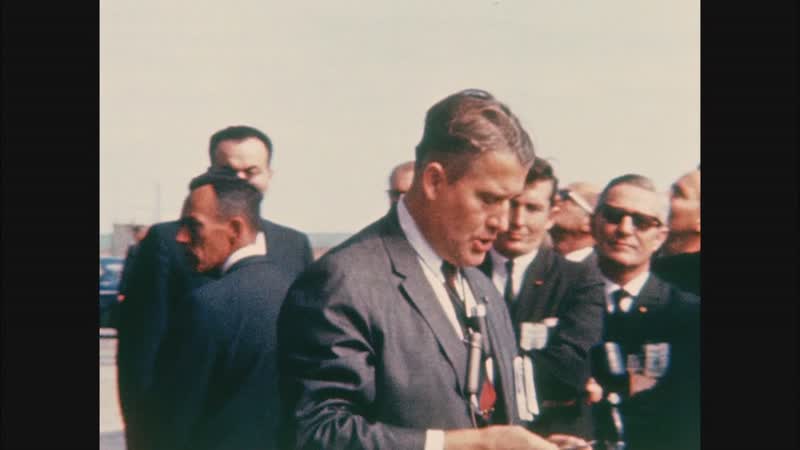
Content from HD 059 - MOON MACHINES President Kennedy Tour at Cape Canaveral, 1962 00:19 – Kennedy tours the cape – Gemini capsule 03:50 – Grissom talking with someone in entourage 05:44 – Air Force One arrival – airport grip & grins 07:22 – Kennedy & Grissom & Slayton 09:30 – von Braun lecturing Kennedy at launch pad 11:00 – von Braun & Kennedy pointing up at rocket 11:38 – Marine One lift-off & arrival at airport 1

2020NASA Image and Video Library

NASA Science Live: How to Spot Comet NEOWISE [Episode 19]

Have you seen Comet NEOWISE in the sky? ☄️ Visiting from the most distant parts of our solar system, it made its once-in-our-lifetimes close approach to the Sun on July 3, 2020 and will cross outside Earth’s orbit on its way back to the outer parts of the solar system by mid-August. Join experts on #NASAScience Live to learn more about this comet and how you can spot it before it’s gone. Joy Ng, Host Joe Masiero, NEO

2025NASA Image and Video Library

How Do We Do Research in Zero Gravity | We Asked a NASA Expert

When it comes to experiments in space, astronauts on the International Space Station face challenges you won’t find on Earth: bubbles don’t rise, things float away and many Earth-based lab tools don’t always work the same way. So science in space needs to me reimagined from the ground up. A NASA scientist explains how we study life, chemistry and physics in orbit. Learn more about science on the ISS: https://www.nasa

2021NASA Image and Video Library

How Ingenuity Talks to Us From Mars

The Ingenuity helicopter made history on April 19, 2021, with the first powered, controlled flight of an aircraft on another planet. How do engineers talk to a helicopter all the way out on Mars? We’ll hear about it from Nacer Chahat of NASA’s Jet Propulsion Laboratory, who worked on the helicopter’s antenna and telecommunication system. He chats with NASA’s Chief Scientist Jim Green in this episode of the “Gravity A

2025NASA Image and Video Library

How Long Does it Take to Get to the Moon, Mars, Jupiter

How long does it take to get to the Moon? Mars? Jupiter? The answer is: it depends — and speed is only one factor. Travel times also depend on distance, fuel, physics and clever trajectory planning. From quick trips to the Moon to years-long voyages to the outer planets, every mission follows a unique path. Watch as a NASA scientist breaks down what it really takes to travel through space. Learn more about how we nav

2025NASA Image and Video Library

How Long Does it Take to Get to the Moon, Mars, Jupiter?

How long does it take to get to the Moon? Mars? Jupiter? The answer is: it depends — and speed is only one factor. Travel times also depend on distance, fuel, physics and clever trajectory planning. From quick trips to the Moon to years-long voyages to the outer planets, every mission follows a unique path. Watch as a NASA scientist breaks down what it really takes to travel through space. Learn more about how we nav

2026NASA Image and Video Library

How Will We Extract Water on the Moon

We know the Moon contains water, but, could future astronauts access and make use of it? That’s the goal. At NASA, we’re actively trying to answer that question. Once it lands at the lunar south pole, our PRIME-1 — Polar Resources Ice Mining Experiment-1 – will robotically sample and analyze ice from beneath the lunar surface, contributing to our search for water on the Moon: https://go.nasa.gov/2QygCmF Producers: Je

2023NASA Image and Video Library

How Will We Extract Water on the Moon? We Asked a NASA Expert

If the Moon contains water, could future astronauts access and make use of it? That’s the goal! At NASA, we’re actively trying to answer that question. Once it lands at the lunar south pole, our PRIME-1 — Polar Resources Ice Mining Experiment-1 – will robotically sample and analyze ice from beneath the lunar surface, contributing to our search for water on the Moon. Amy Eichenbaum explains more.

2023NASA Image and Video Library

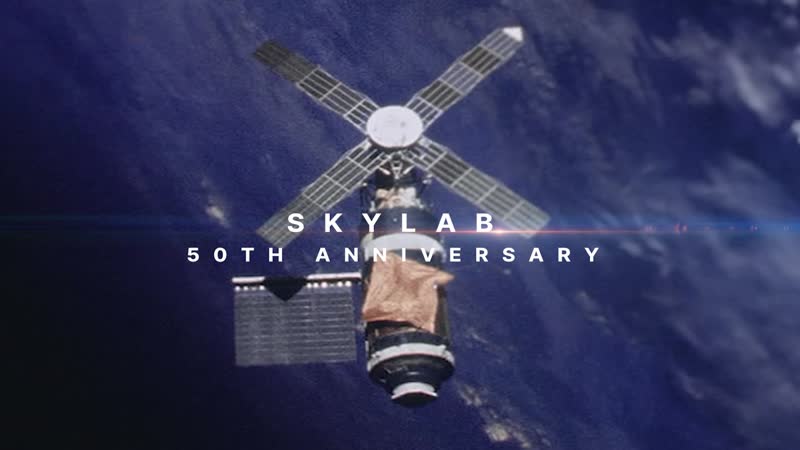
Honoring the 50th Anniversary of NASA’s Skylab

America’s first space station and the first crewed research laboratory in space, Skylab, lifted off on May 14, 1973. Skylab helped pave the way for permanent operations in low-Earth orbit. Over the course of its human occupation from May 25, 1973, to Feb. 8, 1974, three crews visited Skylab, carrying out 270 scientific and technical investigations in astronauts’ physiological responses to long-duration space flight,

2026NASA Image and Video Library

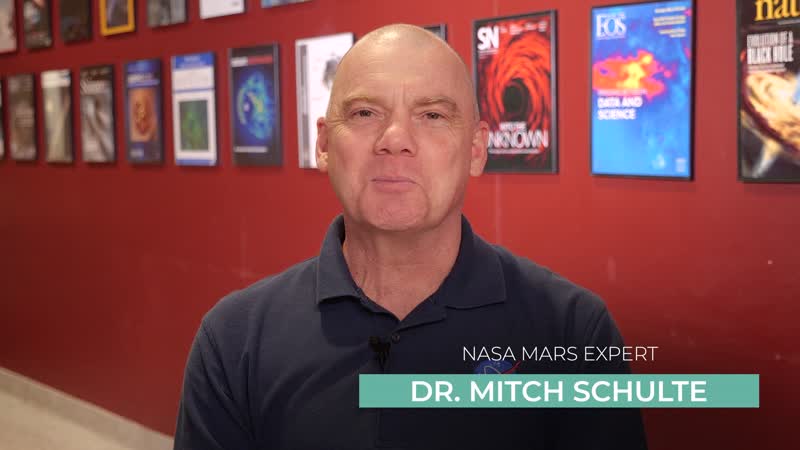
Have Humans Ever Visited Mars

Have humans ever visited Mars? Not yet, but we’ve sent lots of rovers, landers and orbiters to explore the Red Planet. NASA has two operating rovers — Curiosity and Perseverance — which are currently traversing the Martian terrain in search of rocks that could teach us about Mars’ ancient past. And with NASA Artemis, we’re working on new tech that could one day get humans to Mars. NASA scientist Dr. Mitch Schulte has

2022NASA Image and Video Library

Highlights From the First 13 Days of NASA's Artemis I Moon Mission

On Monday, Nov. 28, 2022, Artemis I reached the halfway point of its 26-day mission around the Moon, flying roughly 270,000 miles (434,000 km) from the Earth—farther from our home planet than any spacecraft designed to send humans to space and back has gone before. From Artemis I's launch at NASA's Kennedy Space Center, to its first "Earthrise", to close-up views of the lunar surface, take a look back at some of the