NASA's OSIRIS-REx Asteroid Sample Return Mission
The OSIRIS-REx mission, launching in September 2016, plans to return a sample of asteroid Bennu to Earth in 2023 so that scientists can study pristine material left over from the early solar system.
السجلات المفهرسة تحت NASA Image and Video Library مع المعرّفات والروابط وبيانات الحقوق الأصلية. هذه المواد المستوردة وليست كامل مقتنيات المؤسسة. تحقق من المؤسسة الأصلية عندما يكون المصدر مجمّعًا للبيانات.
4,093 سجلًا مطابقًا؛ الأوصاف والعناوين الأصلية محفوظة. البحث والمرشحات →
التحقق من الأدلة · توثيق المادة والمقطع · الحقوق
The OSIRIS-REx mission, launching in September 2016, plans to return a sample of asteroid Bennu to Earth in 2023 so that scientists can study pristine material left over from the early solar system.
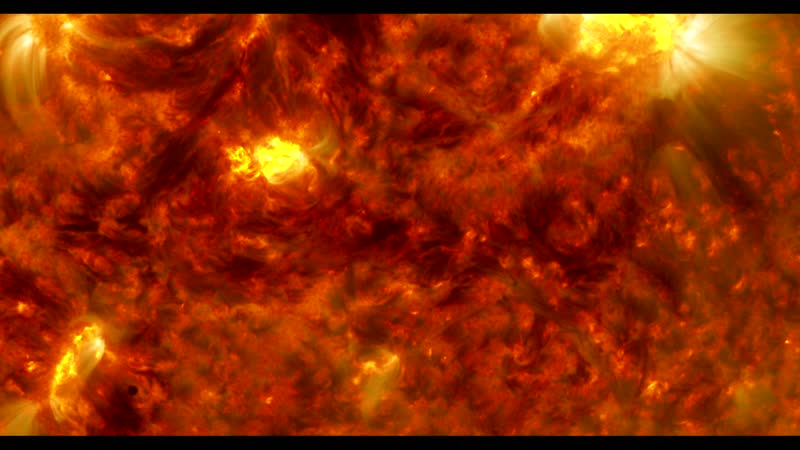
Around 13 times per century, Mercury passes between Earth and the sun in a rare astronomical event known as a planetary transit. Mercury orbits in a plane that is tilted from Earth’s orbit, moving above or below our line of sight to the sun. The 2016 Mercury transit occurred on May 9th, between about 7:12 a.m. and 2:42 p.m. EDT. The images in this video are from NASA's Solar Dynamics Observatory, or SDO. Transits pro
Volcano eruptions can wreak havoc on airplanes that fly through the clouds of ash and sulfur dioxide. The ash, in particular, can destroy a jet engine and even cause it to fail mid-flight. However, it can be difficult to detect the ash clouds, because they often look like ordinary rain clouds on radar and to the pilot's eye. To be cautious, volcanic eruptions are given a wide berth, leading to costly delays and cance
Precipitation (falling rain and snow) is our fresh water reservoir in the sky and is fundamental to life on Earth. A Global Tour of Precipitation from NASA shows how rain and snowfall moves around the world from the vantage of space using measurements from the Global Precipitation Measurement Core Observatory, or GPM. This is a joint mission between NASA and the Japanese Aerospace Exploration Agency (JAXA) and offers
Around 13 times per century, Mercury passes between Earth and the sun in a rare astronomical event known as a planetary transit. Mercury orbits in a plane that is tilted from Earth’s orbit, moving above or below our line of sight to the sun. The 2016 Mercury transit occurred on May 9th, between about 7:12 a.m. and 2:42 p.m. EDT. The images in this video are from NASA's Solar Dynamics Observatory, or SDO. Transits pro
Around 13 times per century, Mercury passes between Earth and the sun in a rare astronomical event known as a planetary transit. Mercury orbits in a plane that is tilted from Earth’s orbit, moving above or below our line of sight to the sun. The 2016 Mercury transit occurred on May 9th, between about 7:12 a.m. and 2:42 p.m. EDT. The images in this video are from NASA's Solar Dynamics Observatory, or SDO. Transits pro
Piers Sellers, who passed away on Dec. 23 more than a year after learning he had pancreatic cancer, leaves behind a dynamic legacy at NASA. As an astronaut he helped build the International Space Station. As a manager he helped lead hundreds of scientists. And as a public figure he was an inspiration to many for his optimistic take on humanity's ability to confront Earth's changing climate. But his most lasting contr
Piers Sellers, who passed away on Dec. 23 more than a year after learning he had pancreatic cancer, leaves behind a dynamic legacy at NASA. As an astronaut he helped build the International Space Station. As a manager he helped lead hundreds of scientists. And as a public figure he was an inspiration to many for his optimistic take on humanity's ability to confront Earth's changing climate. But his most lasting contr
Piers Sellers, who passed away on Dec. 23 more than a year after learning he had pancreatic cancer, leaves behind a dynamic legacy at NASA. As an astronaut he helped build the International Space Station. As a manager he helped lead hundreds of scientists. And as a public figure he was an inspiration to many for his optimistic take on humanity's ability to confront Earth's changing climate. But his most lasting contr
The monsoon is a seasonal rain and wind pattern that occurs over South Asia (among other places). Through NASA satellites and models we can see the monsoon patterns like never before. Monsoon rains provide important reservoirs of water that sustain human activities like agriculture and supports the natural environment through replenishment of aquifers. However, too much rainfall routinely causes disasters in the regi
Tiny solid and liquid particles suspended in the atmosphere are called aerosols. Examples of aerosols include windblown dust, sea salts, volcanic ash, smoke from fires, and pollution from factories. These particles are important to scientists because they can affect climate, weather, and people's health. Aerosols affect climate by scattering sunlight back into space and cooling the surface. Aerosols also help cool Ea
This year’s wildfire season is off to a blazing start. The United States had an early start to the season, with more than 29,000 wildfires burning more than 2.6 million acres of land. The driest season in 14 years has left the southern Amazon primed for heavy wildfire activity as well. The expected wildfire surge in the Amazon this summer is the result of El Niño, a warming of waters in the Pacific Ocean that had maj
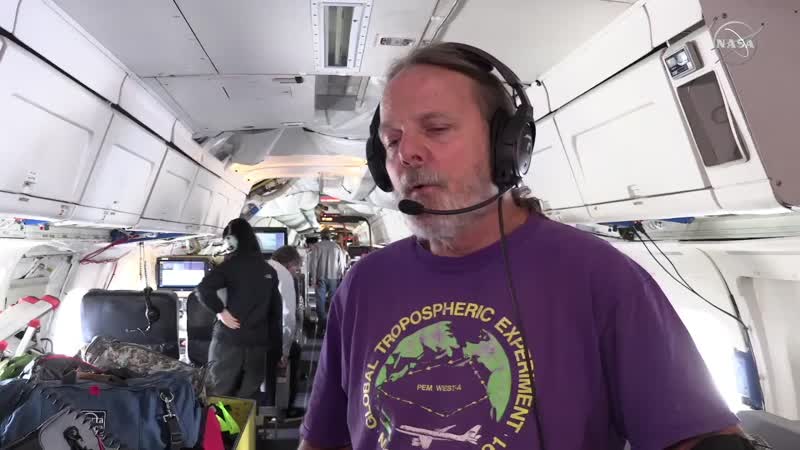
The ATom mission aboard NASA's DC-8 flying laboratory is sampling world-wide in one of the most extensive surveys of the atmosphere to date, measuring over 200 gases as well as airborne particles. The science team is particularly interested in methane, tropospheric ozone and black carbon particles, which have strong effects on climate and which all have both human and natural origins.
The ATom mission aboard NASA's DC-8 flying laboratory is sampling world-wide in one of the most extensive surveys of the atmosphere to date, measuring over 200 gases as well as airborne particles. The science team is particularly interested in methane, tropospheric ozone and black carbon particles, which have strong effects on climate and which all have both human and natural origins.
The ATom mission aboard NASA's DC-8 flying laboratory is sampling world-wide in one of the most extensive surveys of the atmosphere to date, measuring over 200 gases as well as airborne particles. The science team is particularly interested in methane, tropospheric ozone and black carbon particles, which have strong effects on climate and which all have both human and natural origins.
The ATom mission aboard NASA's DC-8 flying laboratory is sampling world-wide in one of the most extensive surveys of the atmosphere to date, measuring over 200 gases as well as airborne particles. The science team is particularly interested in methane, tropospheric ozone and black carbon particles, which have strong effects on climate and which all have both human and natural origins.
NASA's latest New Frontiers mission, OSIRIS-REx, will venture to a near-Earth asteroid to discover clues about the unique resources asteroids hold, processes that affect asteroids' orbital paths and their potential for impacting Earth, and the origins of life in the solar system. In addition, OSIRIS-REx will collect a sample from the surface of the asteroid and return it to Earth for generations of scientists to stud
OSIRIS-REx launched Thursday, September 8 at 7:05PM on an Atlas V rocket on a journey to study asteroid Bennu and return a sample to Earth. Thousands of visitors watched the launch, some of whom were part of a NASA Social event.
Southern Africa produces almost a third of the world’s vegetative burning, which sends smoke particles up into the atmosphere, where they eventually mix with stratocumulus clouds over the southeastern Atlantic Ocean. The Observations of Clouds above Aerosols and their Interactions (ORACLES) study is investigating how these particles impact the stratocumulus clouds, which play a key role in both regional and global su
Southern Africa produces almost a third of the world’s vegetative burning, which sends smoke particles up into the atmosphere, where they eventually mix with stratocumulus clouds over the southeastern Atlantic Ocean. The Observations of Clouds above Aerosols and their Interactions (ORACLES) study is investigating how these particles impact the stratocumulus clouds, which play a key role in both regional and global su
Southern Africa produces almost a third of the world’s vegetative burning, which sends smoke particles up into the atmosphere, where they eventually mix with stratocumulus clouds over the southeastern Atlantic Ocean. The Observations of Clouds above Aerosols and their Interactions (ORACLES) study is investigating how these particles impact the stratocumulus clouds, which play a key role in both regional and global su
Southern Africa produces almost a third of the world’s vegetative burning, which sends smoke particles up into the atmosphere, where they eventually mix with stratocumulus clouds over the southeastern Atlantic Ocean. The Observations of Clouds above Aerosols and their Interactions (ORACLES) study is investigating how these particles impact the stratocumulus clouds, which play a key role in both regional and global su
Southern Africa produces almost a third of the world’s vegetative burning, which sends smoke particles up into the atmosphere, where they eventually mix with stratocumulus clouds over the southeastern Atlantic Ocean. The Observations of Clouds above Aerosols and their Interactions (ORACLES) study is investigating how these particles impact the stratocumulus clouds, which play a key role in both regional and global su
Southern Africa produces almost a third of the world’s vegetative burning, which sends smoke particles up into the atmosphere, where they eventually mix with stratocumulus clouds over the southeastern Atlantic Ocean. The Observations of Clouds above Aerosols and their Interactions (ORACLES) study is investigating how these particles impact the stratocumulus clouds, which play a key role in both regional and global su