English

NASA Image and Video Library

السجلات المفهرسة تحت NASA Image and Video Library مع المعرّفات والروابط وبيانات الحقوق الأصلية. هذه المواد المستوردة وليست كامل مقتنيات المؤسسة. تحقق من المؤسسة الأصلية عندما يكون المصدر مجمّعًا للبيانات.

4,093 سجلًا مطابقًا؛ الأوصاف والعناوين الأصلية محفوظة. البحث والمرشحات →

التحقق من الأدلة · توثيق المادة والمقطع · الحقوق

2014مكتبة صور وفيديو ناسا

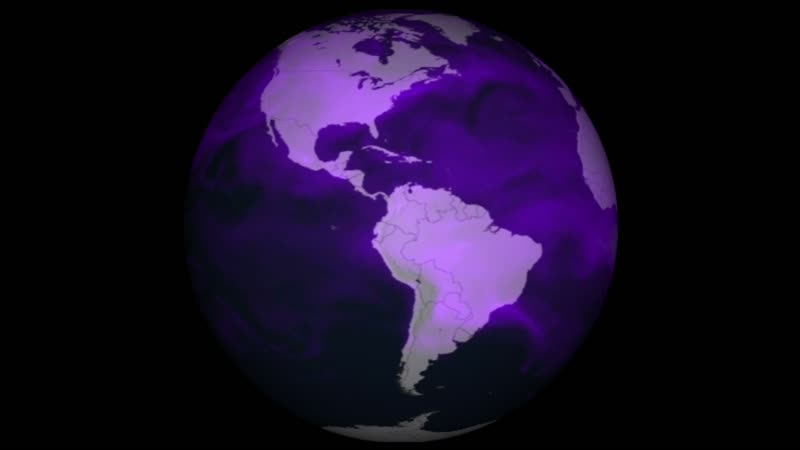
Why is the Ozone Hole Getting Smaller?

The Antarctic ozone hole reached its annual peak size on Sept. 11, according to scientists from NASA and the National Oceanic and Atmospheric Administration (NOAA). The size of this year’s hole was 24.1 million square kilometers (9.3 million square miles) — an area roughly the size of North America. With the increased atmospheric chlorine levels present since the 1980s, the Antarctic ozone hole forms and expands duri

2014مكتبة صور وفيديو ناسا

Need To Know: Sample Analysis at Mars Findings

There’s big news coming out of the Sample Analysis at Mars instrument suite (SAM) on NASA’s Curiosity rover. For the first time, organic matter has definitively been detected on Mars. In addition to finding organic compounds in rocks, SAM has also detected sharp increases and decreases in methane levels in the atmosphere. MSL participating scientist, Danny Glavin, explains these findings and what they tell us about o

2015مكتبة صور وفيديو ناسا

2014 Warmest Year On Record

The year 2014 now ranks as the warmest on record since 1880, according to an analysis by NASA scientists. Nine of the 10 warmest years since modern records began have now occurred since 2000, according to a global temperature analysis by scientists at NASA’s Goddard Institute for Space Studies in New York. 2014’s record-breaking warmth continues a long-term trend of a warming climate. The global average temperature h

2015مكتبة صور وفيديو ناسا

CATS Up and Running on the Space Station

On January 22, 2015, the Cloud-Aerosol Transport System was installed on the International Space Station. This procedure involved the first ever hand-off between the two robotic arms on the ISS, with the first arm removing the instrument from the SpaceX Dragon capsule that ferried it to the station, and the second arm taking the instrument and moving it to the Japanese Experiment Module, where it was installed. The t

2015مكتبة صور وفيديو ناسا

Mars' Ancient Ocean

For decades, planetary scientists have suspected that ancient Mars was a much warmer, wetter environment than it is today, but estimates of just how much water Mars has lost since its formation vary widely. Now, new isotopic measurements by researchers at NASA's Goddard Space Flight Center reveal that an ocean once covered approximately twenty percent of the Martian surface. This new picture of early Mars is consider

2015مكتبة صور وفيديو ناسا

New Craters on the Moon

Planetary scientists believe that small impacts regularly bombard the Moon, but until recently, they’ve had no way to distinguish new craters from the already pockmarked lunar surface. In 2009, NASA’s Lunar Reconnaissance Orbiter (LRO) arrived at the Moon and began taking high-resolution photographs. By comparing pictures taken early in the mission with more recent images, the LRO camera team has discovered more than

2015مكتبة صور وفيديو ناسا

Scientists Link Earlier Melting Of Snow To Dark Aerosols

Tiny particles suspended in the air, known as aerosols, can darken snow and ice causing it to absorb more of the sun’s energy. But until recently, scientists rarely considered the effect of all three major types of light-absorbing aerosols together in climate models. In a new study, NASA scientists used a climate model to examine the impact of this snow-darkening phenomenon on Northern Hemisphere snowpacks, including

2015مكتبة صور وفيديو ناسا

Mapping Mars' Upper Atmosphere

High above the thin Martian skies, NASA’s MAVEN spacecraft is carrying out a mission: determine how Mars lost its early atmosphere, and with it, its water. While previous Mars orbiters have peered down at the planet’s surface, MAVEN is spending part of its time gazing at the stars, looking for subtle changes in their color as they dip through the limb of Mars and set below the horizon. Such stellar occultations revea

2015مكتبة صور وفيديو ناسا

SDO Transit - September 2015

On Sept. 13, 2015, as NASA’s Solar Dynamics Observatory, or SDO, kept up its constant watch on the sun, its view was photobombed not once, but twice. Just as the moon came into SDO’s field of view on a path to cross the sun, Earth entered the picture, blocking SDO’s view completely. When SDO's orbit finally emerged from behind Earth, the moon was just completing its journey across the sun’s face. Though SDO sees doze

2015مكتبة صور وفيديو ناسا

Brazil’s Extreme Drought Seen From Space

Empty water reservoirs, severe water rationing, and electrical blackouts are the new status quo in major cities across southeastern Brazil where the worst drought in 35 years has desiccated the region. A new NASA study estimates that the region has lost an average of 15 trillion gallons of water per year from 2012 to 2015. Eastern Brazil as a whole has lost on average 28 trillion gallons of water per year over the sa

2015مكتبة صور وفيديو ناسا

Researchers Gear Up For OLYMPEX

From November 10 through December 21, NASA and university scientists are taking to the field to study wet winter weather near Seattle, Washington. With weather radars, weather balloons, specialized ground instruments, and NASA's DC-8 flying laboratory, the science team will be verifying rain and snowfall observations made by the Global Precipitation Measurement (GPM) satellite mission on a NASA-led field campaign, Th

2015مكتبة صور وفيديو ناسا

OLYMPEX Scientist Profiles: Rachael Kroodsma

From November 10 through December 21, NASA and university scientists are taking to the field to study wet winter weather near Seattle, Washington. With weather radars, weather balloons, specialized ground instruments, and NASA's DC-8 flying laboratory, the science team will be verifying rain and snowfall observations made by the Global Precipitation Measurement (GPM) satellite mission on a NASA-led field campaign, Th

2015مكتبة صور وفيديو ناسا

OLYMPEX Scientist Profiles: Joe Zagrodnik

From November 10 through December 21, NASA and university scientists are taking to the field to study wet winter weather near Seattle, Washington. With weather radars, weather balloons, specialized ground instruments, and NASA's DC-8 flying laboratory, the science team will be verifying rain and snowfall observations made by the Global Precipitation Measurement (GPM) satellite mission on a NASA-led field campaign, Th

2016مكتبة صور وفيديو ناسا

Annual Global Temperature, 1880-2015

Earth's 2015 surface temperatures were the warmest since modern record keeping began in 1880, continuing a long-term warming trend. Most of the warming occurred in the past 35 years, with 15 of the 16 warmest years on record occurring since 2001. Last year was the first time the global average temperatures were more than 1 degree Celsius above the 1880-1899 average, a change largely driven by increased carbon dioxide

2016مكتبة صور وفيديو ناسا

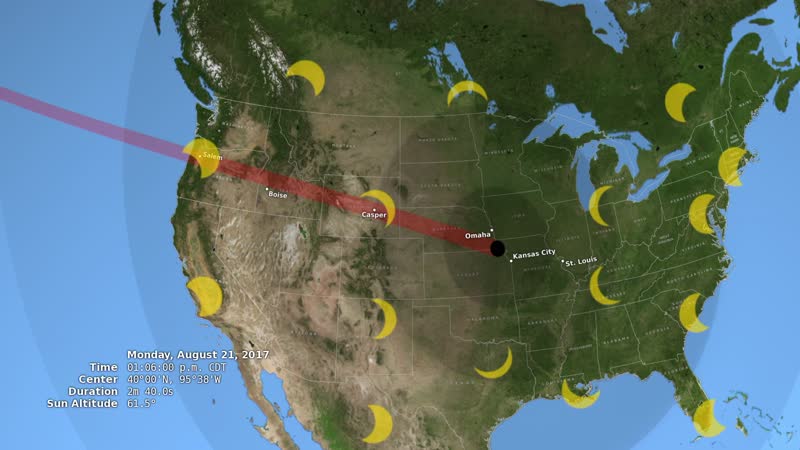
Visualizing the 2017 All-American Eclipse

On August 21, 2017, the Earth will cross the shadow of the Moon, creating a total solar eclipse. Eclipses happen about every six months, but this one is special. For the first time in almost 40 years, the path of the Moon's shadow passes through the continental United States. The video features several visualizations of this event. From behind the Earth, we see the night sides of both the Earth and Moon and the umbra