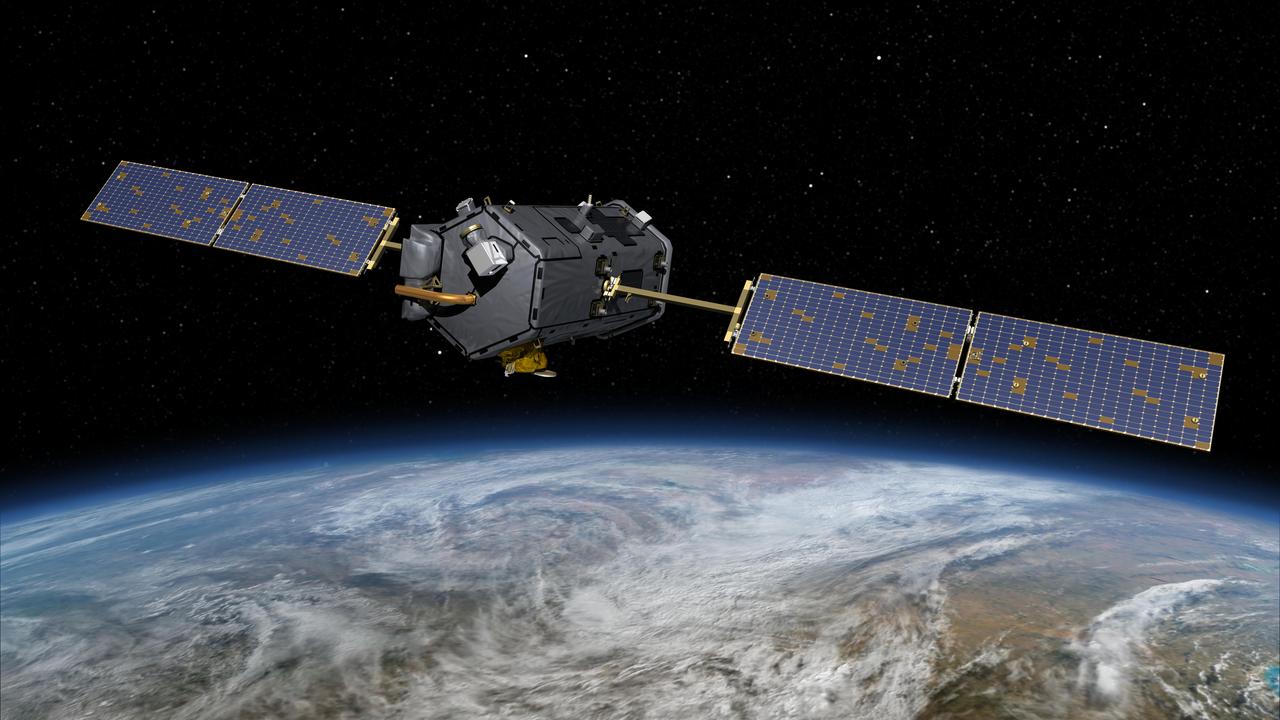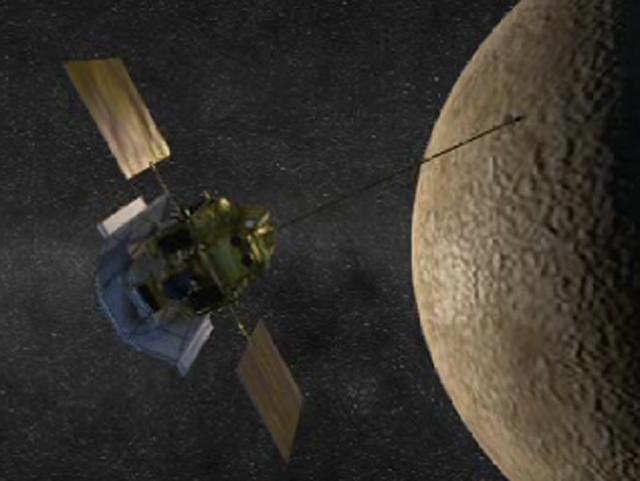
Mercury Orbit Insertion Artist Concept
NASA MESSENGER prepares to perform the Mercury orbit insertion burn in this animated artist concept.
السجلات المفهرسة تحت NASA Image and Video Library مع المعرّفات والروابط وبيانات الحقوق الأصلية. هذه المواد المستوردة وليست كامل مقتنيات المؤسسة. تحقق من المؤسسة الأصلية عندما يكون المصدر مجمّعًا للبيانات.
4,093 سجلًا مطابقًا؛ الأوصاف والعناوين الأصلية محفوظة. البحث والمرشحات →
التحقق من الأدلة · توثيق المادة والمقطع · الحقوق
NASA MESSENGER prepares to perform the Mercury orbit insertion burn in this animated artist concept.
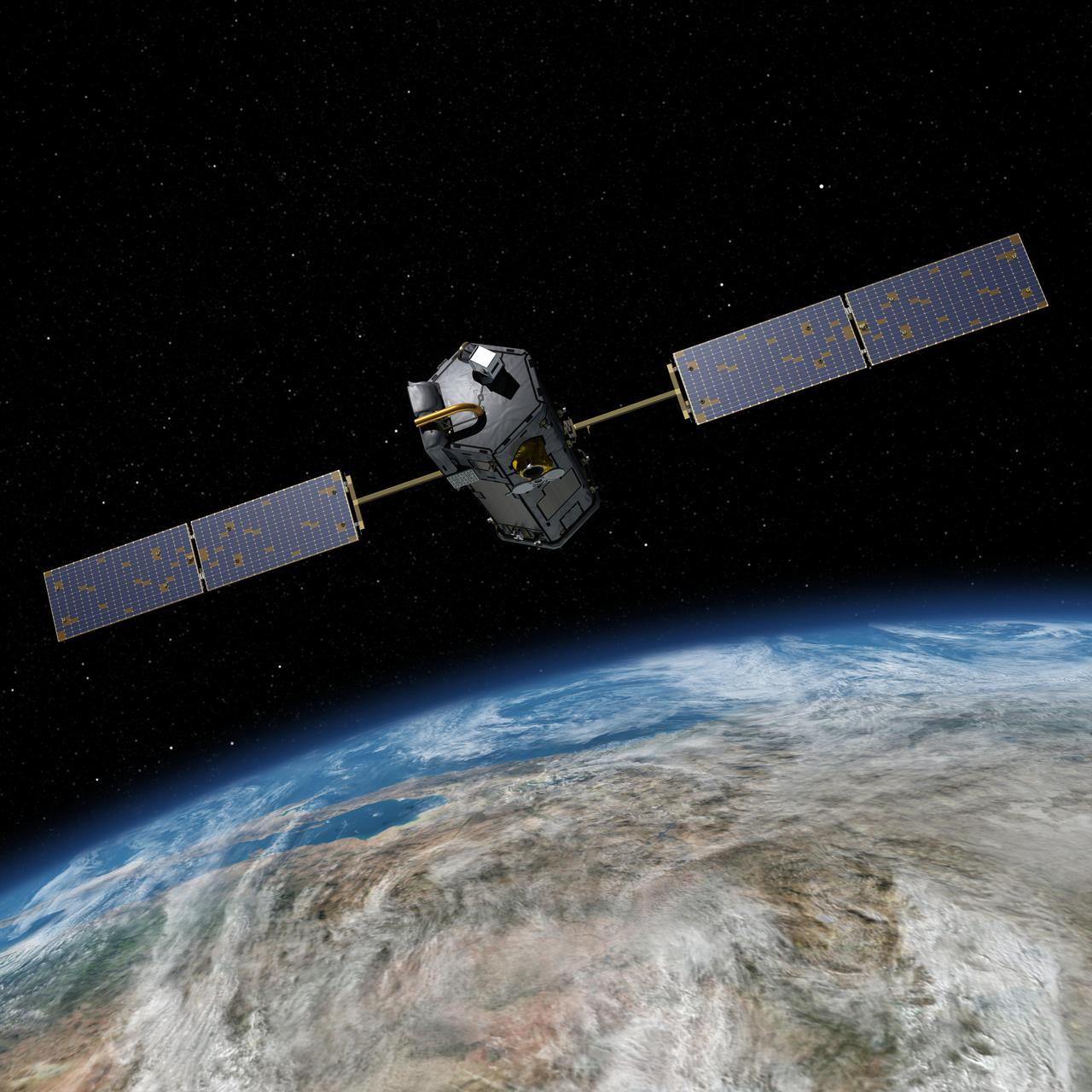
This most recent artist rendering shows NASA Orbiting Carbon Observatory OCO-2, one of five new NASA Earth science missions set to launch in 2014, and one of three managed by the Jet Propulsion Laboratory JPL.
This most recent artist rendering shows NASA Orbiting Carbon Observatory OCO-2, one of five new NASA Earth science missions set to launch in 2014, and one of three managed by the Jet Propulsion Laboratory JPL.
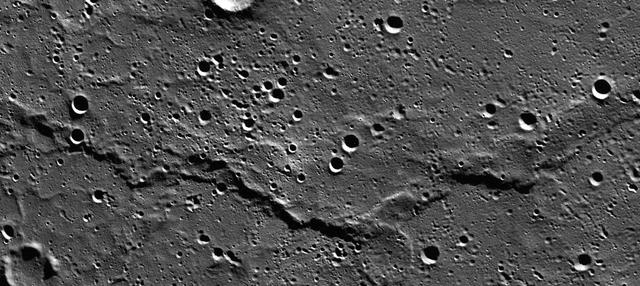
This image mosaic from NASA MESSENGER spacecraft shows an unnamed ridge in the northern volcanic plains of Mercury. Wrinkle ridges like this are interpreted to be tectonic in origin and are usually only found in volcanic plains. Six individual MDIS images are part of this mosaic. Instruments: Mercury Dual Imaging System (MDIS) Latitude: 79° Longitude: 118° E Scale: The ridge is approximately 140 kilometers (87 miles)
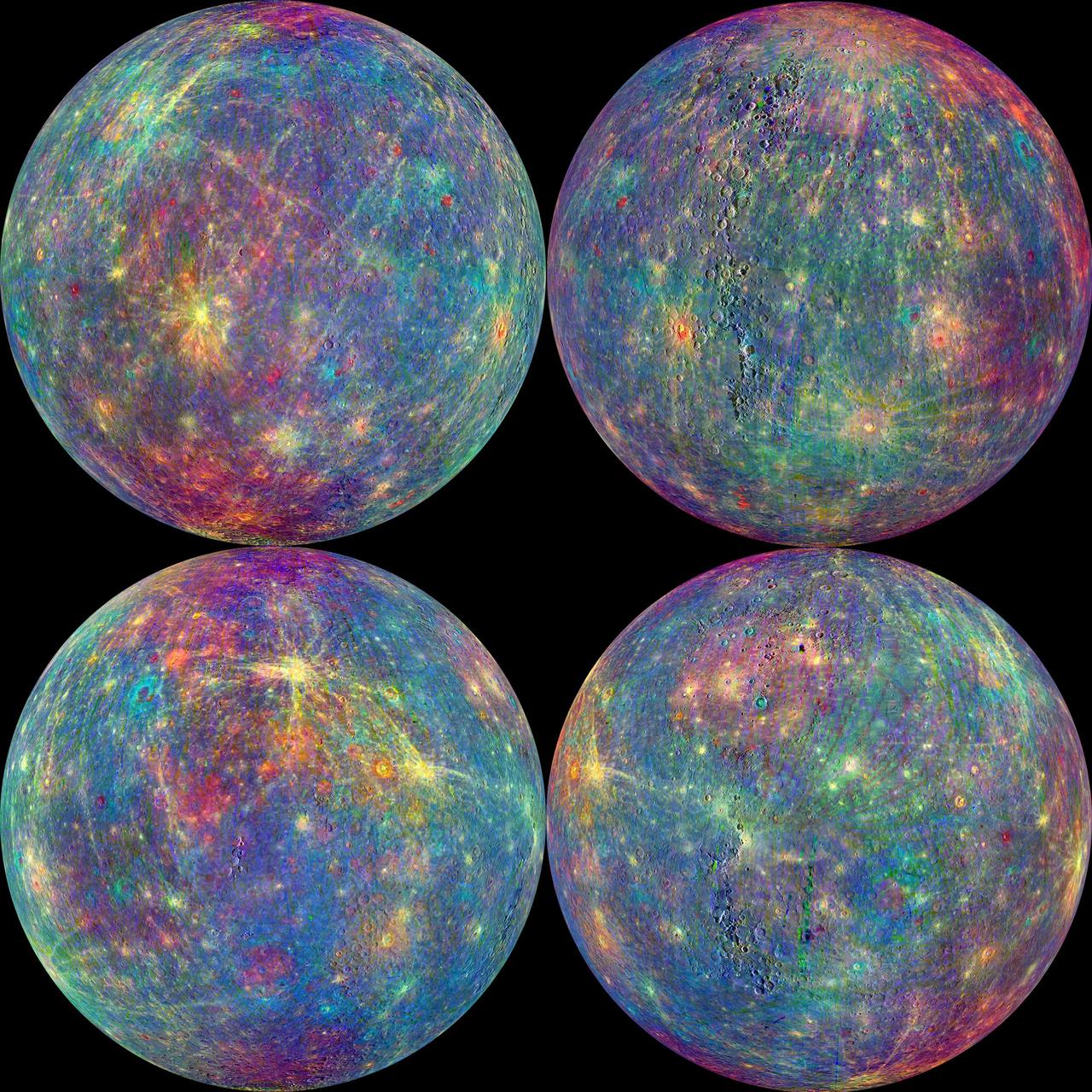
The MASCS instrument onboard NASA MESSENGER spacecraft was designed to study both the exosphere and surface of Mercury. To learn more about the minerals and surface processes on Mercury, the Visual and Infrared Spectrometer (VIRS) portion of MASCS has been diligently collecting single tracks of spectral surface measurements since MESSENGER entered orbit. The track coverage is now extensive enough that the spectral pr
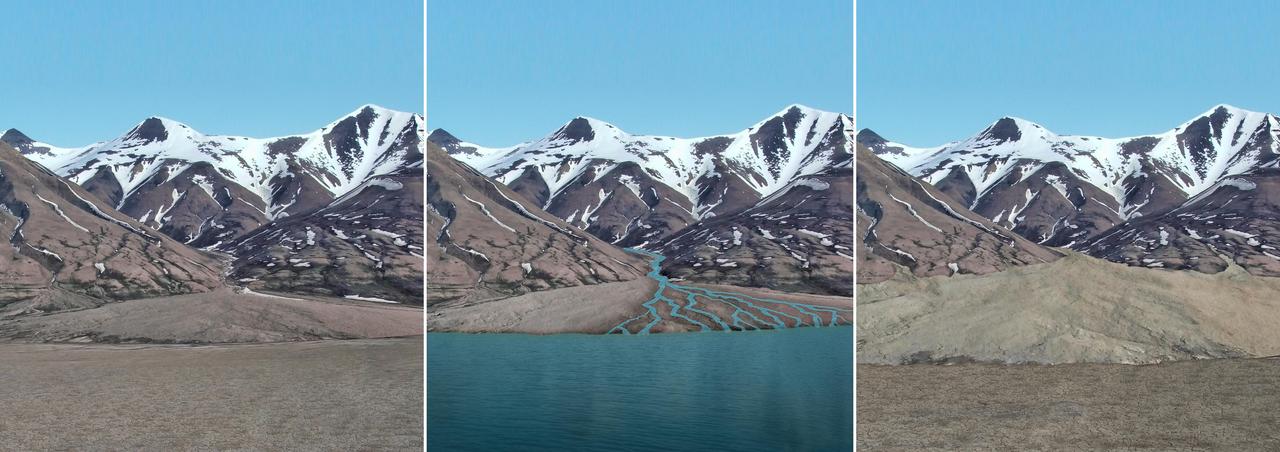
This series of images reconstructs the geology of the region around Mars Mount Sharp, where NASA Curiosity Mars rover landed and is now driving. The images were taken on Earth and have been altered for the illustration.
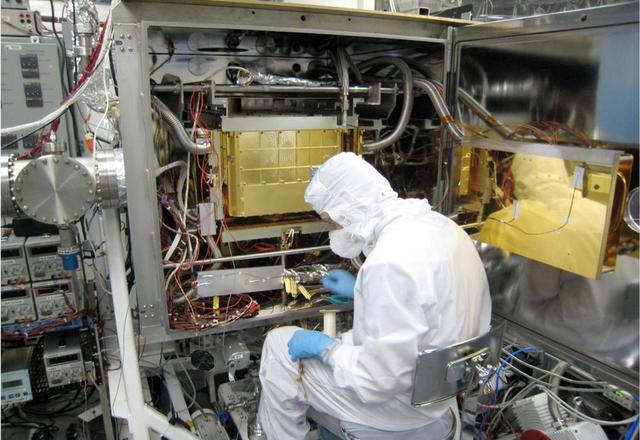
A Sample Analysis at Mars (SAM) team member at NASA's Goddard Space Flight Center, Greenbelt, Maryland, prepares the SAM testbed for an experiment. This test copy of the SAM suite of instruments is inside a chamber that, when closed, can model the pressure and temperature environment that SAM sees inside NASA's Curiosity rover on Mars. Many weeks of testing are often needed to develop and refine sequences of operatio
Mercury Calcium Exosphere
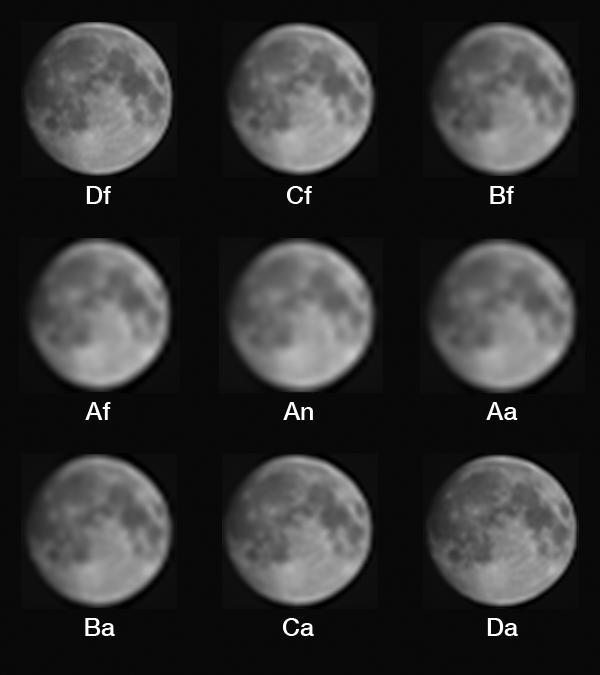
The job of the Multiangle Imaging SpectroRadiometer (MISR) instrument on NASA's Terra satellite is to view Earth. For more than 17 years, its nine cameras have stared downward 24 hours a day, faithfully collecting images used to study Earth's surface and atmosphere. On August 5, however, MISR captured some very unusual data as the Terra satellite performed a backflip in space. This maneuver was performed to allow MIS
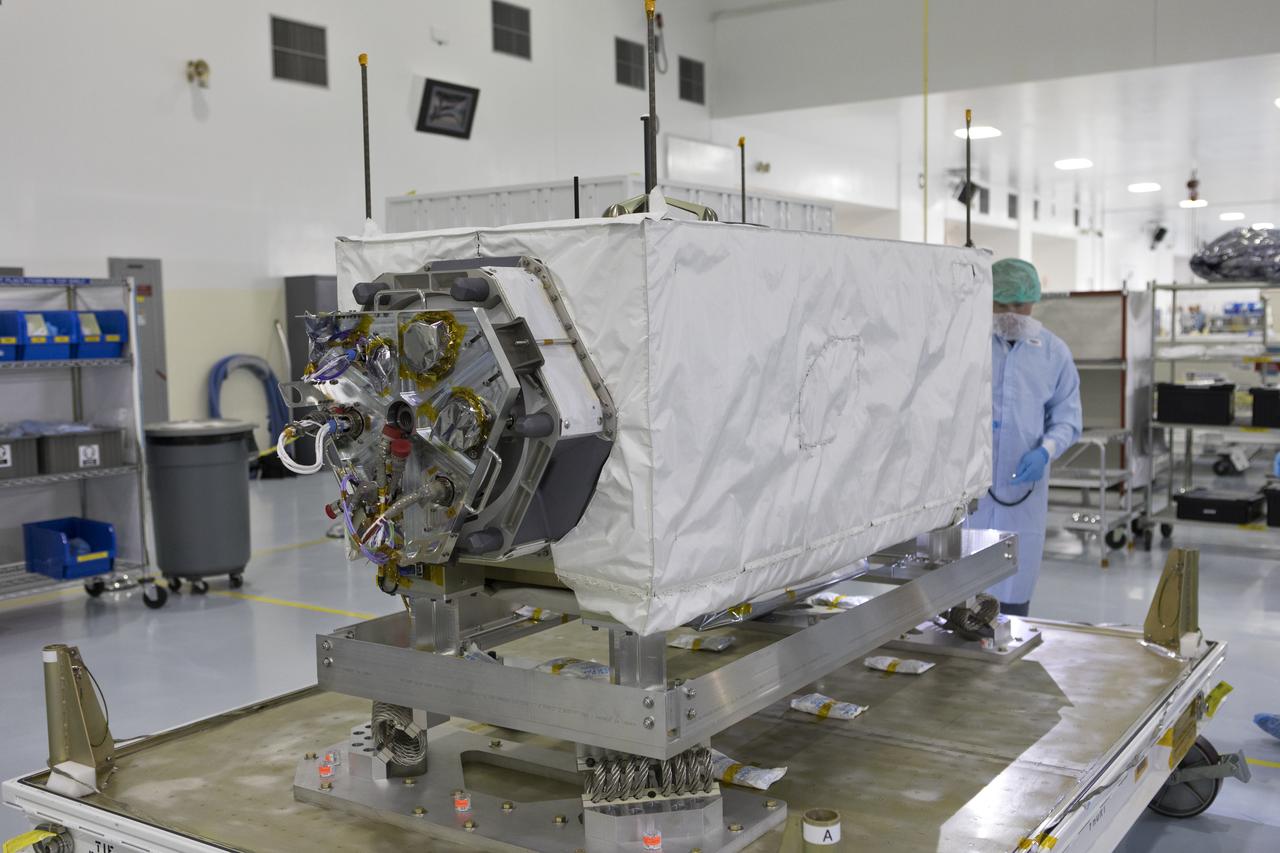
ECOSTRESS Unbagging
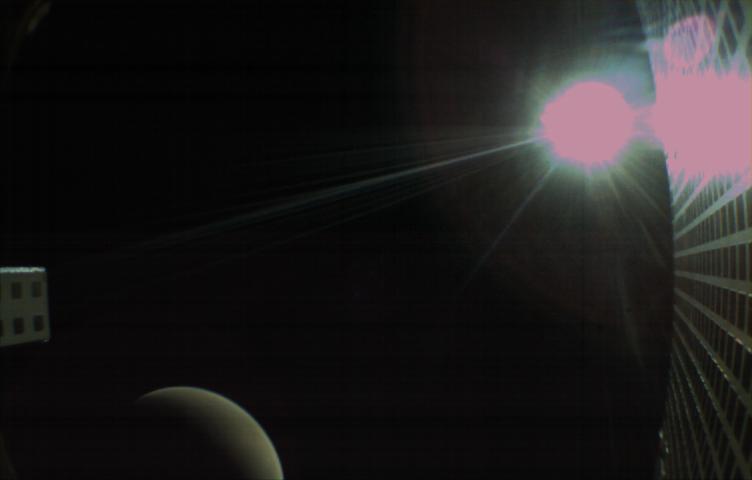
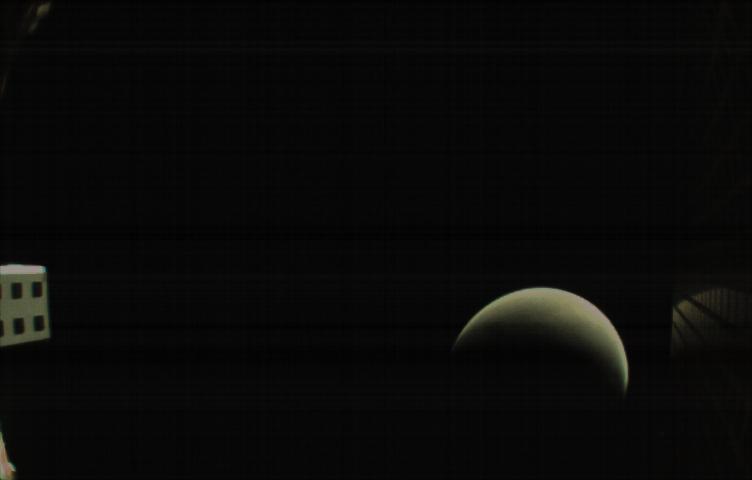
MarCO-B, one of the experimental Mars Cube One (MarCO) CubeSats, took this image of Mars from about 10,900 miles (17,500 kilometers) away just after NASA’s InSight spacecraft landed on Mars on Nov. 26, 2018. MarCO-B flew by Mars with its twin, MarCO-A, to serve as communications relays for InSight as it touched down on the Red Planet around noon PST (3 p.m. EST). This image was taken at 1 p.m. PST (4 p.m. EST). Mars’
MarCO-B, one of the experimental Mars Cube One (MarCO) CubeSats, took this image of Mars from about 10,900 miles (17,500 kilometers) away just after NASA’s InSight spacecraft landed on Mars on Nov. 26, 2018. MarCO-B flew by Mars with its twin, MarCO-A, to serve as communications relays for InSight as it touched down on the Red Planet around noon PST (3 p.m. EST). This image was taken at 1 p.m. PST (4 p.m. EST). A cre
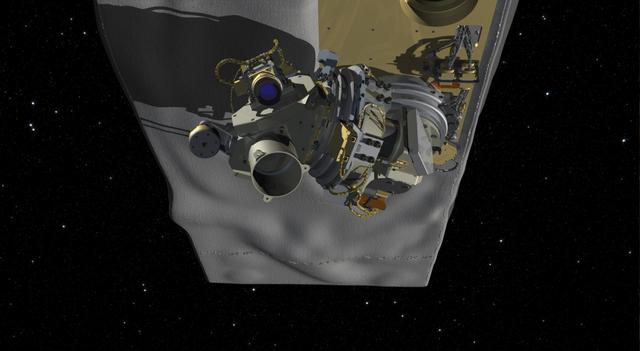
Illustration of NASA's OCO-3 mounted on the underside of the International Space Station. https://photojournal.jpl.nasa.gov/catalog/PIA22837
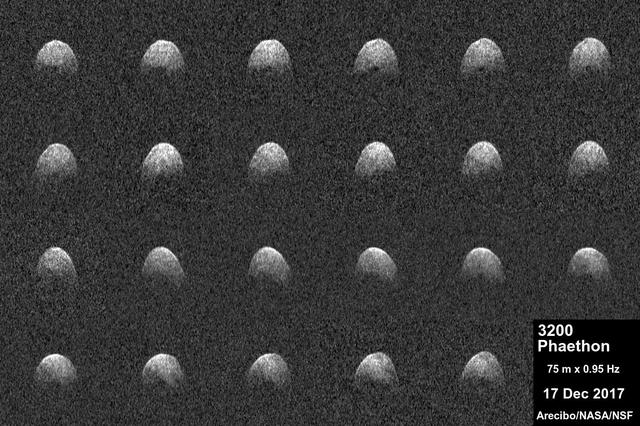
These radar images of near-Earth asteroid 3200 Phaethon were generated by astronomers at the National Science Foundation's Arecibo Observatory on Dec. 17, 2017. Observations of Phaethon were conducted at Arecibo from Dec.15 through 19, 2017. At time of closest approach on Dec. 16 at 3 p.m. PST (6 p.m. EST, 11 p.m. UTC) the asteroid was about 6.4 million miles (10.3 million kilometers) away, or about 27 times the dist
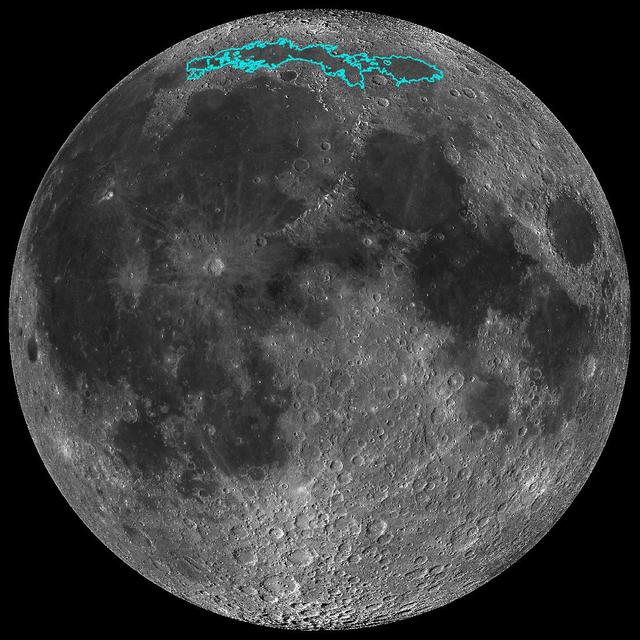
New surface features of the Moon have been discovered in a region called Mare Frigoris, outlined here in teal. This image is a mosaic composed of many images taken by NASA's Lunar Reconnaissance Orbiter (LRO). https://photojournal.jpl.nasa.gov/catalog/PIA23209
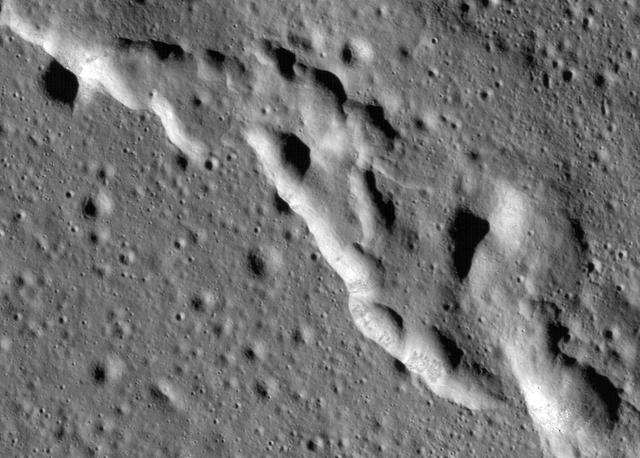
Scientists have discovered these wrinkle ridges in a region of the Moon called Mare Frigoris. These ridges add to evidence that the Moon has an actively changing surface. This image was taken by NASA's Lunar Reconnaissance Orbiter (LRO). https://photojournal.jpl.nasa.gov/catalog/PIA23210
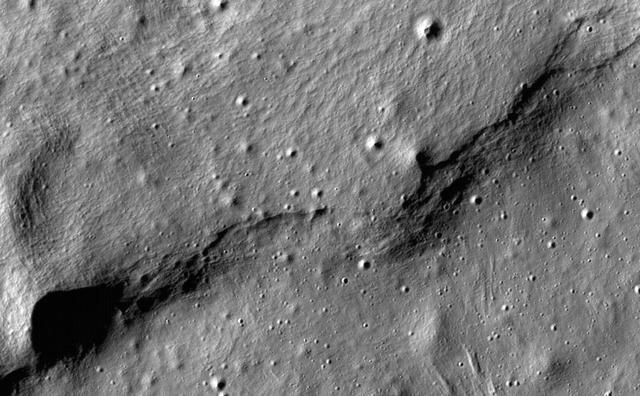
This image of lobate scarps - a kind of curved hill - was taken near a region of the Moon called Mare Frigoris by NASA's Lunar Reconnaissance Orbiter (LRO). https://photojournal.jpl.nasa.gov/catalog/PIA23236
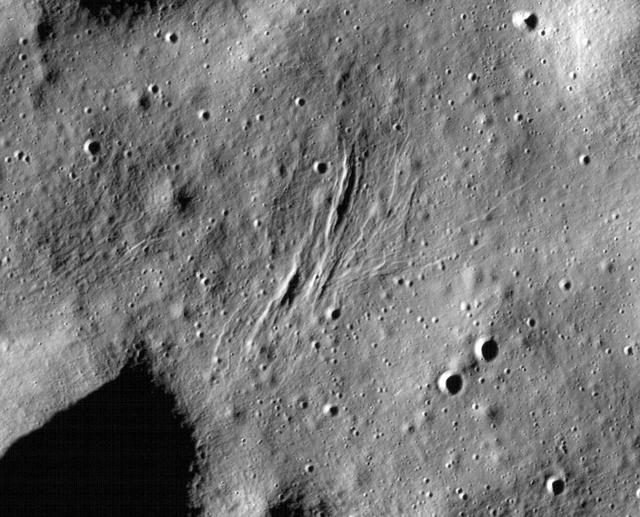
These graben - a kind of trench that is formed as a surface expands - were imaged near a region of the Moon called Mare Frigoris by NASA's Lunar Reconnaissance Orbiter (LRO). https://photojournal.jpl.nasa.gov/catalog/PIA23237
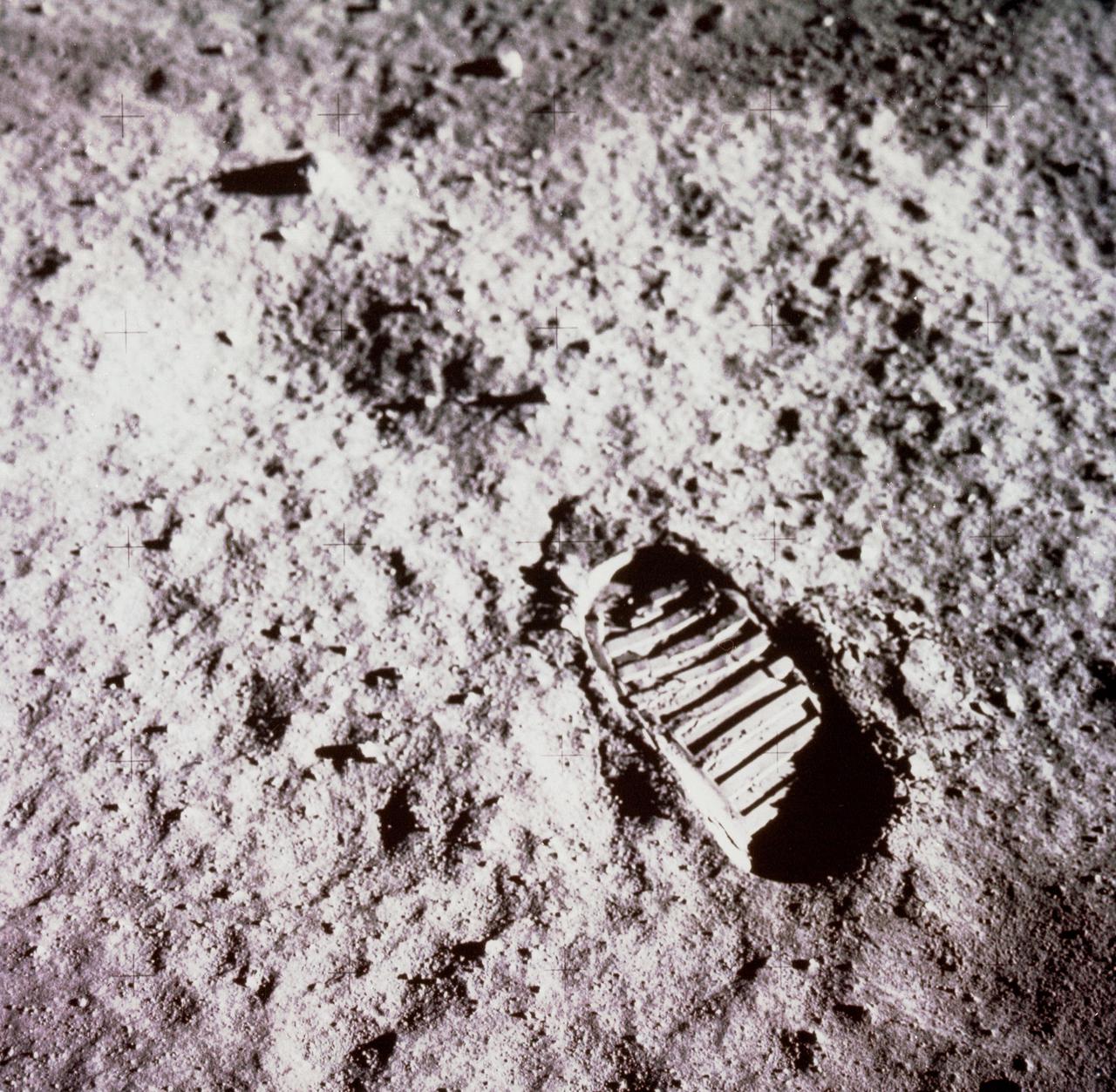
Buzz Aldrin took this iconic image of a bootprint on the Moon during the Apollo 11 moonwalk on July 20, 1969. https://photojournal.jpl.nasa.gov/catalog/PIA24439
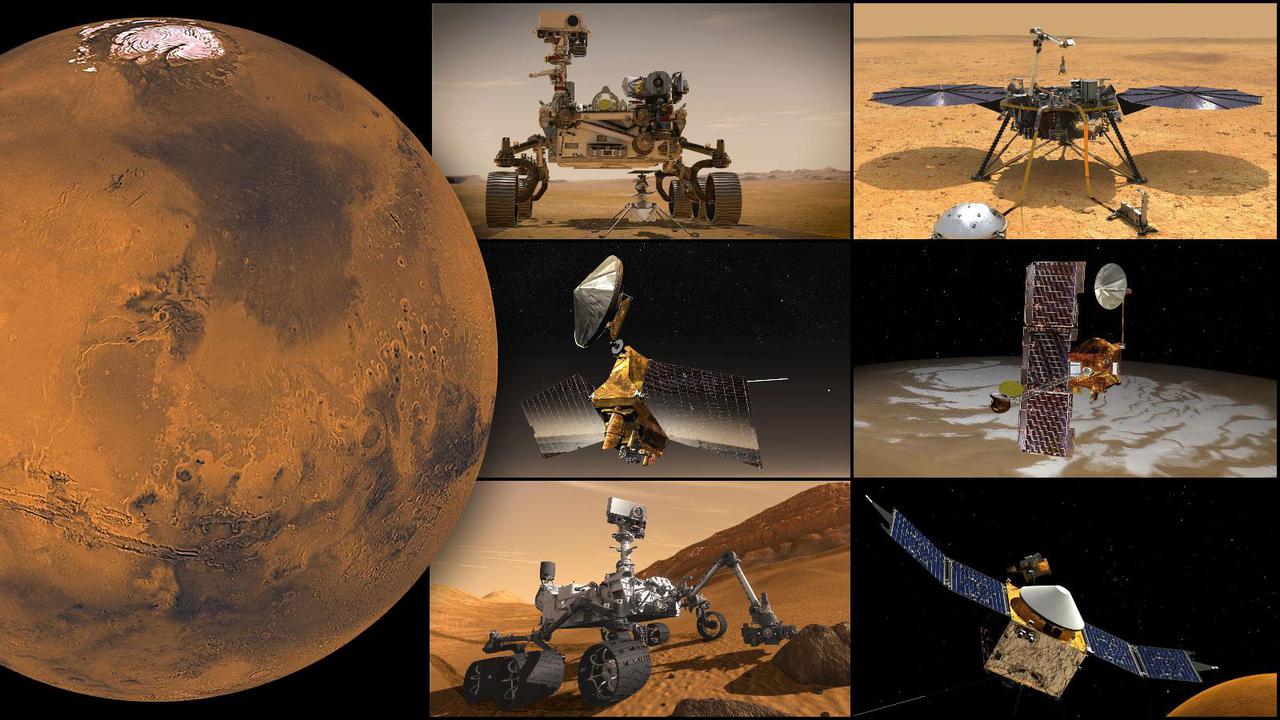
NASA's Mars missions, clockwise from top left: Perseverance rover and Ingenuity Mars Helicopter, InSight lander, Odyssey orbiter, MAVEN orbiter, Curiosity rover, and Mars Reconnaissance Orbiter. https://photojournal.jpl.nasa.gov/catalog/PIA24838
NASA's 2001 Mars Odyssey orbiter arrived at Mars on Oct. 24, 2001. Over the past two decades, the mission has mapped the composition of the Martian surface, providing a window to the past so scientists could piece together how the planet evolved. It has also served as a vital asset in relaying communications between landers and rovers at the Red Planet and the mission teams back on Earth. Here are some of the highlig
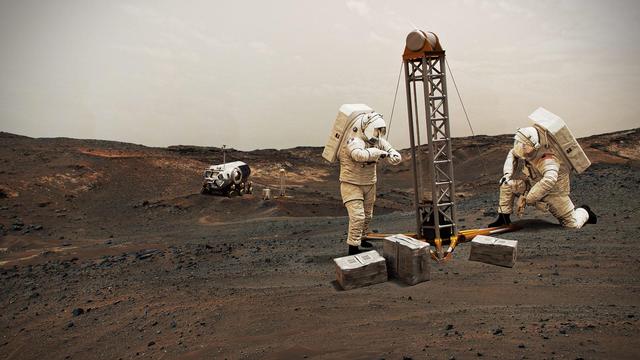
NASA astronauts on Mars in this illustration. https://photojournal.jpl.nasa.gov/catalog/PIA24031
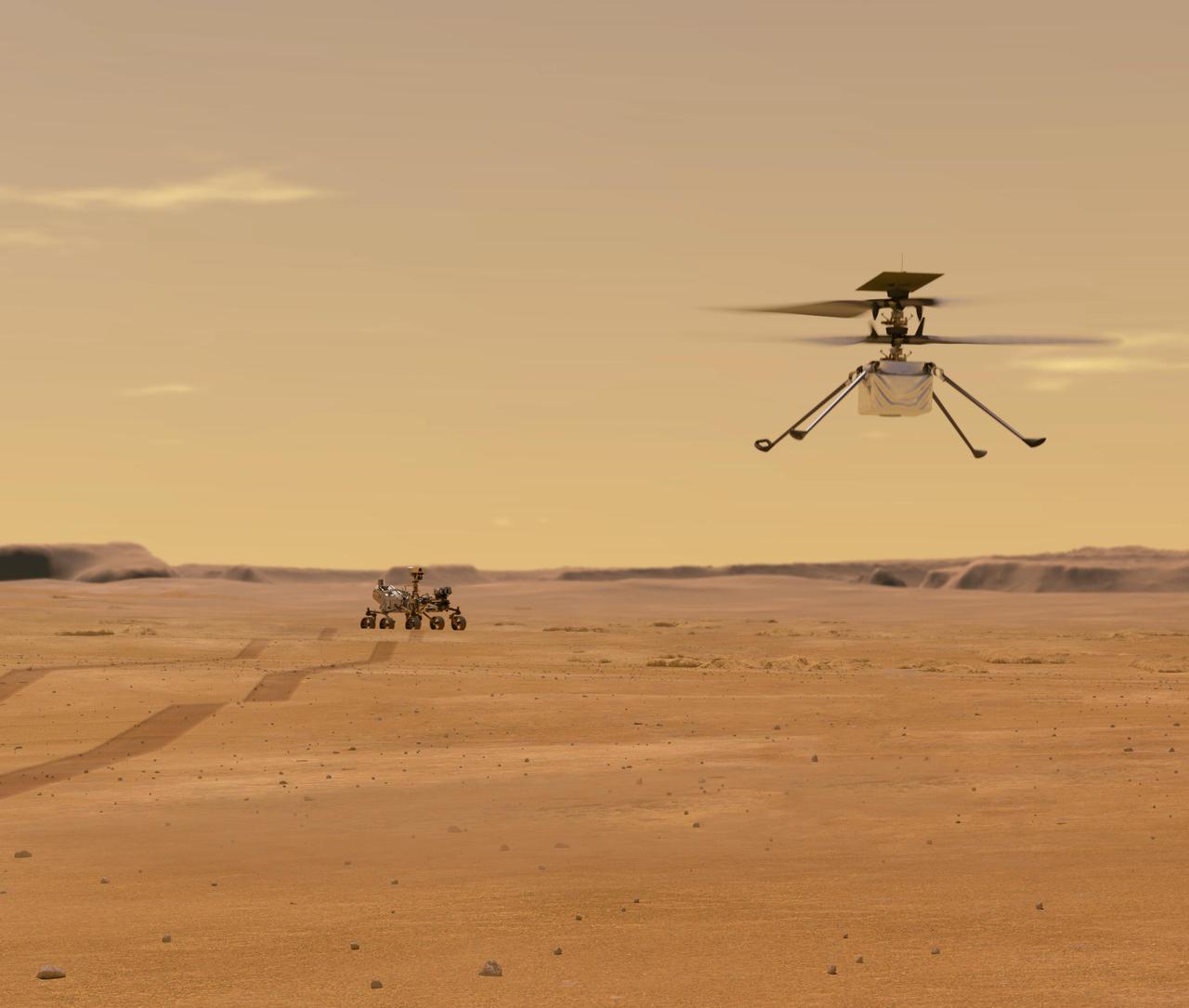
This illustration depicts Mars Helicopter Ingenuity during a test flight on Mars. Ingenuity was taken to the Red Planet strapped to the belly of the Perseverance rover (seen in the background). Ingenuity, a technology experiment, will be the first aircraft to attempt controlled flight on another planet. It will arrive on Mars on Feb. 18, 2021, attached to the belly of NASA's Mars 2020 Perseverance rover. Ingenuity is
An illustration of the planet Mars, highlighting NASA's Mars Perseverance rover mission. https://photojournal.jpl.nasa.gov/catalog/PIA24348