English

NASA Image and Video Library

السجلات المفهرسة تحت NASA Image and Video Library مع المعرّفات والروابط وبيانات الحقوق الأصلية. هذه المواد المستوردة وليست كامل مقتنيات المؤسسة. تحقق من المؤسسة الأصلية عندما يكون المصدر مجمّعًا للبيانات.

4,093 سجلًا مطابقًا؛ الأوصاف والعناوين الأصلية محفوظة. البحث والمرشحات →

التحقق من الأدلة · توثيق المادة والمقطع · الحقوق

1997مكتبة صور وفيديو ناسا

International Space Station (ISS)

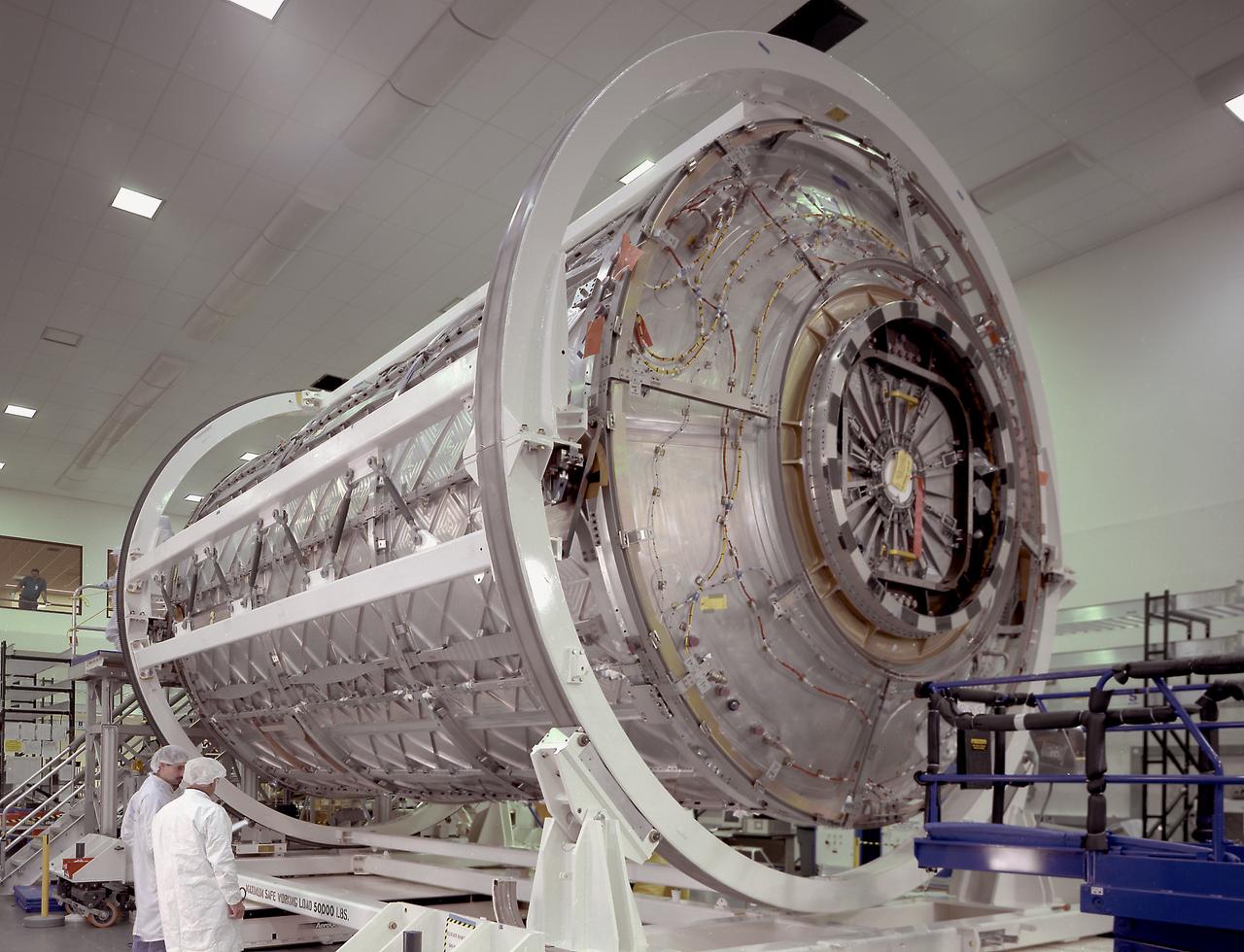
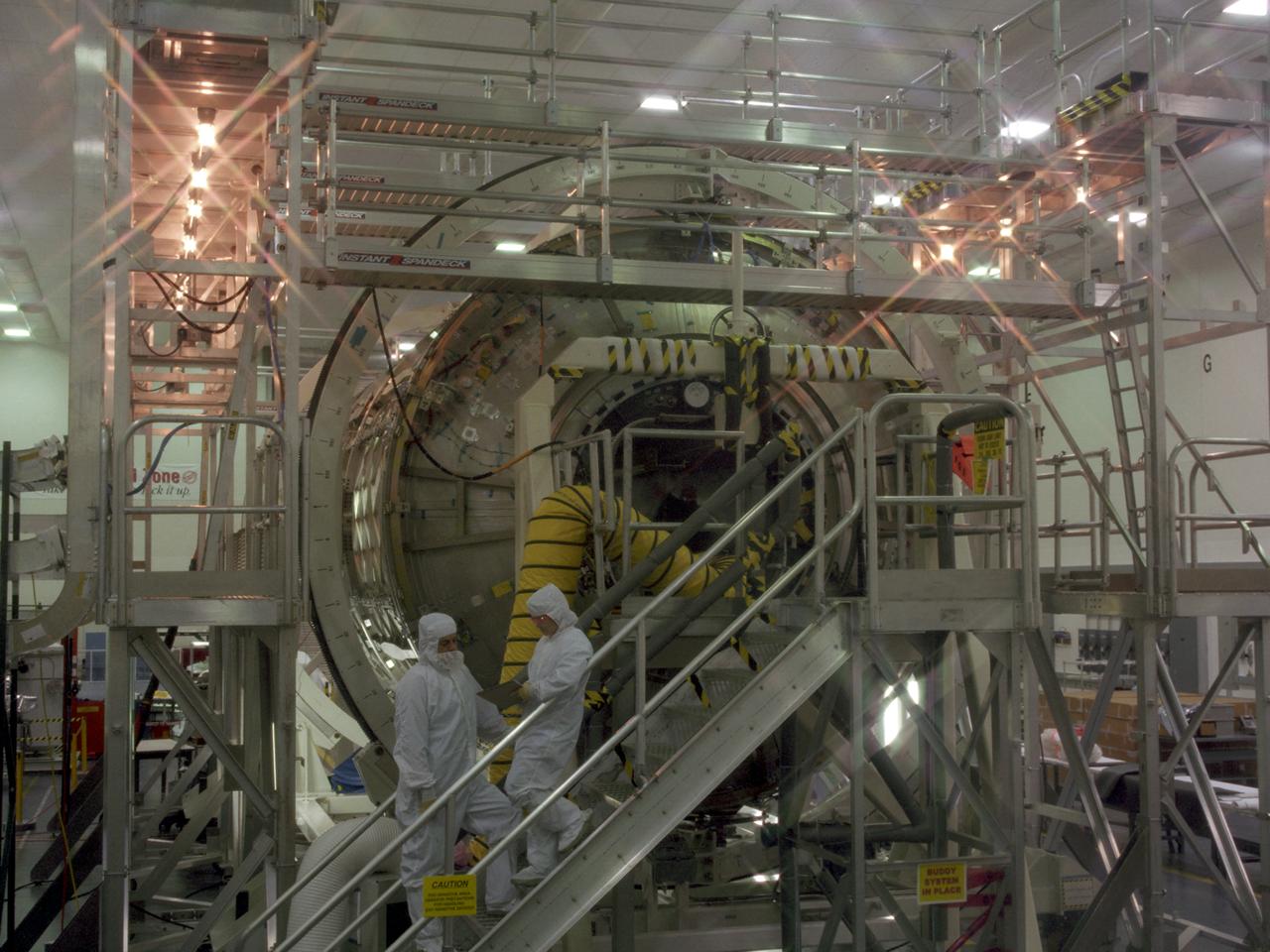
This photograph shows the U.S. Laboratory Module (also called Destiny) for the International Space Station (ISS), under construction in the Space Station manufacturing facility at the Marshall Space Flight Center. The U.S. Laboratory module is the centerpiece of the ISS, where science experiments will be performed in the near-zero gravity of space. The Destiny Module was launched aboard the Space Shuttle orbiter Atla
1986مكتبة صور وفيديو ناسا

Space Station

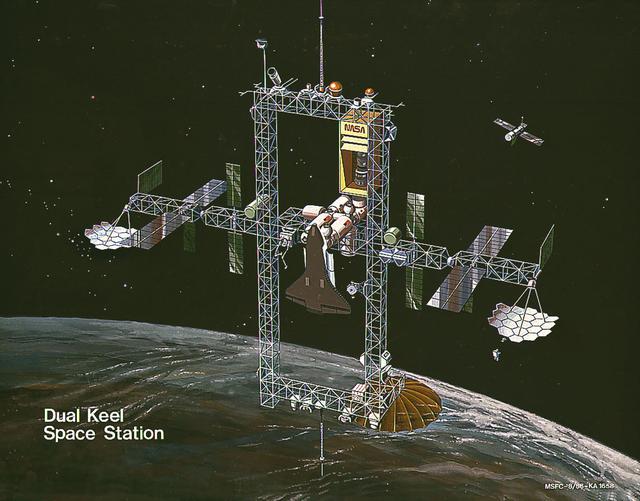
In response to President Reagan's directive to NASA to develop a permanent marned Space Station within a decade, part of the State of the Union message to Congress on January 25, 1984, NASA and the Administration adopted a phased approach to Station development. This approach provided an initial capability at reduced costs, to be followed by an enhanced Space Station capability in the future. This illustration depict

1969مكتبة صور وفيديو ناسا

Space Station

This picture illustrates a concept of a 33-Foot-Diameter Space Station Leading to a Space Base. In-house work of the Marshall Space Flight Center, as well as a Phase B contract with the McDornel Douglas Astronautics Company, resulted in a preliminary design for a space station in 1969 and l970. The Marshall-McDonnel Douglas approach envisioned the use of two common modules as the core configuration of a 12-man space

1972مكتبة صور وفيديو ناسا

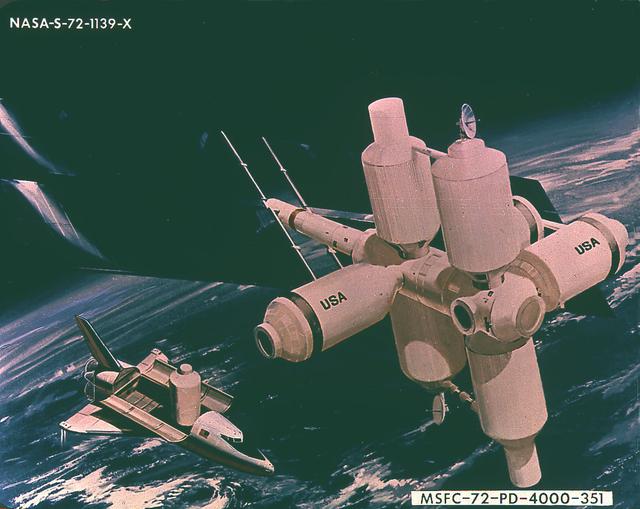
Space Station

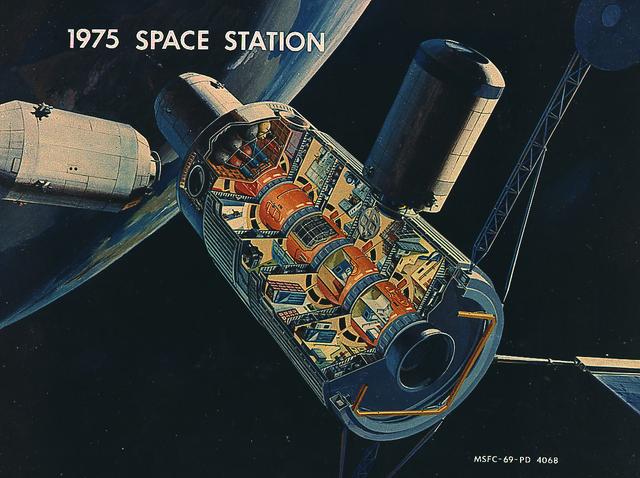
This is an artist's concept of a modular space station. In 1970 the Marshall Space Flight Center arnounced the completion of a study concerning a modular space station that could be launched by the planned-for reusable Space Shuttle. The study envisioned a space station composed of cylindrical sections 14 feet in diameter and of varying lengths joined to form any one of a number of possible shapes. The sections were

1976مكتبة صور وفيديو ناسا

Space Shuttle Projects

This is a cutaway illustration of the Space Shuttle external tank (ET) with callouts. The giant cylinder, higher than a 15-story building, with a length of 154-feet (47-meters) and a diameter of 27.5-feet (8.4-meters), is the largest single piece of the Space Shuttle. During launch, the ET also acts as a backbone for the orbiter and solid rocket boosters. Separate pressurized tank sections within the external tank ho

1998مكتبة صور وفيديو ناسا

International Space Station (ISS)

This artist's concept depicts the completely assembled International Space Station (ISS) passing over Florida and the Bahamas. As a gateway to permanent human presence in space, the Space Station Program is to expand knowledge benefiting all people and nations. The ISS is a multidisciplinary laboratory, technology test bed, and observatory that will provide unprecedented undertakings in scientific, technological, and

1998مكتبة صور وفيديو ناسا

International Space Station (ISS)

This artist's concept depicts the completely assembled International Space Station (ISS) passing over the Straits of Gibraltar and the Mediterranean Sea. As a gateway to permanent human presence in space, the Space Station Program is to expand knowledge benefiting all people and nations. The ISS is a multidisciplinary laboratory, technology test bed, and observatory that will provide unprecedented undertakings in sci

1998مكتبة صور وفيديو ناسا

International Space Station (ISS)

This artist's digital concept depicts the completely assembled International Space Station (ISS) passing over Florida. As a gateway to permanent human presence in space, the Space Station Program is to expand knowledge benefiting all people and nations. The ISS is a multidisciplinary laboratory, technology test bed, and observatory that will provide unprecedented undertakings in scientific, technological, and interna

1997مكتبة صور وفيديو ناسا

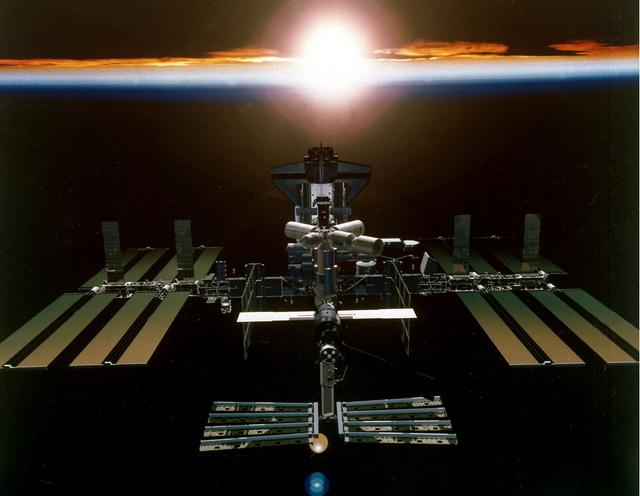
International Space Station (ISS)

Artist's digital concept of the International Space Station (ISS), a gateway to permanent human presence in space, after all assembly is completed in Year 2003. The Station will be powered by almost an acre of solar panels and have a mass of almost one million pounds. Station modules are being provided by the United States, Russia, Japan, and Europe. Canada is providing a mechanical arm and Canada Hand. Sixteen count

2004مكتبة صور وفيديو ناسا

Microgravity

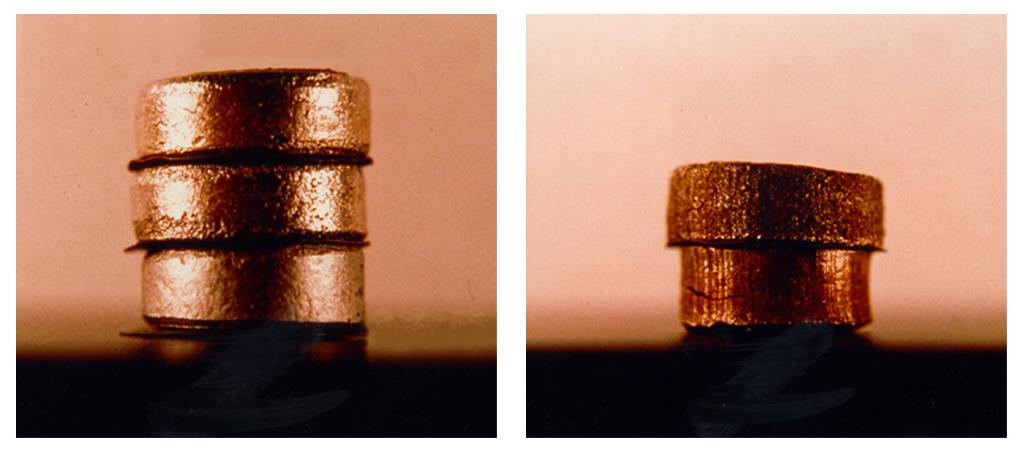
Industry spends billions of dollars each year on machine tools to manufacture products out of metal. This includes tools for cutting every kind of metal part from engine blocks to Shuttle main engine components. Cutting tool tips often break because of weak spots or defects in their composition. Based on a new concept called defect trapping, space offers a novel environment to study defect formation in molten metal m

1998مكتبة صور وفيديو ناسا

International Space Station (ISS)

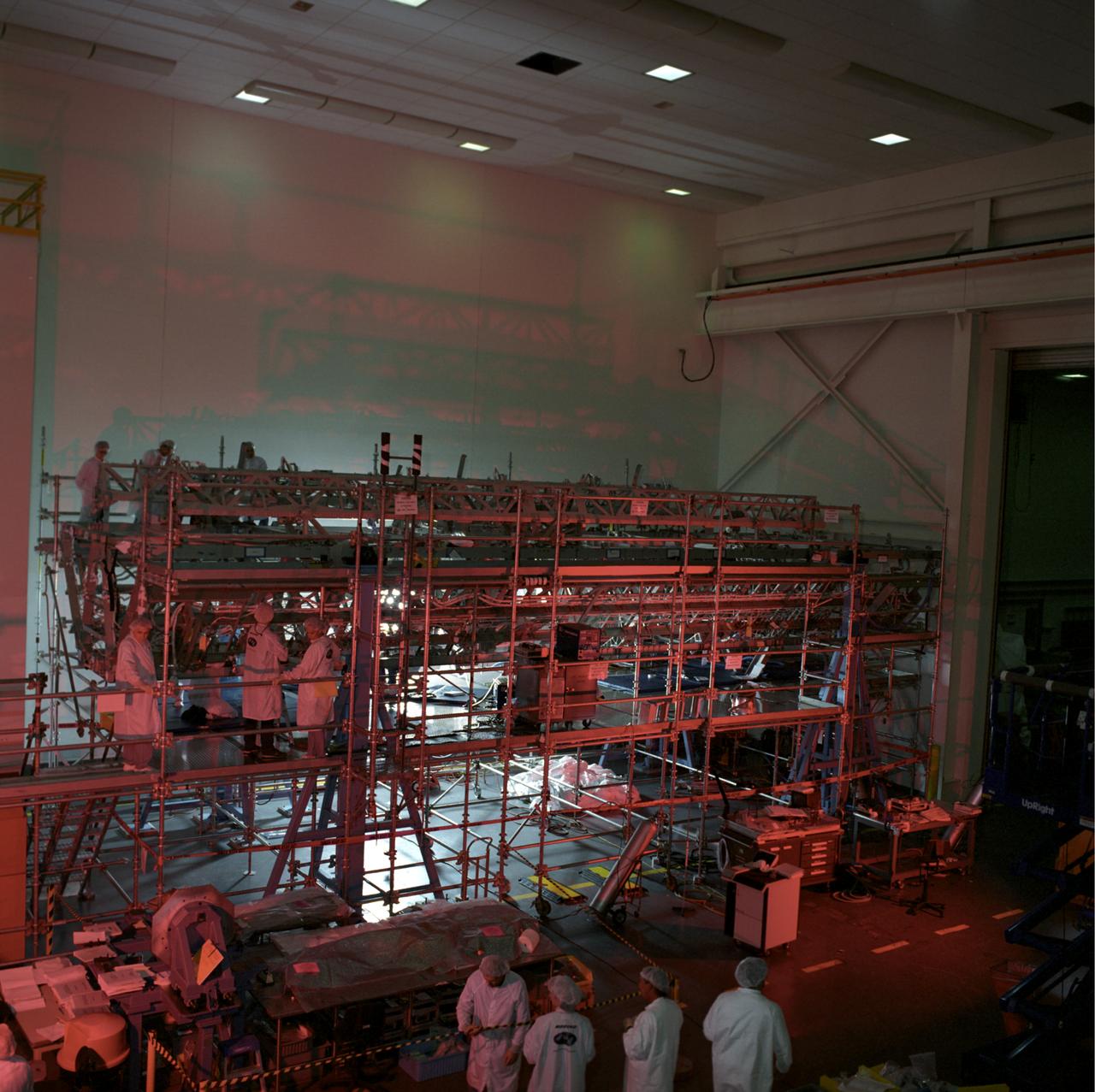
This photograph shows the U.S. Laboratory Module (also called Destiny) for the International Space Station (ISS), in the Space Station manufacturing facility at the Marshall Space Flight Center, being readied for shipment to the Kennedy Space Center. The U.S. Laboratory module is the centerpiece of the ISS, where science experiments will be performed in the near-zero gravity of space. The Destiny Module was launched

1999مكتبة صور وفيديو ناسا

International Space Station (ISS)

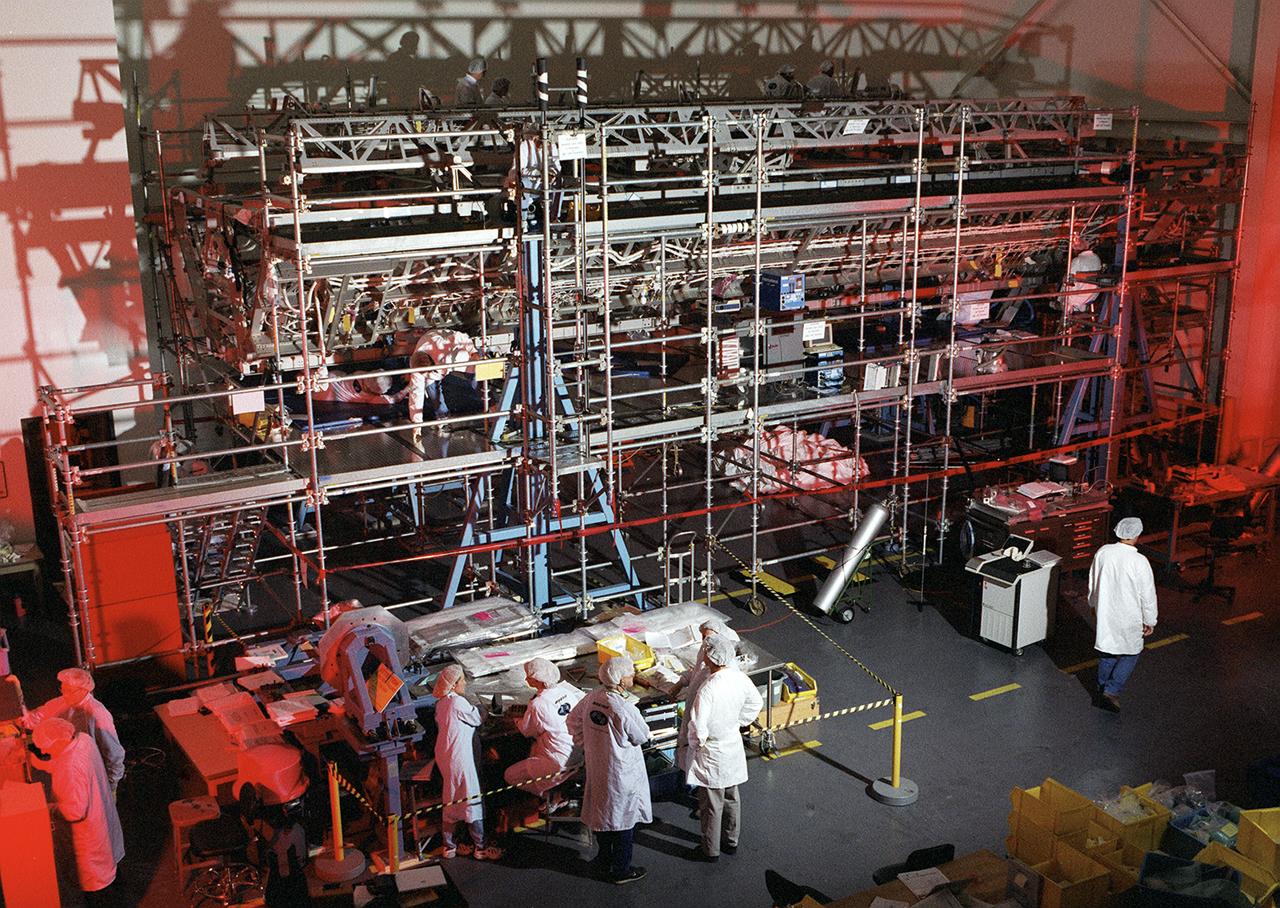
This image shows the Integrated Truss Assembly S-1 (S-One), the Starboard Side Thermal Radiator Truss, for the International Space Station (ISS) undergoing final construction in the Space Station manufacturing facility at the Marshall Space Flight Center. The S1 truss provides structural support for the orbiting research facility's radiator panels, which use ammonia to cool the Station's complex power system. Deliver

2004مكتبة صور وفيديو ناسا

International Space Station (ISS)

Pictured is an artist's concept of the International Space Station (ISS) with solar panels fully deployed. In addition to the use of solar energy, the ISS will employ at least three types of propulsive support systems for its operation. The first type is to reboost the Station to correct orbital altitude to offset the effects of atmospheric and other drag forces. The second function is to maneuver the ISS to avoid co