
It's Surprisingly Hard to Go to the Sun
Review conditions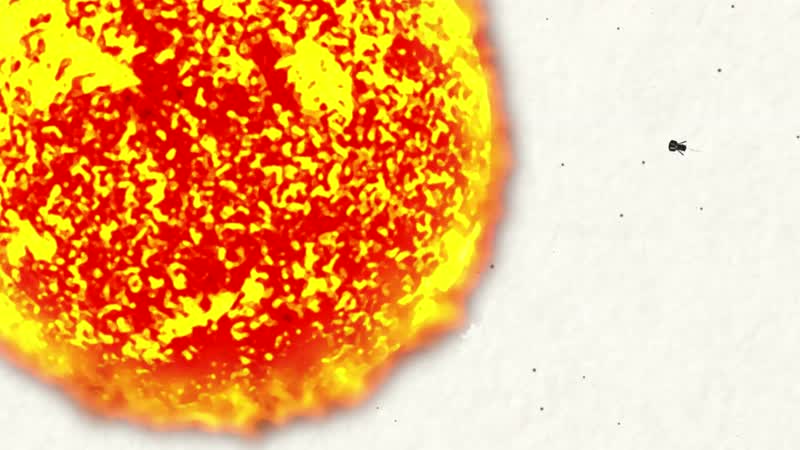
The Sun contains 99.8 percent of the mass in our solar system. Its gravitational pull is what keeps everything here, from tiny Mercury to the gas giants to the Oort Cloud, 186 billion miles away. But even though the Sun has such a powerful pull, it's surprisingly hard to actually go to the Sun: It takes 55 times more energy to go to the Sun than it does to go to Mars. Why is it so difficult? The answer lies in the same fact that keeps Earth from plunging into the Sun: Our planet is traveling very fast — about 67,000 miles per hour — almost entirely sideways relative to the Sun. The only way to get to the Sun is to cancel that sideways motion. Since Parker Solar Probe will skim through the Sun's atmosphere, it only needs to drop 53,000 miles per hour of sideways motion to reach its destination, but that's no easy feat. In addition to using a powerful rocket, the Delta IV Heavy, Parker Solar Probe will perform seven Venus gravity assists over its seven-year mission to shed sideways speed into Venus' well of orbital energy. These gravity assists will draw Parker Solar Probe's orbit closer to the Sun for a record approach of just 3.83 million miles from the Sun's visible surface on the
Rights evidence
NASA media-use guidance applies; NASA identifiers, endorsement, third-party material, and personality rights require separate review.
It's Surprisingly Hard to Go to the Sun. Credit: NASA / GSFC.
Normalized by rights-v2-discovery. This is evidence routing, not legal advice.