
Staden växer
IN COPYRIGHT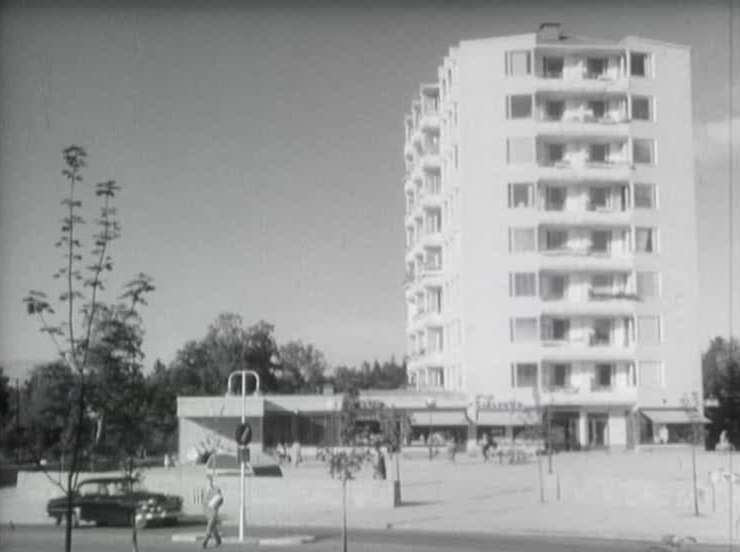
Playback could not be verified recently
Recent automated checks had trouble reaching the media file. The record remains listed; open the original source or try again later.
View on Internet Archive ↗”En film om det nyaste Stockholm”, producerad 1955, där Stockholms snabba modernisering och utbyggnad i förorterna under den tidiga efterkrigstiden skildras. Inklipp till annonser och rubriker i Dagens nyheter, tryckpressarna som rullar i tidningens tryckeri, och bilden av DNs distributionsbil som far runt och enligt berättarrösten levererar morgontidningen till ”sju av tio Söderortsfamiljer” tydliggör att filmen är gjord på uppdrag av DN, men den har karaktären av en tidstypisk informationsfilm snarare än reklam. Alf Henrikssons röst berättar på vers om statistik och förändrade vanemönster i stenstad och ytterområden: ”Mellan folket i samma trappuppgång är beröringen inte stor, sextio procent har aldrig sett hur närmsta grannen bor. Somliga hälsar i trappan – vem var nu det där, vafalls?! Men var tredje hälsar aldrig på någon granne alls.” Kameran tar sig in i höghus och låghus, och reser med tunnelbanan ut till de nya områdena i Söderort och Västerort - särskilt Vällingby skildras under sin framväxt. Men även tidigare förändringar i stadsbilden tas upp i filmen, såsom bygget av Västerbron (1933-35) och trafikplatsen Slussen (1935). “A film about the newest Stockholm”, produced in 1955, showing the city’s rapid modernisation and suburban extension during the years after the war. Cuts to printed advertisements and headlines in the Dagens Nyheter (DN) daily, printing presses rolling out the newspapers, and the DN distribution van driving around and, as the voice-over says, delivering the morning paper to “seven out of ten families living in South Stockholm” – all confirming that the film was commissioned by DN, but with the quality of an information film typical of the time, rather than a commercial. Alf Henriksson’s voice speaks (in verse in the Swedish version) about statistics and altered habits in the stone neighbourhoods and outlying areas: “The people around the stairwells don’t have much to do with each other, sixty per cent have never seen their neighbour’s home. Some say hello on the steps – who on earth could that have been?! But one in three never say hello at all.” The camera takes us into high-rise and low-rise buildings, and takes the metro out to the new areas of South and West Stockholm – Vällingby (in the west) especially is depicted during its emergence. But the film also looks at earlier changes to the cityscape, such as the construction of Västerbron bridge (1933–35) and the traffic hub that is the Slussen lock area (1935).
Rights evidence
http://rightsstatements.org/vocab/InC/1.0/
Public access is separate from reuse rights. Normalized by global-archive-v1; verify the original source before reuse.