Apollo 6 (AS-502) Pacific Recovery
Apollo 6 (AS-502) Pacific Recovery
Records indexed under NASA Image and Video Library, with original identifiers, source links and item-level rights evidence. This is the imported selection, not the institution’s entire holdings. Verify the originating institution when the source is an aggregator.
4,093 matching records; original descriptions and titles are preserved. Search and filters →
Verify the evidence · Cite an item or clip · Rights
Apollo 6 (AS-502) Pacific Recovery
S68-56621 (18 Dec. 1968) --- These three astronauts are the prime crew of the Apollo 9 (Spacecraft 104/Lunar Module 3/Saturn 504) space mission. Left to right, are James A. McDivitt, commander; David R. Scott, command module pilot: and Russell L. Schweickart, lunar module pilot. The Apollo 9 launch is scheduled no earlier than February 28, 1969. In the background is the Apollo 8 space vehicle on Pad A, Launch Complex
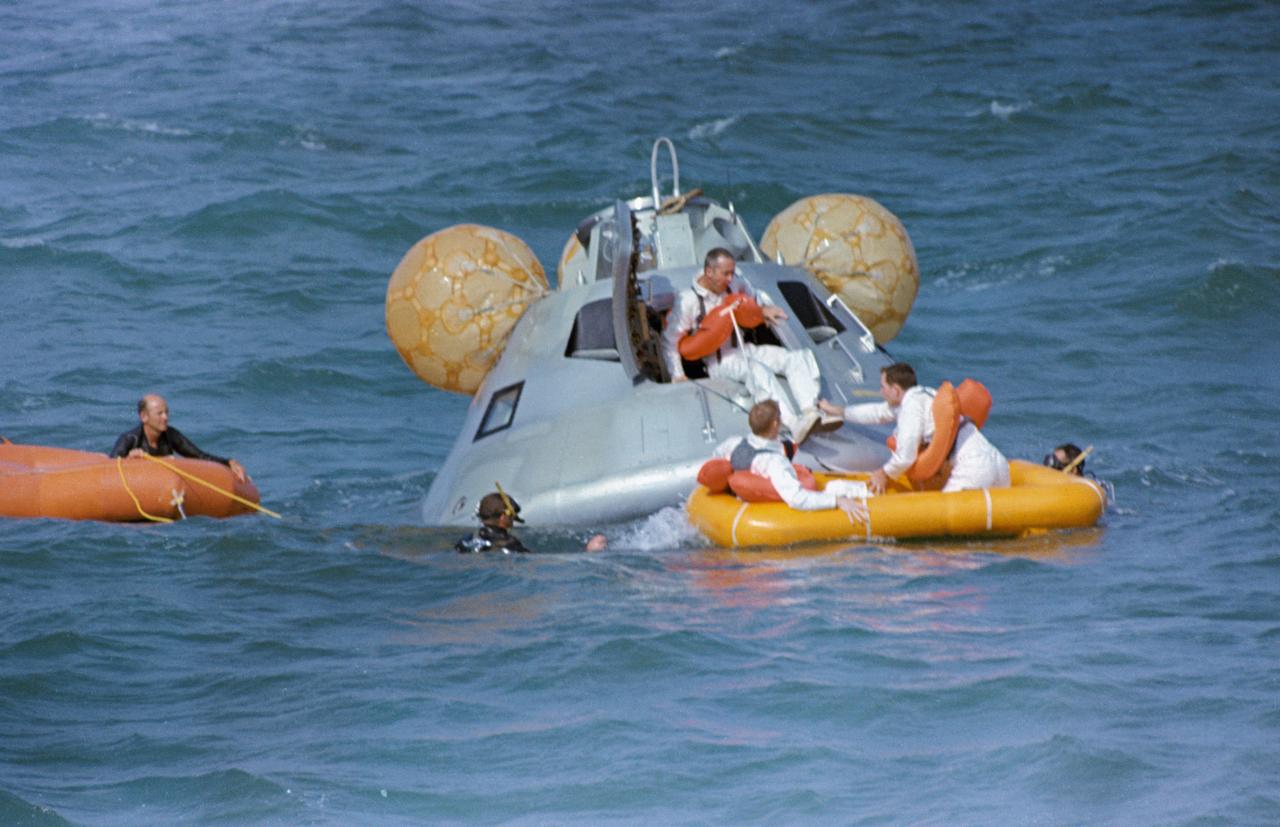
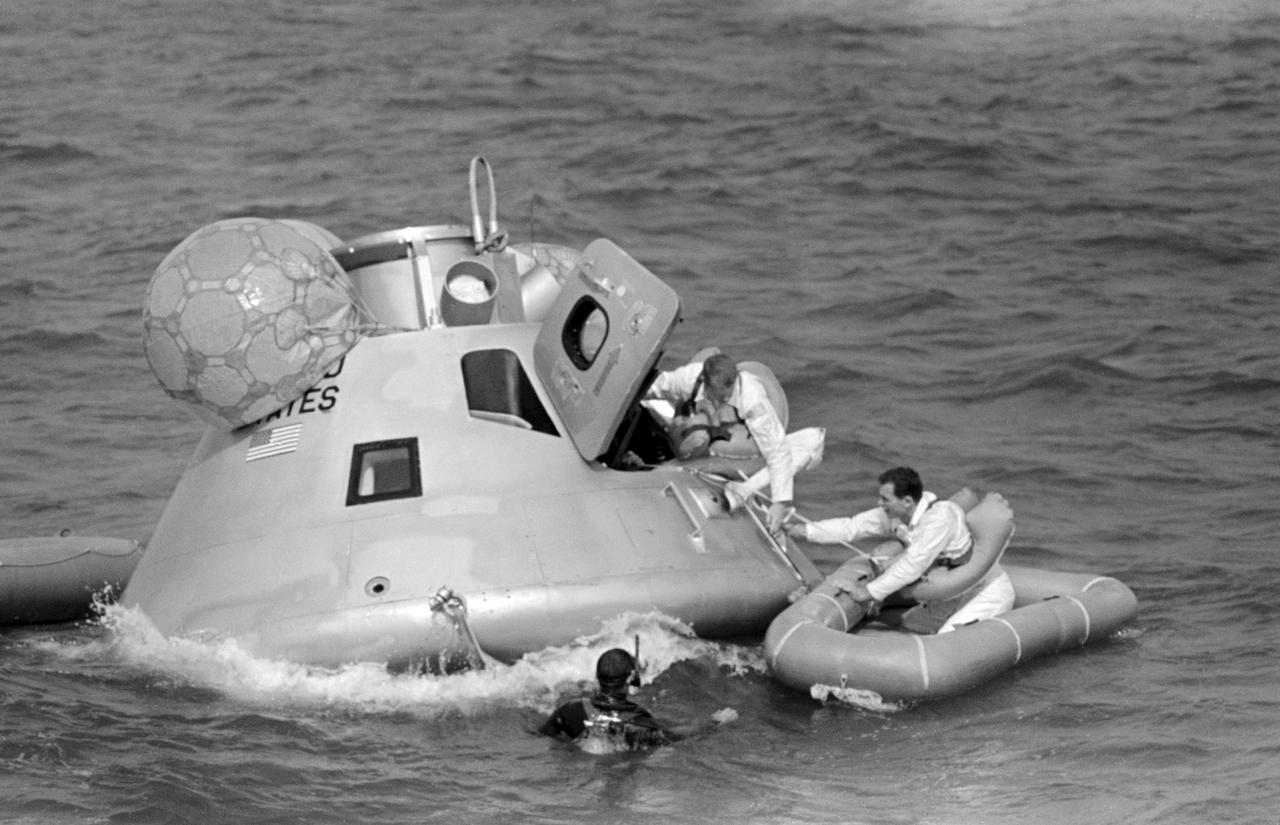
S68-50967 (20 Nov. 1968) --- The Apollo 9 prime crew participates in water egress training in the Gulf of Mexico. Apollo Command Module (CM) Boilerplate 1102 was used in the training. Egressing boilerplate is astronaut James A. McDivitt, commander. In life raft are astronauts Russell L. Schweickart (on left), lunar pilot; and David R. Scott, command pilot. A team of MSC swimmers assisted in the exercise. The inflated
S68-50960 (20 Nov. 1968) --- The Apollo 9 prime crew participates in water egress training in the Gulf of Mexico. Apollo Command Module Boilerplate 1102 was used in the training. In life raft is astronaut David R. Scott, command module pilot. Egressing the boilerplate is astronaut Russell L. Schweickart, lunar module pilot. Still inside boilerplate, out of view, is astronaut James A. McDivitt, commander. A team of MS
S68-50977 (20 Nov. 1968) --- The Apollo 9 prime crew participates in water egress training in the Gulf of Mexico. Apollo Command Module Boilerplate 1102 was used in the training. Egressing the boilerplate is astronaut David R. Scott, command module pilot. Inside the boilerplate, out of view, are astronauts James A. McDivitt, commander; and Russell L. Schweickart, lunar module pilot. A team of MSC swimmers assisted in
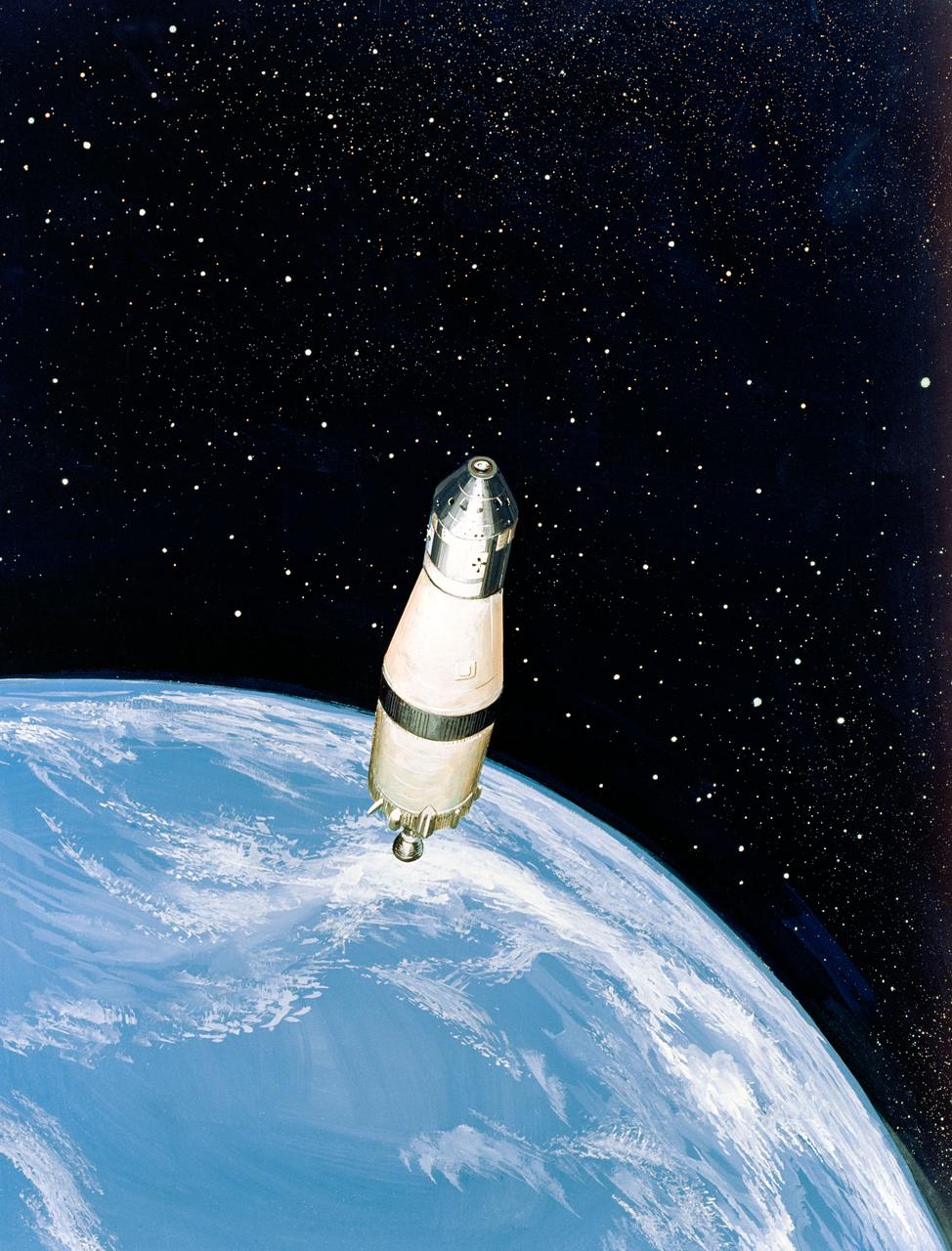
S68-51304 (December 1968) --- North American Rockwell artist's concept illustrating a phase of the scheduled Apollo 8 lunar orbit mission. Here, the Apollo 8 spacecraft Command and Service Modules (CSM), still attached to the Saturn V (S-IVB) third stage, heads for the moon at a speed of about 24,300 miles per hour. The trajectory, computed from the Saturn V's third stage instrumentation unit, provides a "free return
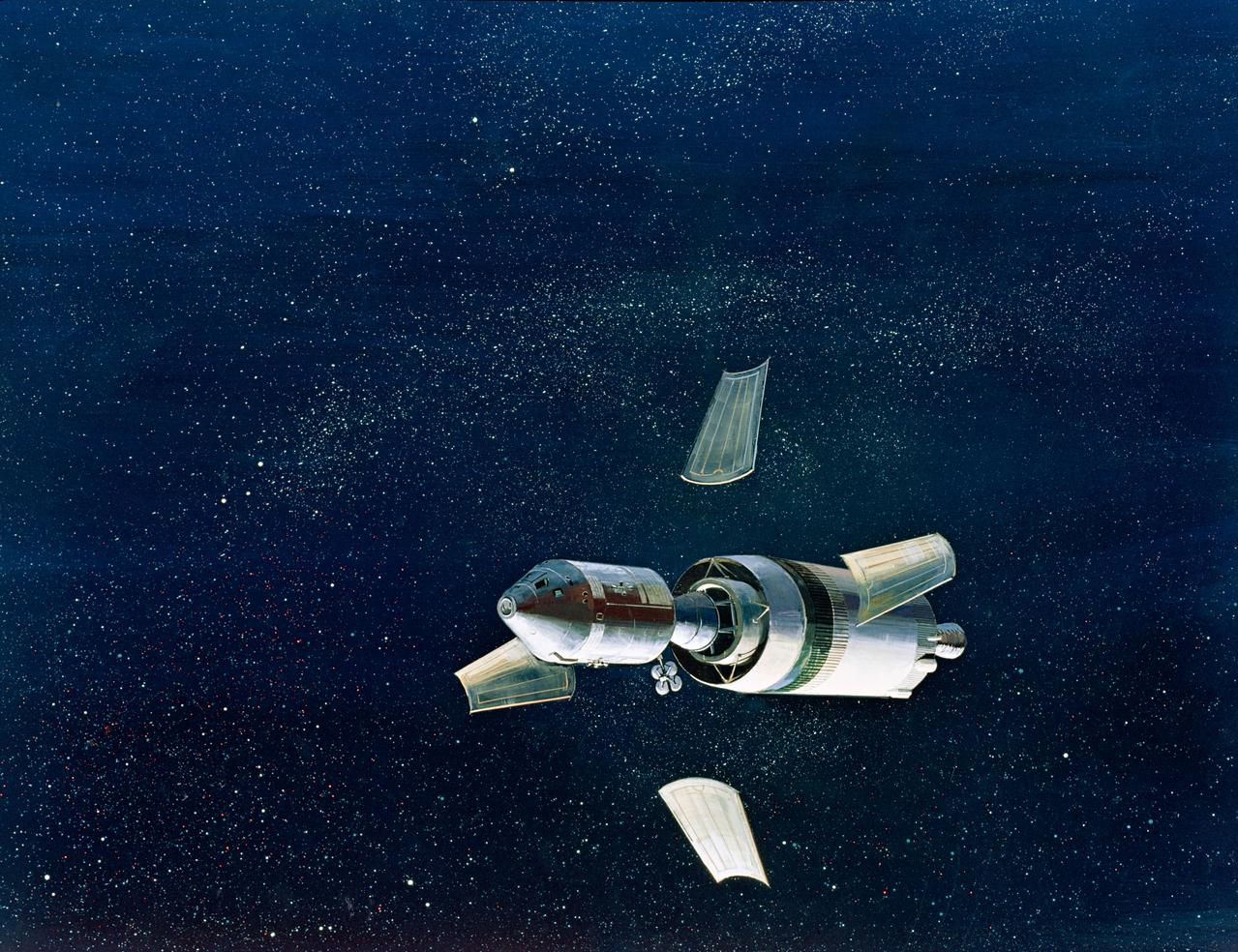
S68-51306 (December 1968) --- North American Rockwell artist's concept illustrating a phase of the scheduled Apollo 8 lunar orbit mission. Here, the Apollo 8 spacecraft lunar module adapter (SLA) panels, which have supported the Command and Service Modules, are jettisoned. This is done by astronauts firing the service module reaction control engines. A signal simultaneously deploys and jettisons the panels, separatin
S68-51302 (December 1968) --- North American Rockwell artist's concept illustrating a phase of the Apollo 8 lunar orbit mission. Here, after 20 hours of lunar orbit, Apollo 8 astronauts start the 20,500-pound thrust engine and head for home. The service module engine will fire about three minutes, starting up while the spacecraft is at the darkened, backside of the moon and blocked from communication with Earth.
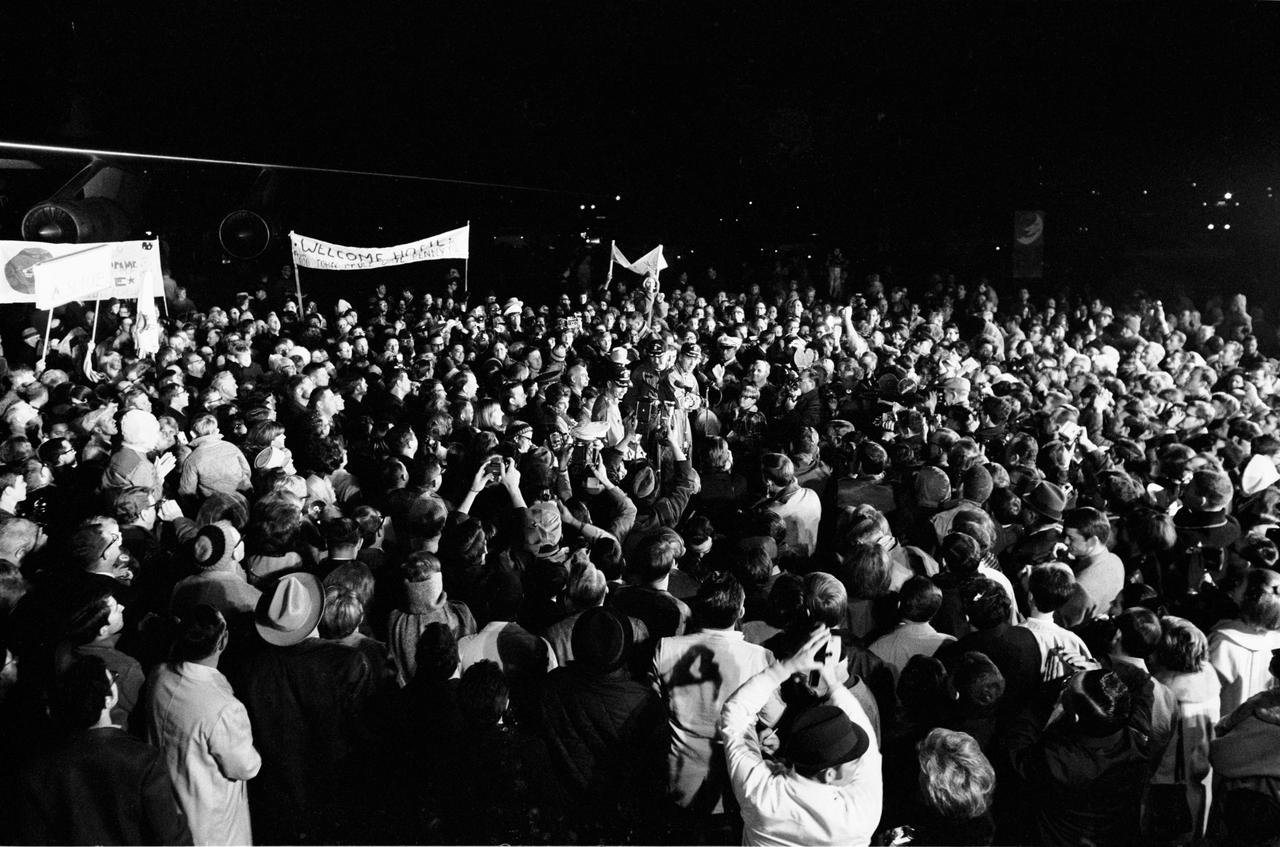
S69-16402 (29 Dec. 1968) --- Although it was past 2 a.m., a crew of more than 2,000 people were on hand at Ellington Air Force Base to welcome the members of the Apollo 8 crew back home. Astronauts Frank Borman, James A. Lovell Jr., and William A. Anders had just flown to Houston from the pacific recovery area by way of Hawaii. The three crewmen of the historic Apollo 8 lunar orbit mission are standing at the microph
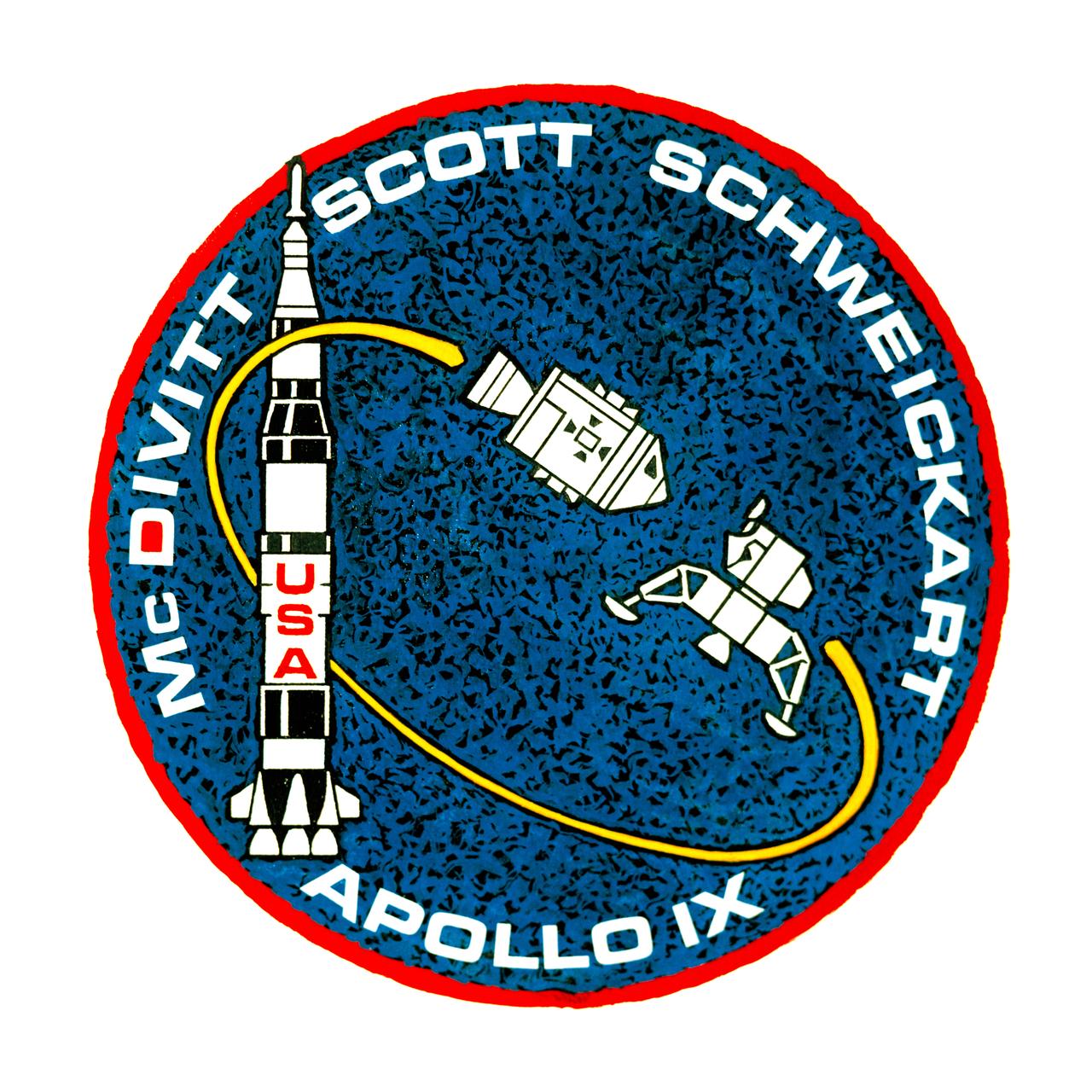
S69-18569 (February 1969) --- The insignia of the Apollo 9 space mission. The crew consist of astronauts James A. McDivitt, commander; David R. Scott, command module pilot; and Russell L. Schweickart, lunar module pilot. The Apollo 9 mission will evaluate spacecraft lunar module systems performance during manned Earth-orbital flight. The NASA insignia design for Apollo flights is reserved for use by the astronauts an
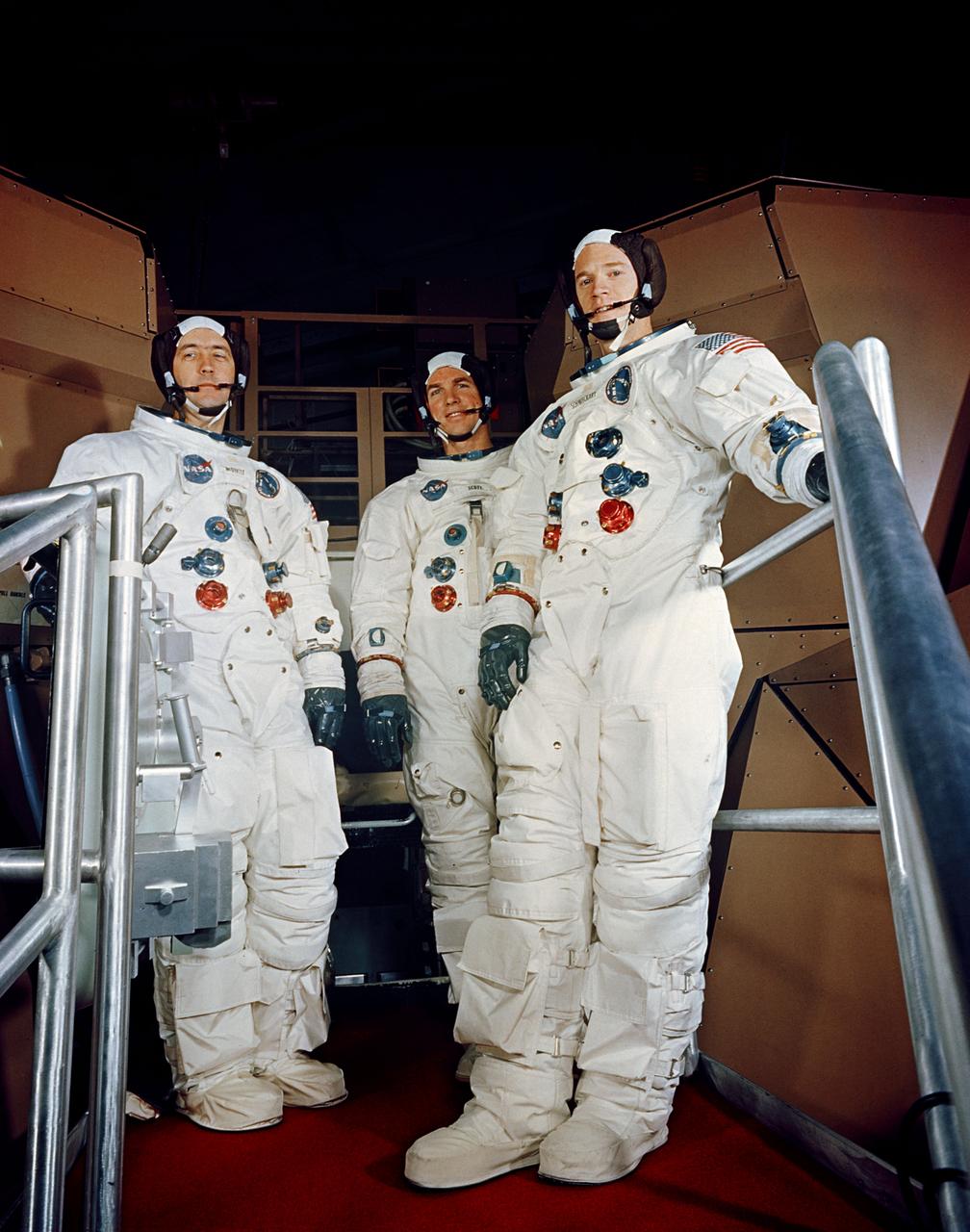
S69-19983 (17 Feb. 1969) --- The Apollo 9 crew is shown suited up for a simulated flight in the Apollo Mission Simulator at the Kennedy Space Center (KSC). Left to right are astronauts James A. McDivitt, commander; David R. Scott, command module pilot; and Russell L. Schweickart, lunar module pilot.
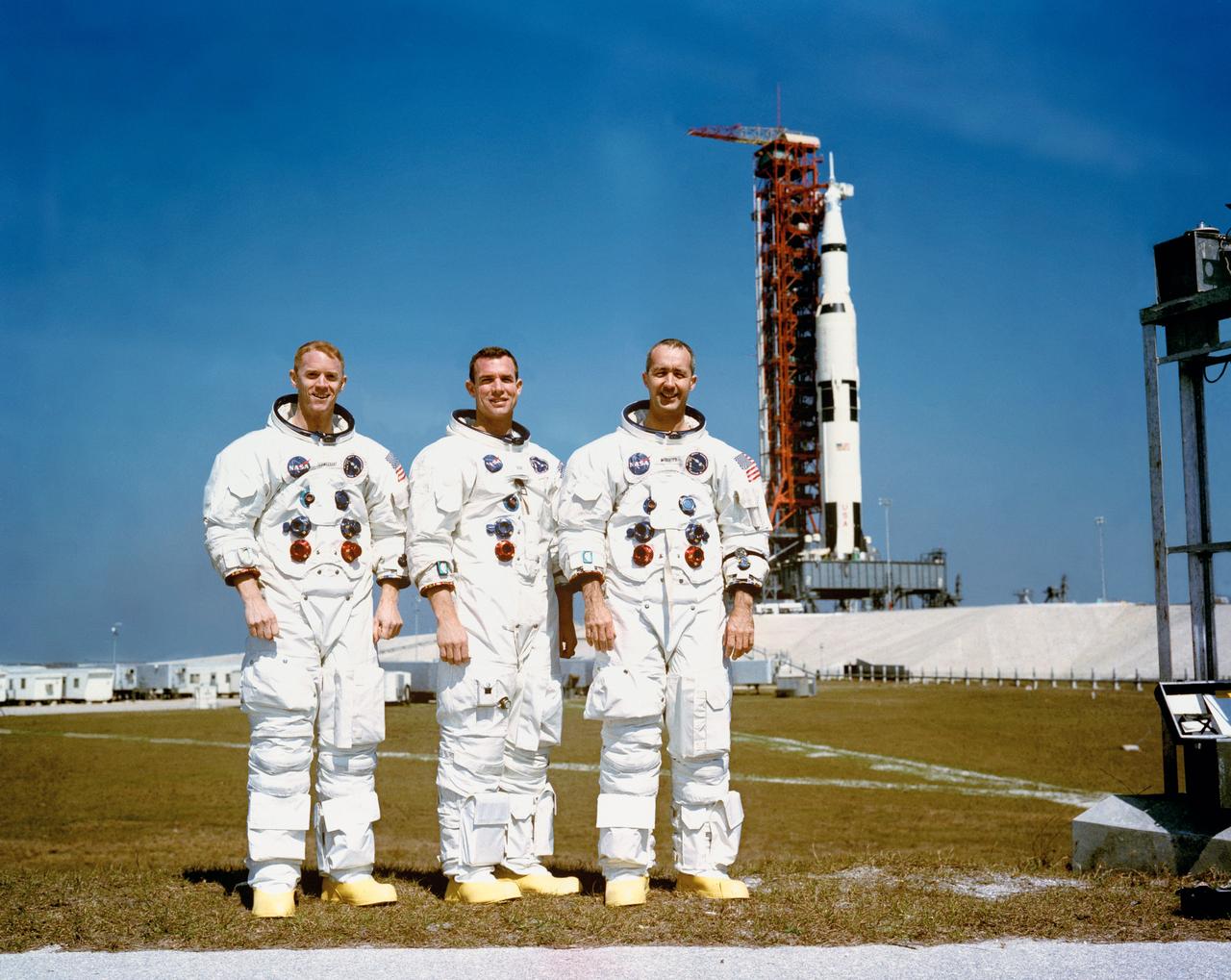
S69-25478 (23 Feb. 1969) --- These three astronauts are the prime crew of the Apollo 9 Earth-orbital space mission. Left to right, are Russell L. Schweickart, lunar module pilot; David R. Scott, command module pilot; and James A. McDivitt, commander. In the right background is the Apollo 9 space vehicle on Pad A, Launch Complex 39, Kennedy Space Center (KSC). They are pausing momentarily during training for their sch
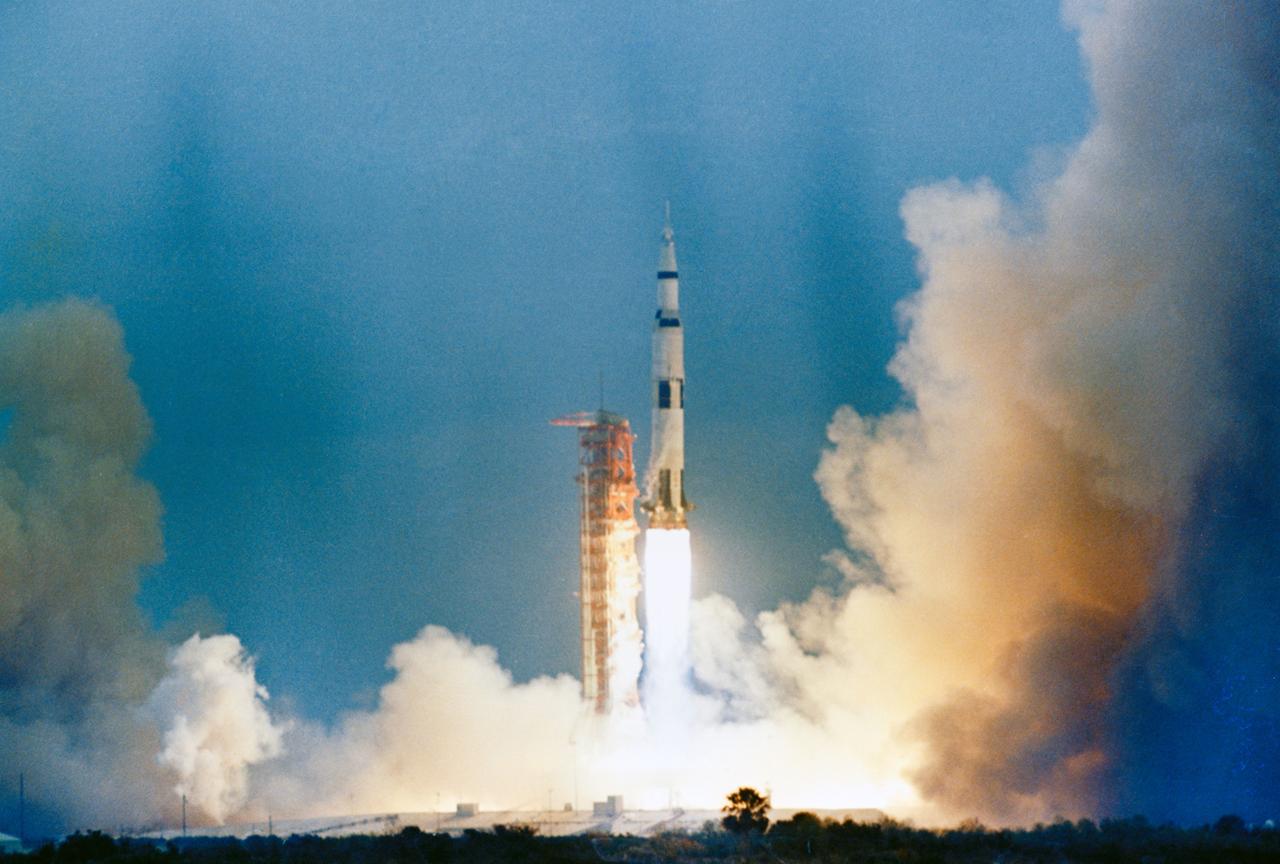
S69-25861 (3 March 1969) --- The Apollo 9 (Spacecraft 104/Lunar Module 3/ Saturn 504) space vehicle is launched from Pad A, Launch Complex 39, Kennedy Space Center (KSC) at 11 a.m. (EST), March 3, 1969. Aboard the spacecraft are astronauts James A. McDivitt, commander; David R. Scott, command module pilot; and Russell L. Schweickart, lunar module pilot. The Apollo 9 mission will evaluate spacecraft lunar module syste
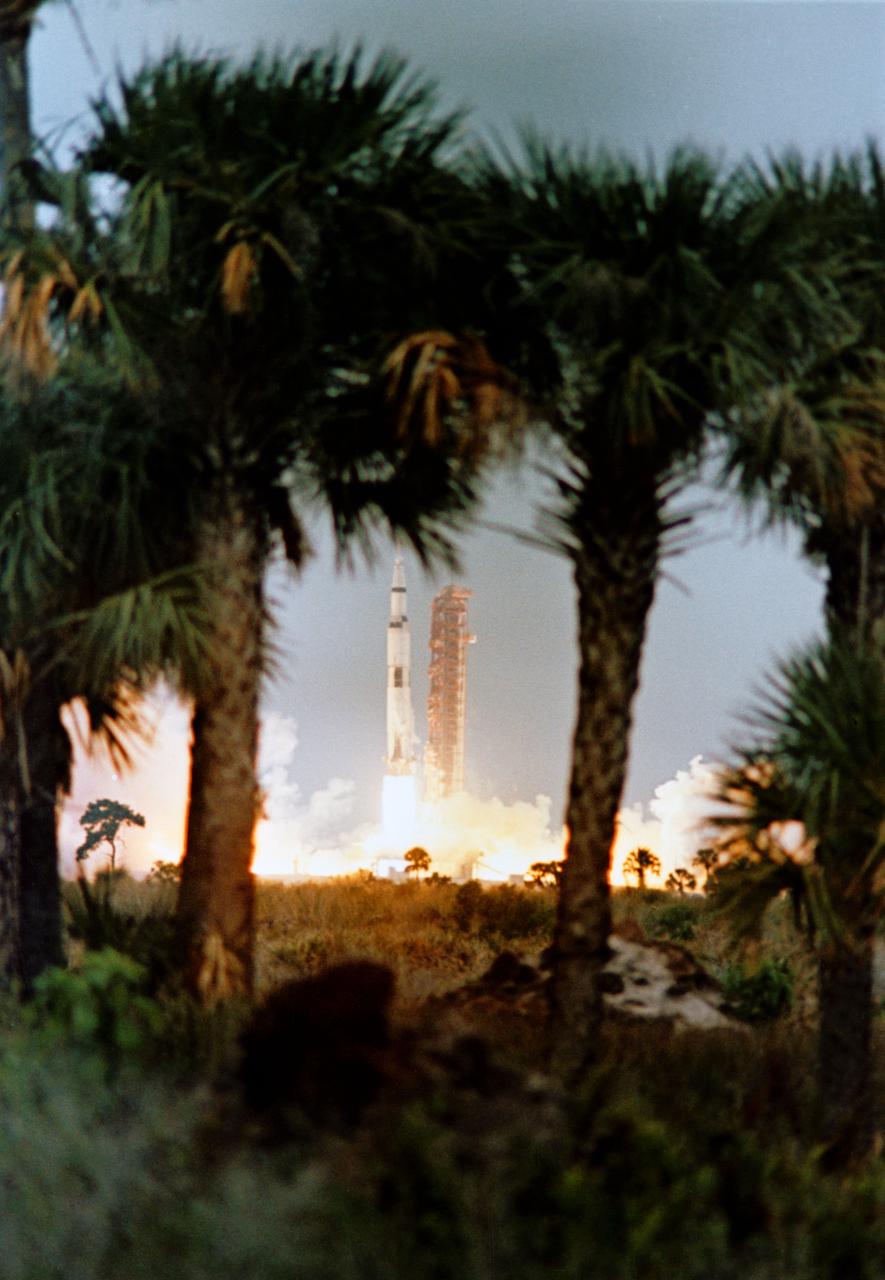
S69-25862 (3 March 1969) --- Framed by palm trees in the foreground, the Apollo 9 (Spacecraft 104/Lunar Module 3/ Saturn 504) space vehicle is launched from Pad A, Launch Complex 39, Kennedy Space Center (KSC) at 11 a.m. (EST), March 3, 1969. Aboard the spacecraft are astronauts James A. McDivitt, commander; David R. Scott, command module pilot; and Russell L. Schweickart, lunar module pilot. The Apollo 9 mission wil
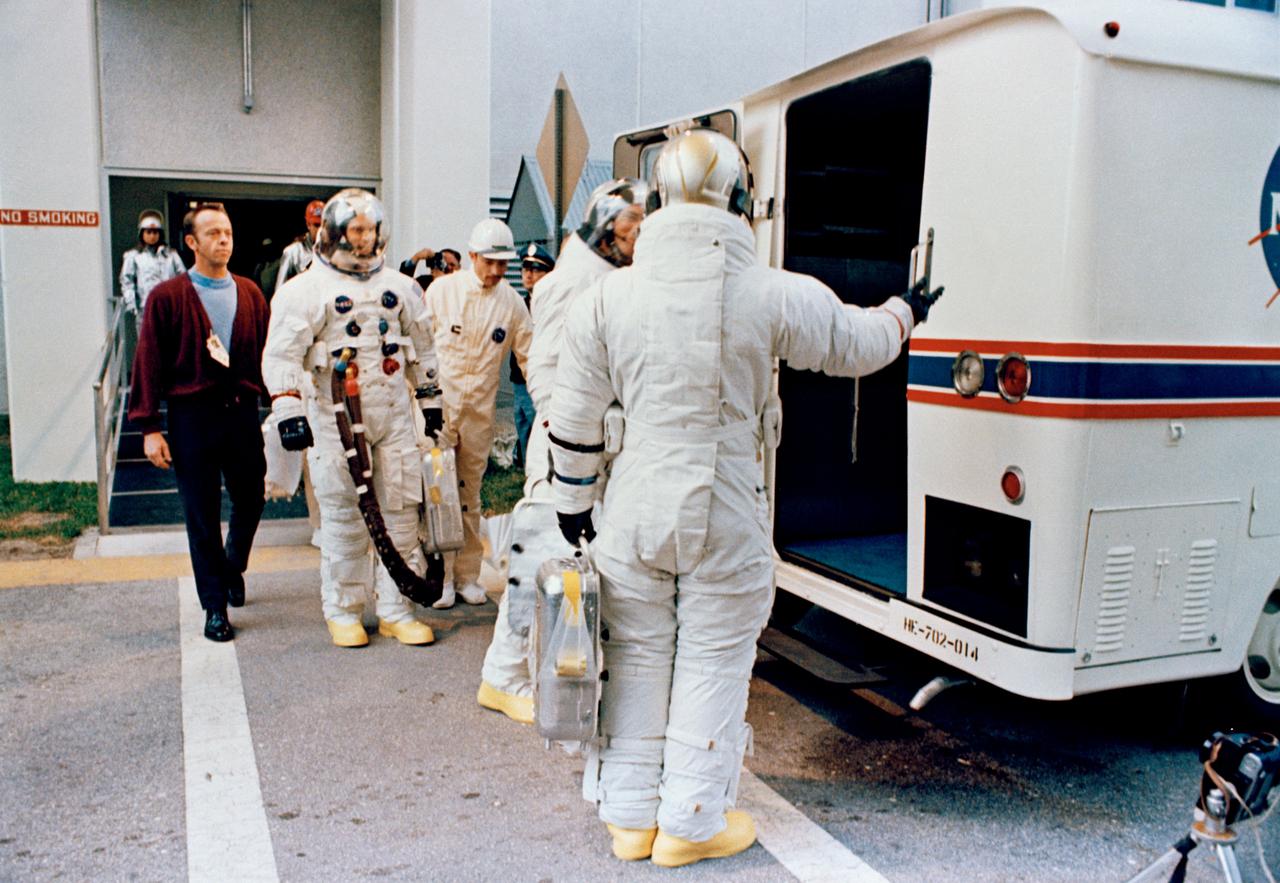
S69-25881 (3 March 1969) --- The Apollo 9 crew leaves the Kennedy Space Center's Manned Spacecraft Operations Building during the Apollo 9 prelaunch countdown. The crewman entered the special transfer van which transported them to their waiting spacecraft at Pad A, Launch Complex 39. Astronaut James A. McDivitt (back to camera) is the commander. McDivitt appears to be inviting astronaut David R. Scott, command module
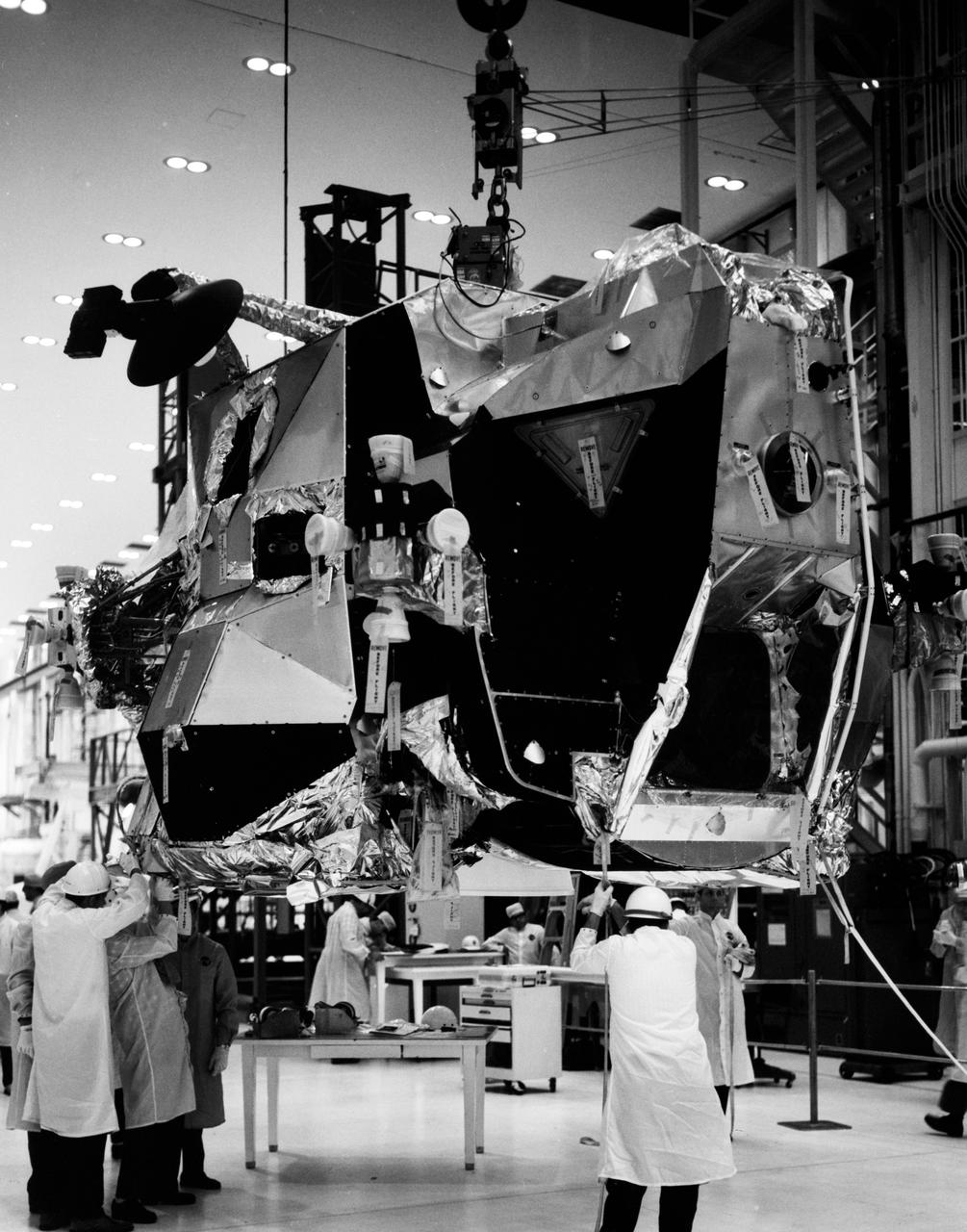
S69-25979 (December 1968) --- The ascent stage of Lunar Module-4 is moved from work stand into altitude chamber in the Kennedy Space Center's Manned Spacecraft Operations Building. Lunar Module-4 will be flown on the Apollo 10 (Spacecraft 106/Saturn 505) lunar orbit mission.
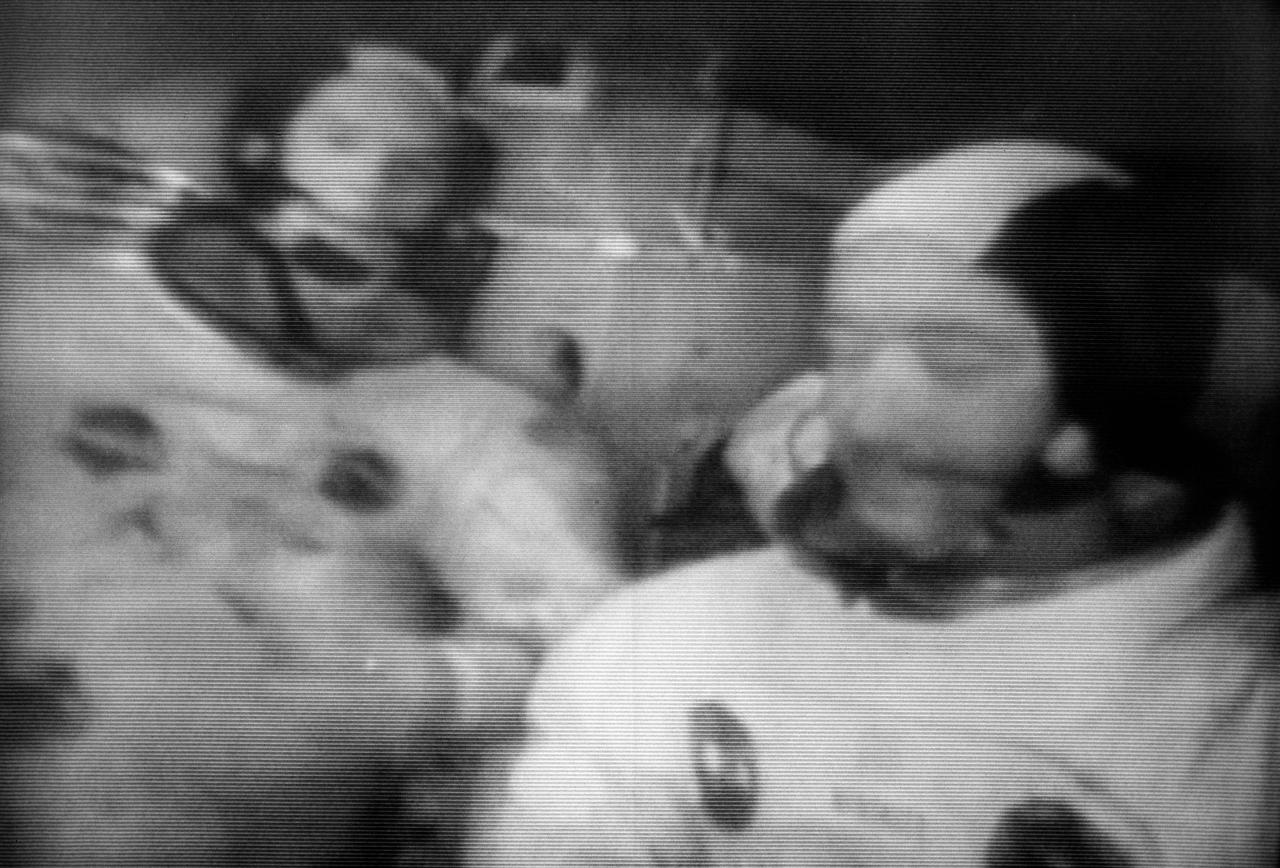
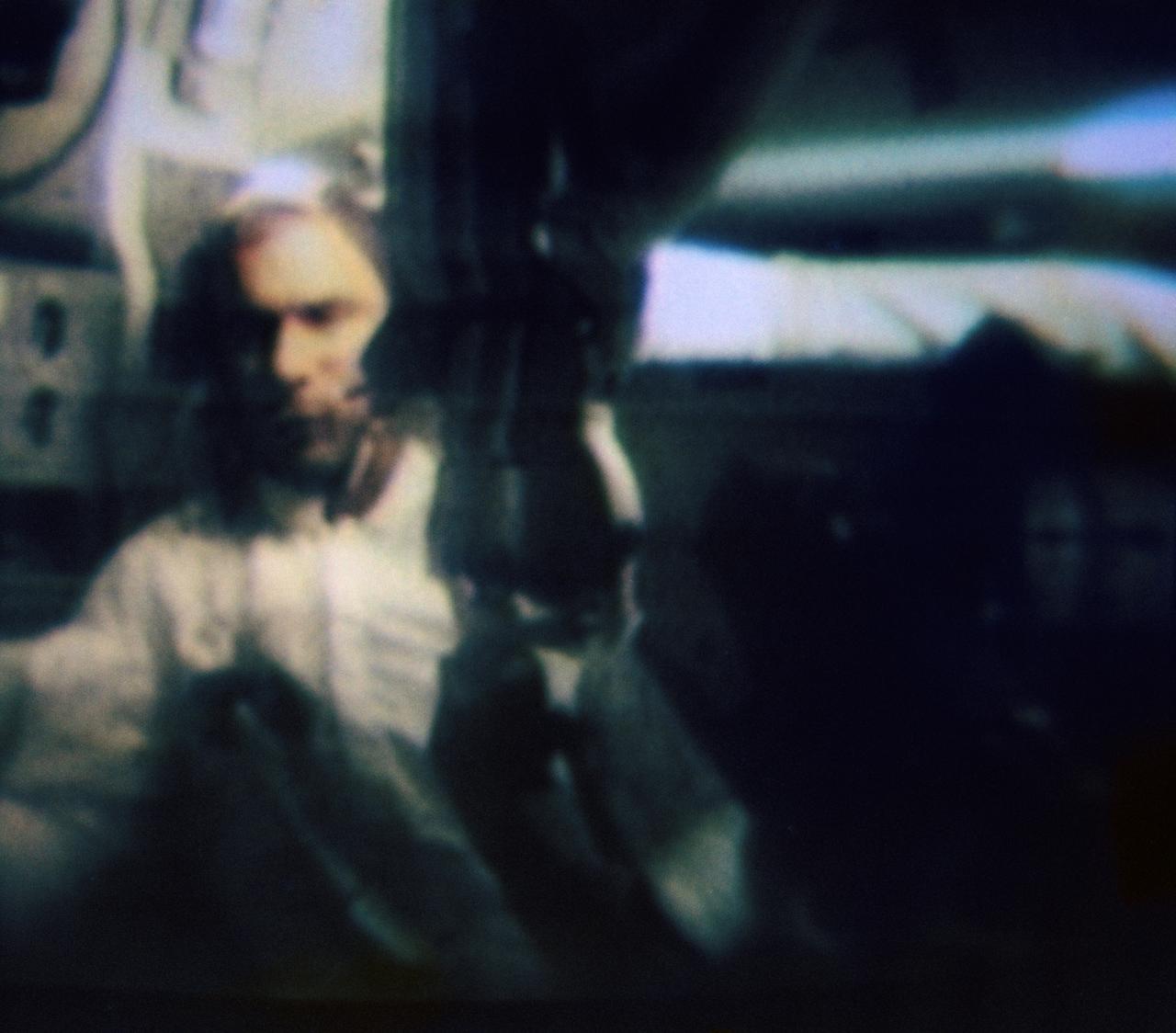
S69-26148 (6 March 1969) --- This photograph from the second live television transmission from Apollo 9 was made early Thursday afternoon on the fourth day in space. Though of poor quality, this view shows the interior of the Lunar Module "Spider" with astronauts James A. McDivitt (foreground) and Russell L. Schweickart at their crew stations. McDivitt is the Apollo 9 commander; and Schweickart is the lunar module pi
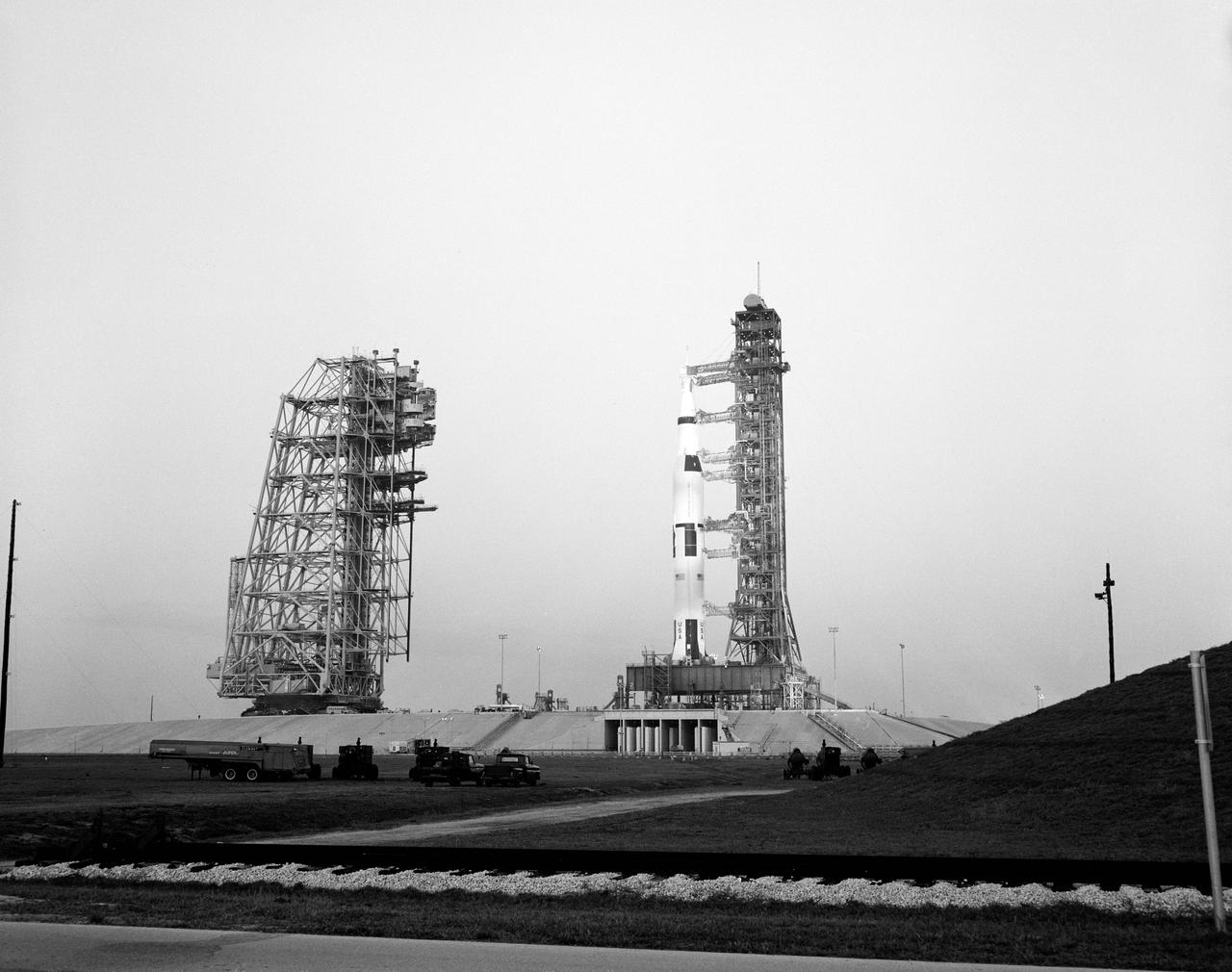
S69-27089 (11 March 1969) --- Overall view of Pad B, Launch Complex 39, Kennedy Space Center, showing the Apollo 10 (Spacecraft 106/Lunar Module-4/Saturn 505) space vehicle during a Countdown Demonstration Test. The Apollo 10 flight is scheduled as a lunar orbit mission. The Apollo 10 crew will be astronauts Thomas P. Stafford, commander; John W. Young, command module pilot; and Eugene A. Cernan, lunar module pilot.
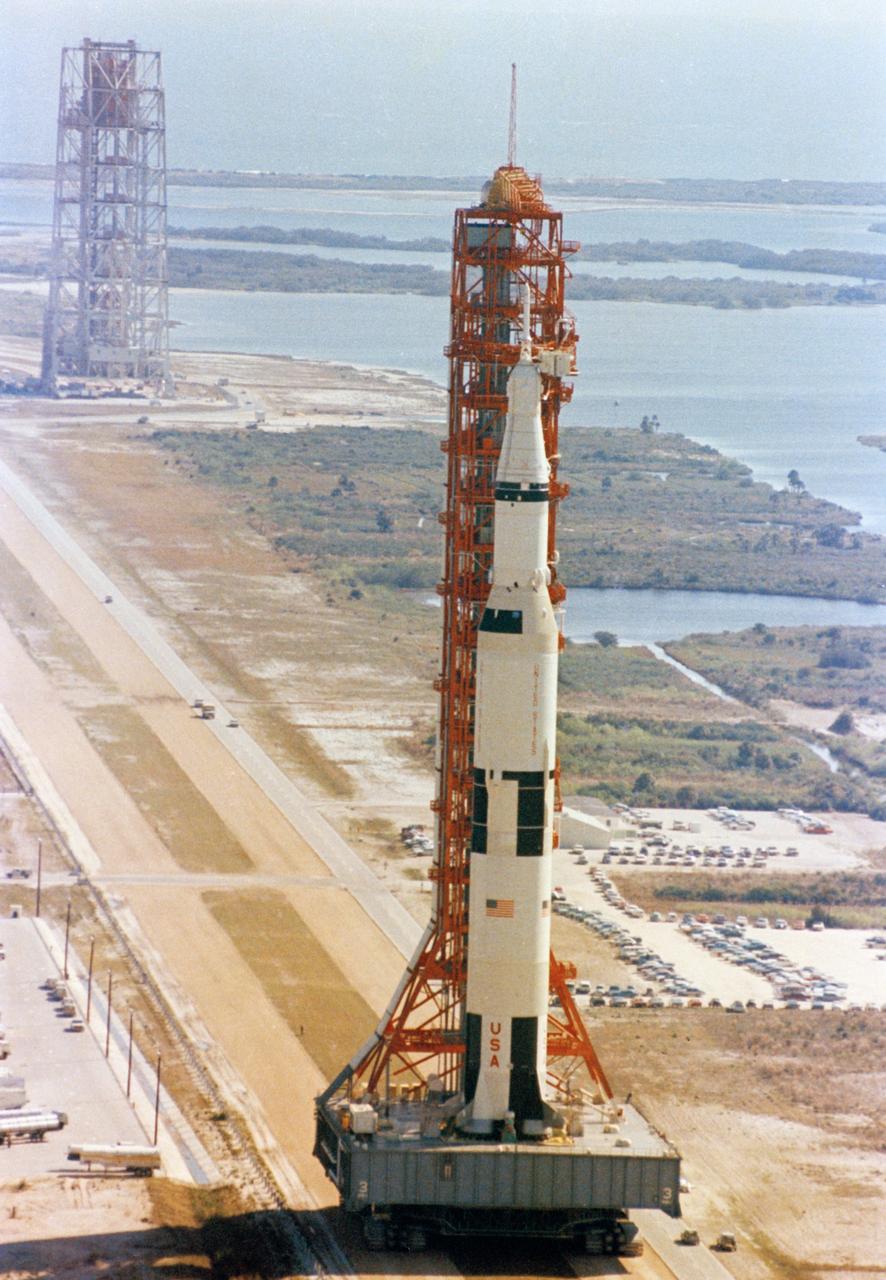
S69-27915 (11 March 1969) --- Aerial view at Launch Complex 39, Kennedy Space Center, showing a close-up of the 363-feet tall Apollo 10 (Spacecraft 106/Lunar Module 4/Saturn 505) space vehicle on its way to Pad B. The Saturn V stack and its mobile launch tower are atop a huge crawler-transporter. The Apollo 10 flight is scheduled as a lunar orbit mission. The Apollo 10 crew will be astronauts Thomas P. Stafford, comm
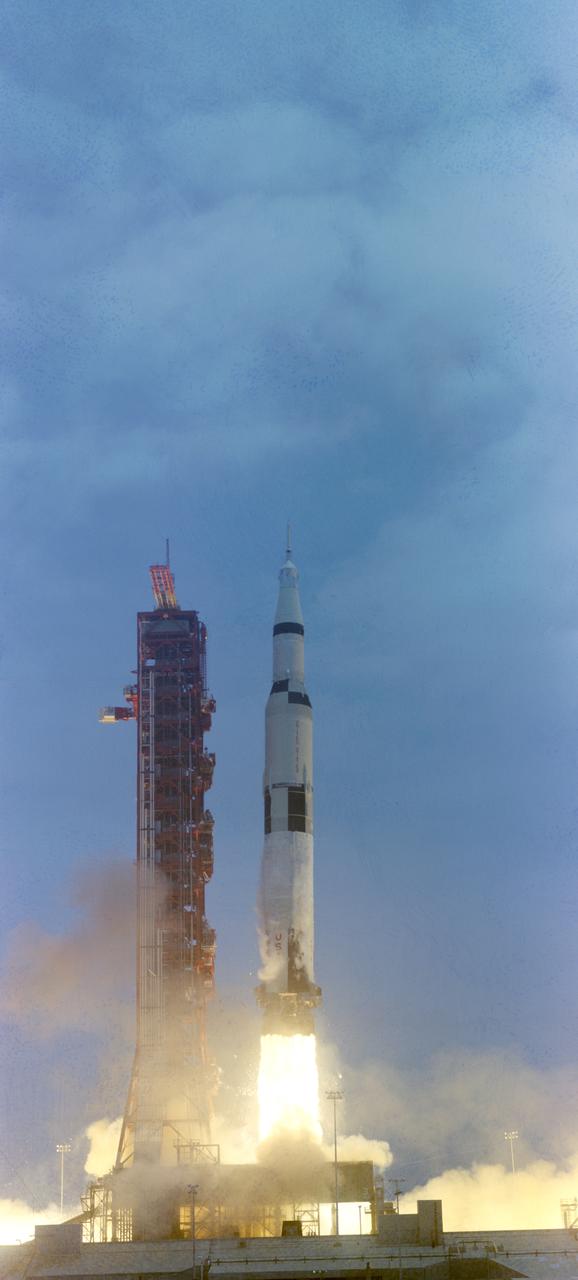
S69-34143 (18 May 1969) --- The Apollo 10 (Spacecraft 106/Lunar Module 4/Saturn 505) space vehicle is launched from Pad B, Launch Complex 39, Kennedy Space Center at 12:49 p.m. (EDT), May 18, 1969. Aboard the spacecraft are astronauts Thomas P. Stafford, commander; John W. Young, command module pilot; and Eugene A. Cernan, lunar module pilot. The eight-day, lunar orbit mission will mark the first time the complete Ap
S69-34313 (20 May 1969) --- Astronaut Eugene A. Cernan is shown spinning a water bag to demonstrate the collection of hydrogen bubbles in this color reproduction taken from the fifth telecast made by the color television camera aboard the Apollo 10 spacecraft. When this picture was made the Apollo 10 spacecraft was approximately 175,300 nautical miles from Earth, and only 43,650 nautical miles from the moon. Cernan i
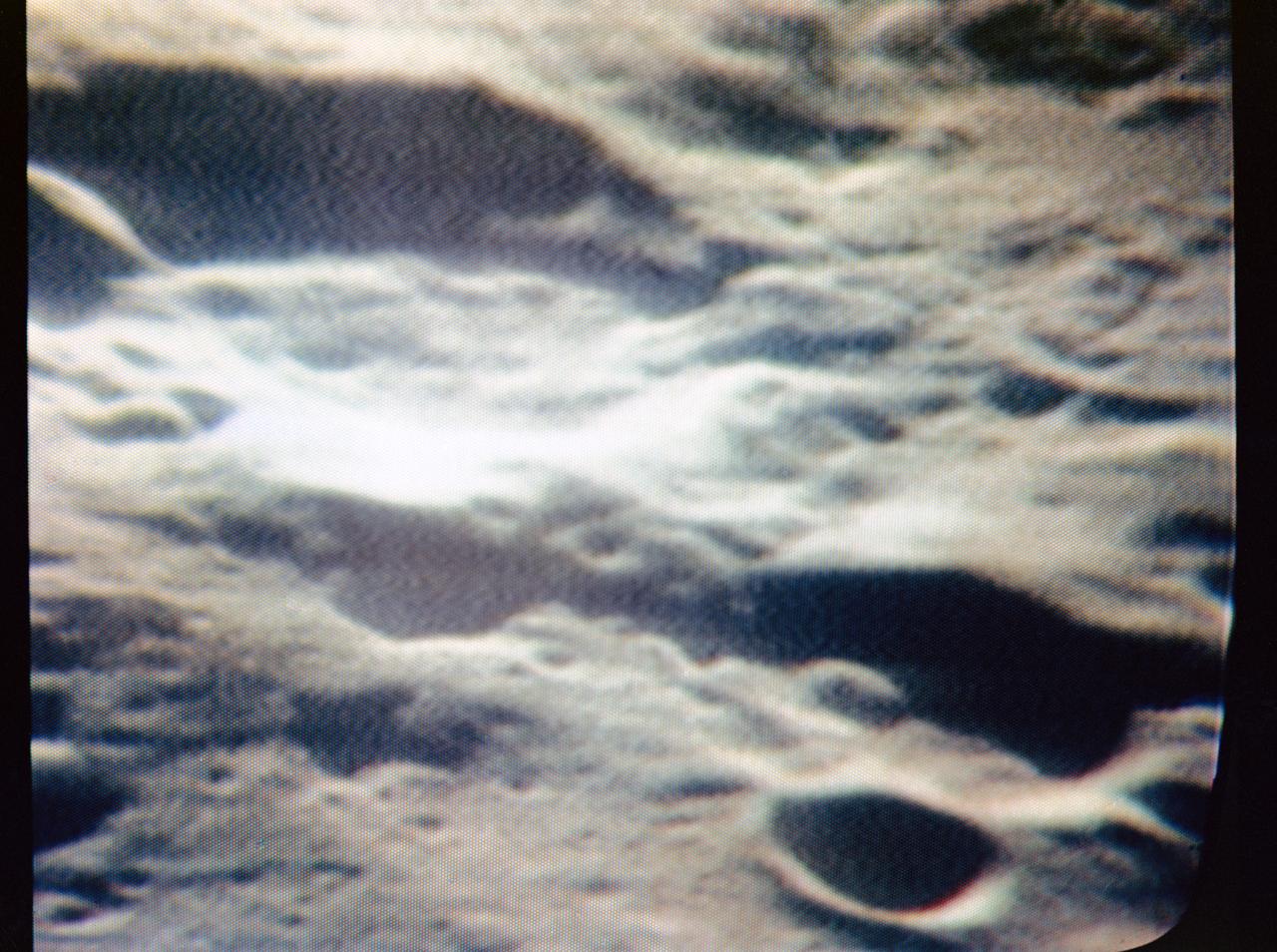
S69-34476 (21 May 1969) --- An oblique view of a group of craters just west of the Sea of Fertility (Mare Fecunditatis) on the lunar nearside is seen in this color reproduction taken from a telecast made by the color television aboard the Apollo 10 spacecraft as it orbited the moon. In this area are Gutenberg I, Capella A, Capella D, Capella E, and Capella M.
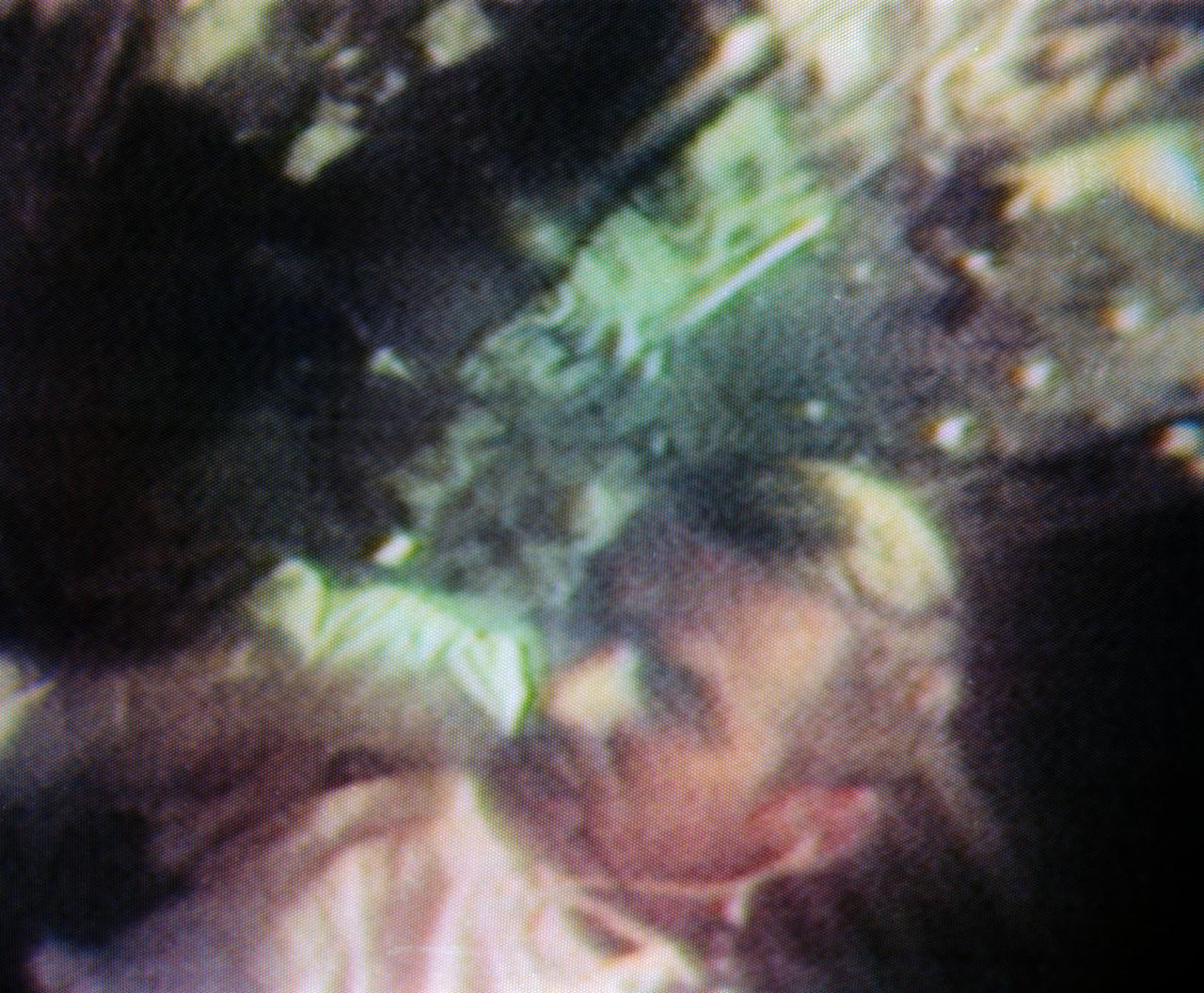
S69-34968 (24 May 1969) --- Astronaut Eugene A. Cernan, Apollo 10 lunar module pilot, is seen in this color reproduction taken from a telecast made by the color television camera aboard the Apollo 10 spacecraft during its trans-Earth journey home.
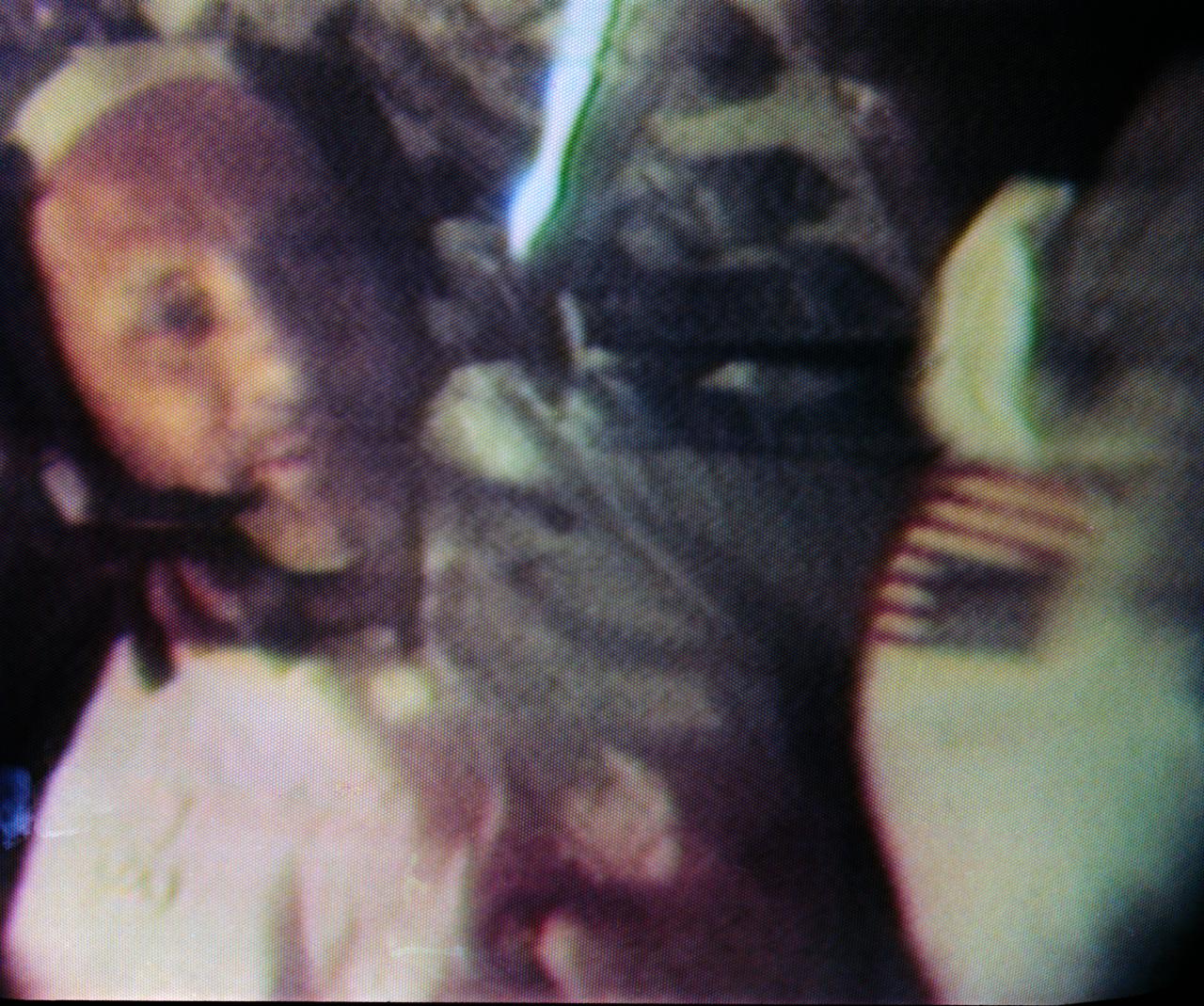
S69-34969 (24 May 1969) --- Astronaut Thomas P. Stafford, Apollo 10 commander, is seen in this color reproduction taken from a telecast made by the color television camera aboard the Apollo 10 spacecraft during its trans-Earth journey home.