Last planned Space Shuttle Main Engine Test
The last planned space shuttle main engine test firing takes place on July 29, 2009.
Records indexed under NASA Image and Video Library, with original identifiers, source links and item-level rights evidence. This is the imported selection, not the institution’s entire holdings. Verify the originating institution when the source is an aggregator.
4,093 matching records; original descriptions and titles are preserved. Search and filters →
Verify the evidence · Cite an item or clip · Rights
The last planned space shuttle main engine test firing takes place on July 29, 2009.
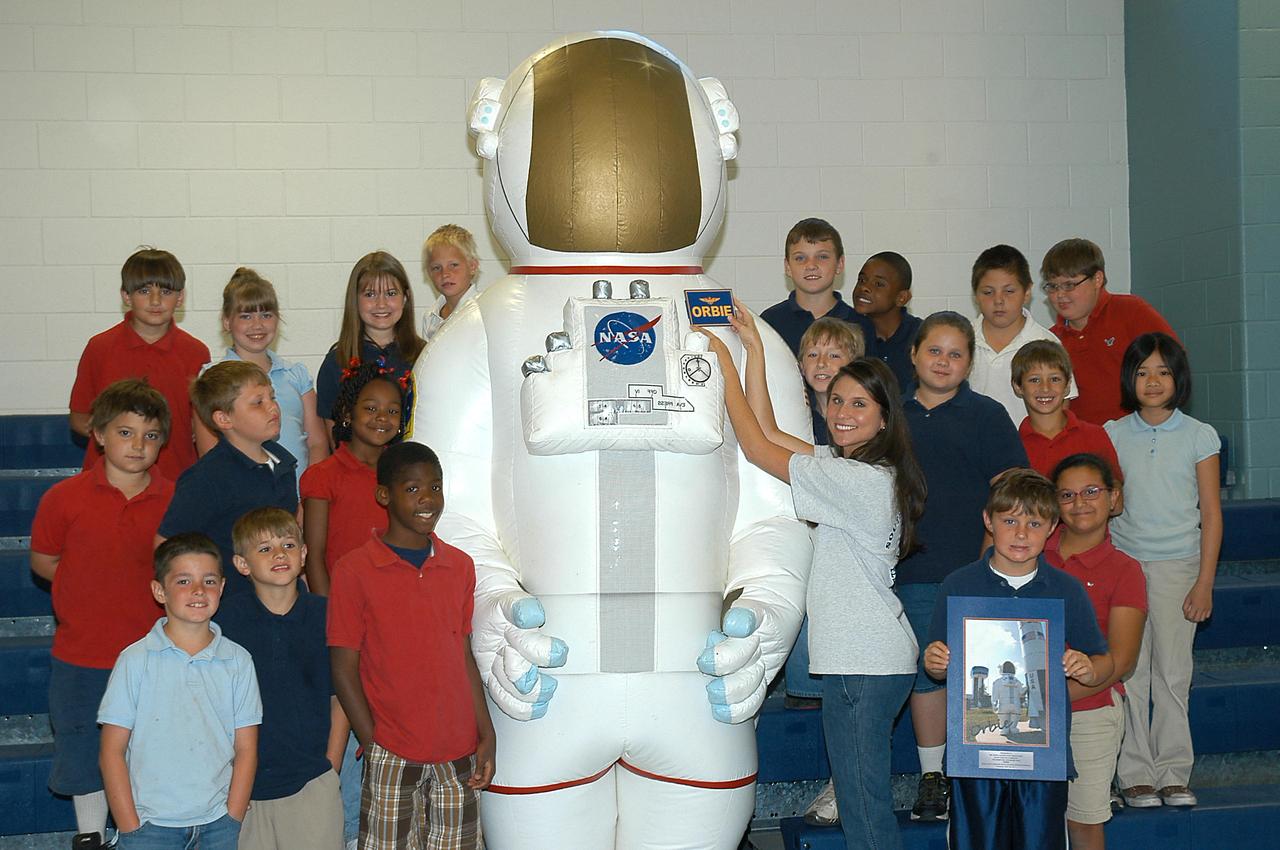
Students at South Hancock Elementary School in Bay St. Louis, Miss., gather around Orbie the Astronaut on May 19 as teacher Sarah Ladner affixes a nameplate to the Stennis Space Center mascot. Members of the third-grade class won a contest to name the inflatable astronaut. Some 20 schools in Louisiana and Mississippi participated in the contest.
NASA's Pegasus barge arrived at Stennis Space Center on Nov. 16, delivering space shuttle main engine ground support equipment to the south Mississippi facility. Stennis tested every main engine used on all 135 space shuttle flights.
Ronnie Rigney (r), chief of the Propulsion Test Office in the Project Directorate at Stennis Space Center, stands with agency colleagues to receive the prestigious American Institute of Aeronautics and Astronautics George M. Low Space Transportation Award on Sept. 12. Rigney accepted the award on behalf of the NASA and contractor team at Stennis for their support of the Space Shuttle Program that ended last summer. F
Ronnie Rigney (r), chief of the Propulsion Test Office in the Project Directorate at Stennis Space Center, stands with agency colleagues to receive the prestigious American Institute of Aeronautics and Astronautics George M. Low Space Transportation Award on Sept. 12. Rigney accepted the award on behalf of the NASA and contractor team at Stennis for their support of the Space Shuttle Program that ended last summer. F
Moon - North Polar Mosaic, Color http://photojournal.jpl.nasa.gov/catalog/PIA00404
NASA Galileo spacecraft took this image of Earth moon on December 7, 1992 on its way to explore the Jupiter system in 1995-97. The distinct bright ray crater at the bottom of the image is the Tycho impact basin. http://photojournal.jpl.nasa.gov/catalog/PIA00405
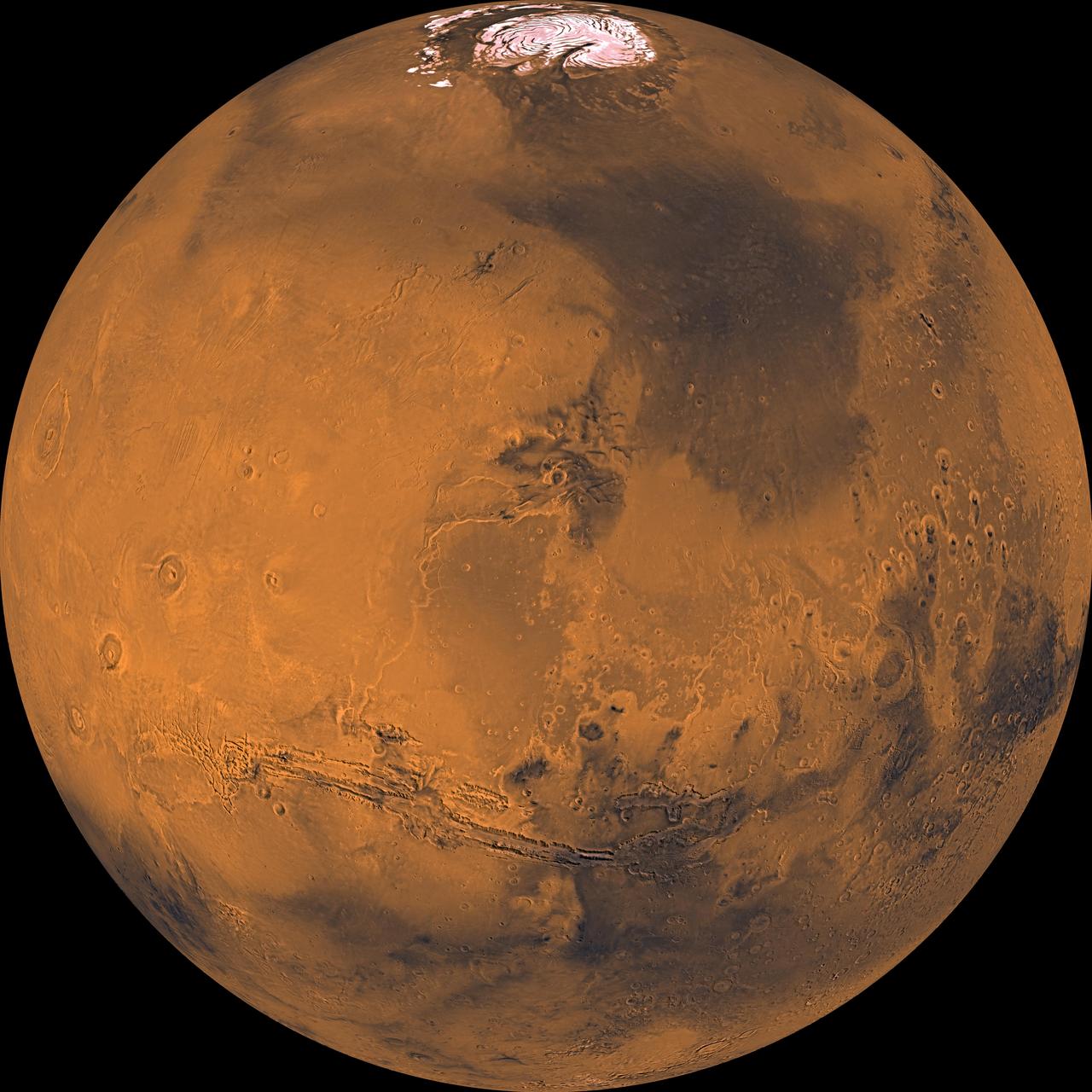
Global Color Views of Mars http://photojournal.jpl.nasa.gov/catalog/PIA00407
Ice On Mars
Wispy Blue Clouds Over Mars
Mars Inner Core
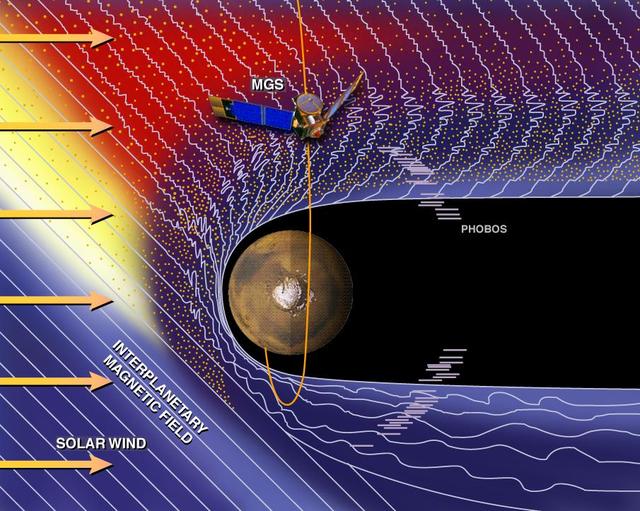
Mars and the Solar Wind
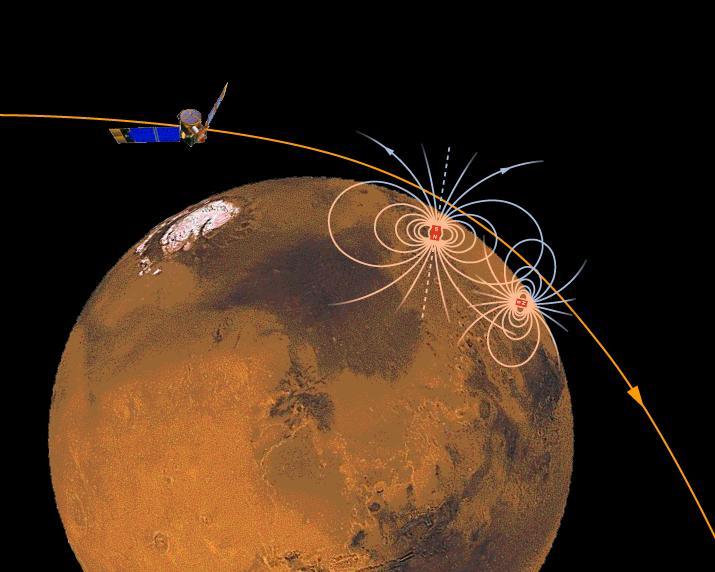
Magnetic Sources in the Crust of Mars
MGS Mars Orbiter Laser Altimeter MOLA - Mars/Earth Relief Comparison
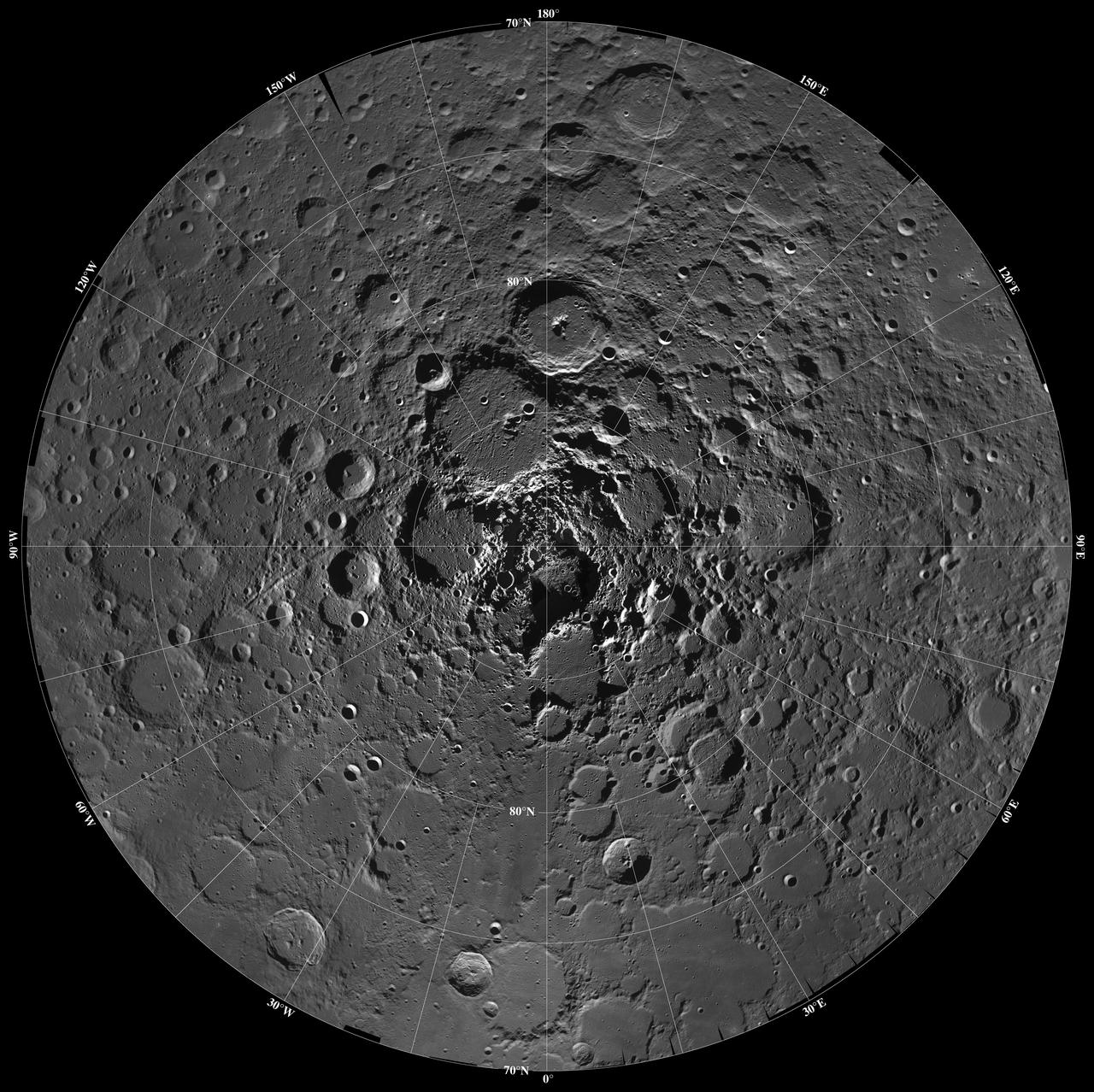
Lunar mosaic of ~1500 Clementine images of the north polar region of the moon. The projection is orthographic centered on the north pole. The polar regions of the moon are of special interest because of the postulated occurrence of ice in permanently shadowed areas. The north pole of the moon is absent of the very rugged terrain seen at the south pole. http://photojournal.jpl.nasa.gov/catalog/PIA00002
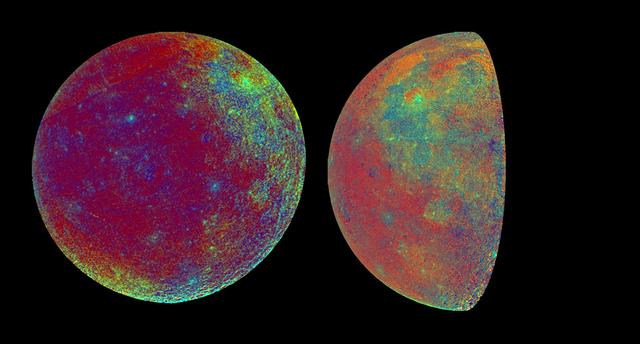
These color visualizations of the Moon were obtained by NASA Galileo spacecraft as it left the Earth after completing its first Earth Gravity Assist. The images were acquired Dec. 8-9, 1990. http://photojournal.jpl.nasa.gov/catalog/PIA00075
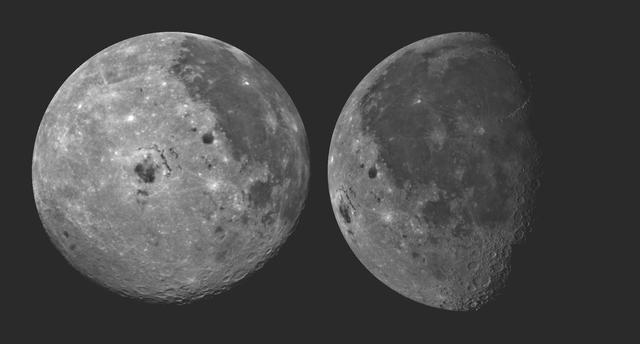
These pictures of the Moon were taken by NASA Galileo spacecraft at right photo Dec.8, 1990 from a distance of almost 220,000 miles, and at left photo Dec. 9, 1990 at a range of more than 350,000 miles. http://photojournal.jpl.nasa.gov/catalog/PIA00077
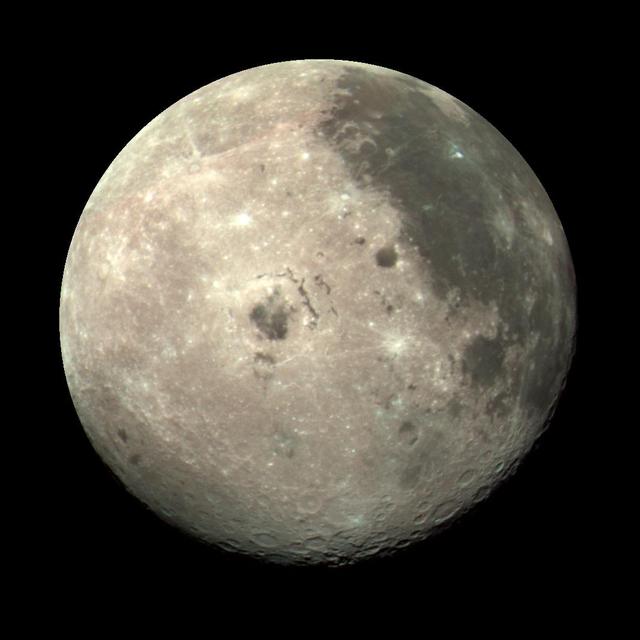
This color image of the Moon was taken by NASA's Galileo spacecraft at 9:35 a.m. PST Dec. 9, 1990, at a range of about 350,000 miles. The concentric, circular Orientale basin, is near the center; the nearside is to the right, the far side to the left. http://photojournal.jpl.nasa.gov/catalog/PIA00113
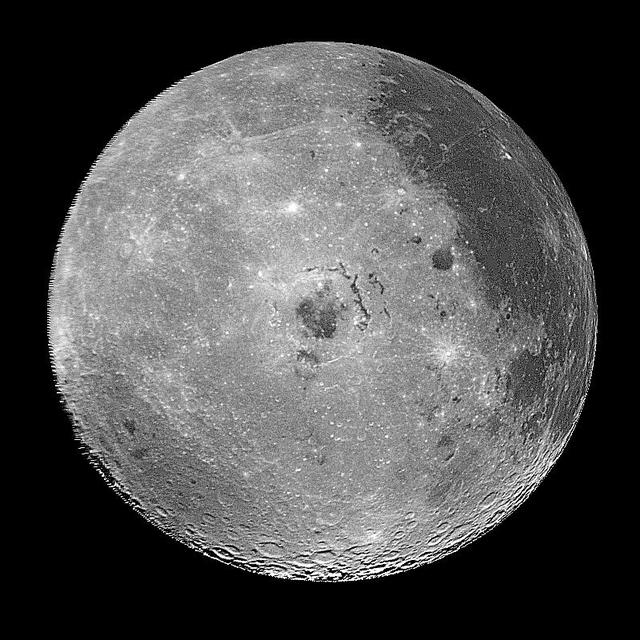
This image of the western hemisphere of the Moon was taken through a green filter by NASA's Galileo spacecraft at 9:35 a.m. PST Dec. 9 at a range of about 350,000 miles. In the center is the Orientale Basin. http://photojournal.jpl.nasa.gov/catalog/PIA00120
This view of the north polar region of the Moon was obtained by NASA's Galileo camera during the spacecraft flyby of the Earth-Moon system on December 7 and 8, 1992. http://photojournal.jpl.nasa.gov/catalog/PIA00126
This mosaic picture of the Moon was compiled from 18 images taken with a green filter NASA's Galileo imaging system during the spacecraft flyby on December 7, 1992, some 11 hours before its Earth flyby. http://photojournal.jpl.nasa.gov/catalog/PIA00128
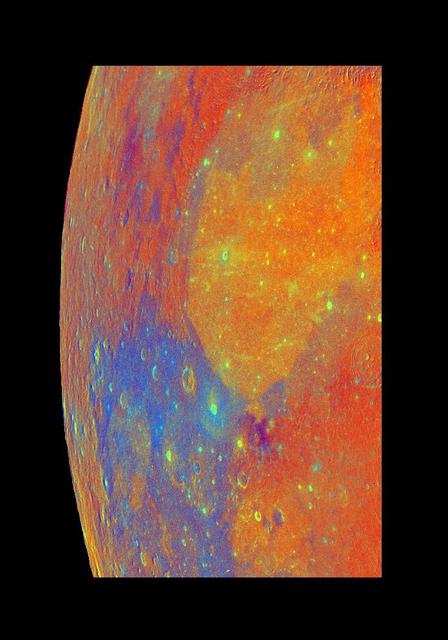
This false-color mosaic of part of the Moon was constructed from 54 images taken by the imaging system aboard NASA's Galileo as the spacecraft flew past the Moon on December 7, 1992. http://photojournal.jpl.nasa.gov/catalog/PIA00129
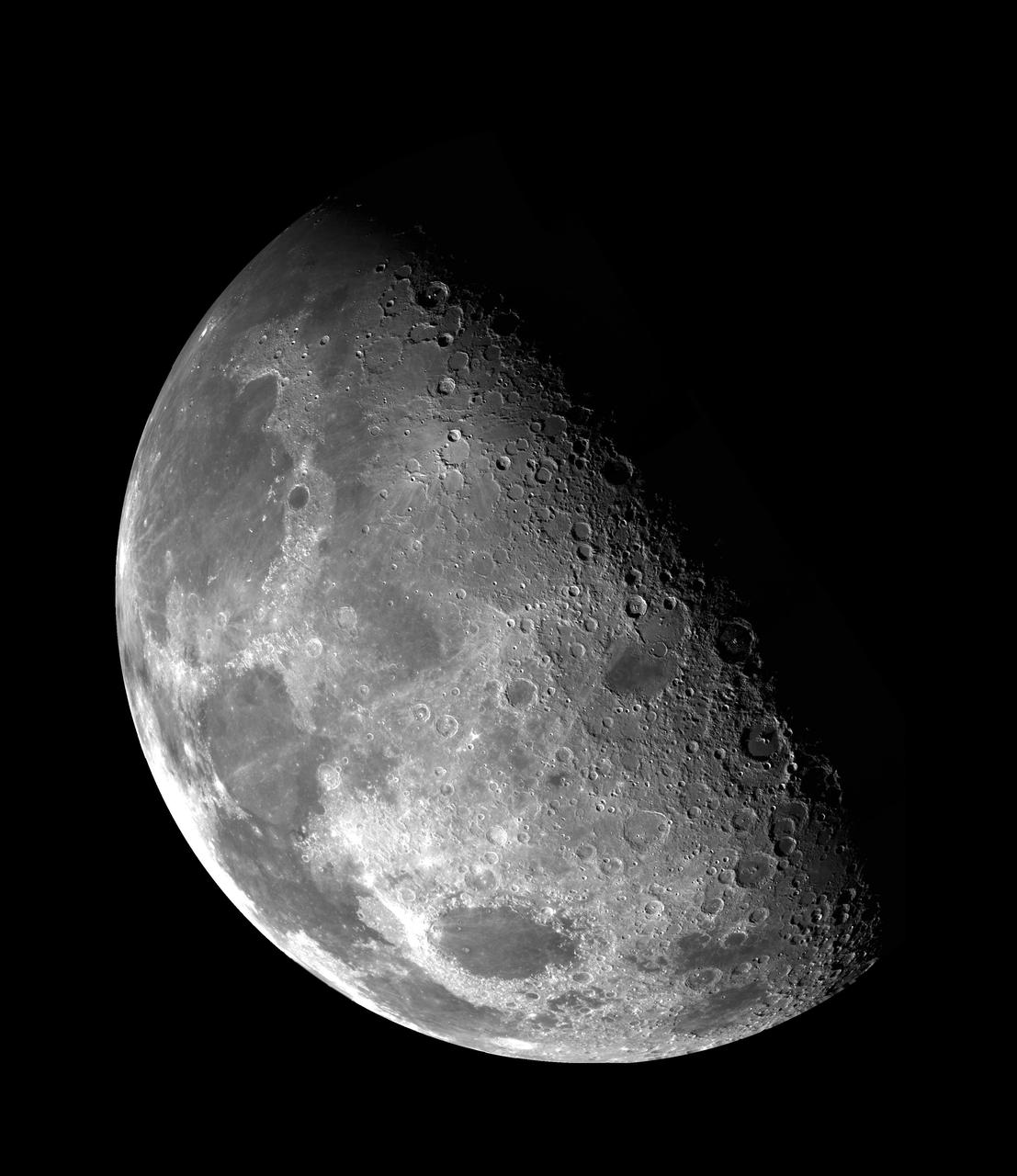
This view of the Moon north pole is a mosaic assembled from 18 images taken by NASA's Galileo imaging system through a green filter as the spacecraft flew by on December 7, 1992. http://photojournal.jpl.nasa.gov/catalog/PIA00130
This false-color mosaic was constructed from a series of 53 images taken through three spectral filters by NASA's Galileo imaging system as the spacecraft flew over the northern regions of the Moon on December 7, 1992. http://photojournal.jpl.nasa.gov/catalog/PIA00131