Espacio a Tierra: La historia de la cinta
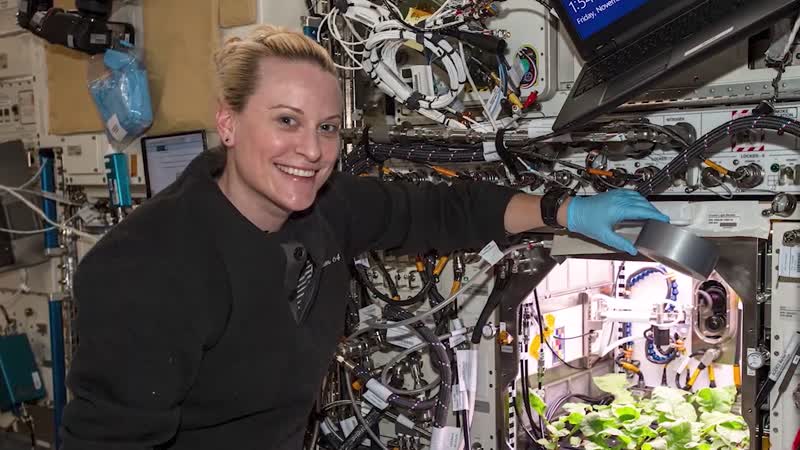
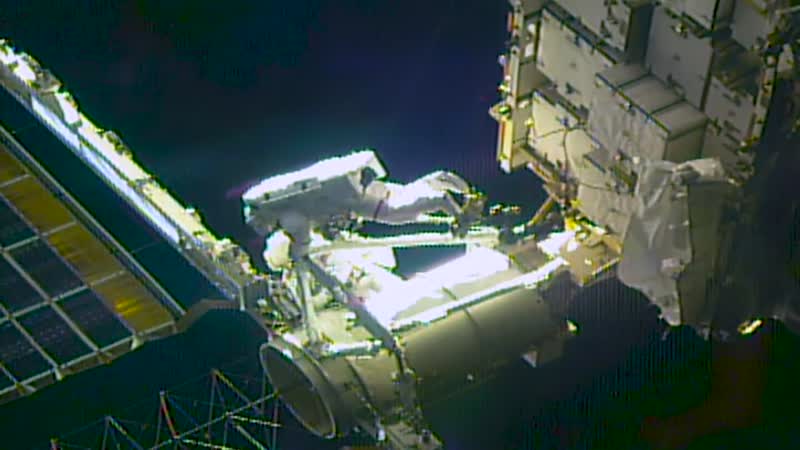
Espacio a Tierra, la versión en español de las cápsulas Space to Ground de la NASA, te informa semanalmente de lo que está sucediendo en la Estación Espacial Internacional.
Records indexed under NASA Image and Video Library, with original identifiers, source links and item-level rights evidence. This is the imported selection, not the institution’s entire holdings. Verify the originating institution when the source is an aggregator.
4,093 matching records; original descriptions and titles are preserved. Search and filters →
Verify the evidence · Cite an item or clip · Rights
Espacio a Tierra, la versión en español de las cápsulas Space to Ground de la NASA, te informa semanalmente de lo que está sucediendo en la Estación Espacial Internacional.
Espacio a Tierra, la versión en español de las cápsulas Space to Ground de la NASA, te informa semanalmente de lo que está sucediendo en la Estación Espacial Internacional.
This video shows how technicians at NASA’s Michoud Assembly Facility in New Orleans completed a major portion of a weld confidence article for the advanced upper stage of NASA’s SLS (Space Launch System) rocket. The weld confidence article forms part of the liquid oxygen tank for the SLS rocket’s exploration upper stage using the state-of-the-art welding tooling at the facility. Beginning with Artemis IV, SLS will ev
NASA’s human spaceflight missions have steadily built on each other, leading us to a continuous human presence in low Earth orbit for 23 years. Now, as we stand on the cusp of a new era of human spaceflight, NASA is calling for feedback on what the agency’s goals and objectives should be for the low Earth orbit microgravity environment. The agency will utilize future commercial space stations to advance microgravity
Earth Day Media Briefing NASA Unveils New Elements of Climate Research In anticipation of Earth Day, NASA invited media to a briefing at the agency’s headquarters on Friday, April 19. The event shared updates on NASA’s climate science and early data from the agency’s ocean-watching PACE (Plankton, Aerosol, Cloud, ocean Ecosystem) mission, and revealed upcoming Earth airborne missions. The speakers included: NASA Admi
The International Space Station’s High Definition Earth Viewing (HDEV) experiment is an external camera platform located on the Columbus module of the space station. In addition to providing beautiful views of Earth, one of the goals of HDEV is to monitor the longevity and quality of its image sensors in the space environment. HDEV operations began April 30, 2014 and only a single bad pixel has been identified.
On Dec. 24, 1968, Apollo 8 astronauts Frank Borman, Jim Lovell, and Bill Anders became the first humans to orbit the Moon, and the first to witness the magnificent sight called "Earthrise." NASA’s Chief Scientist and Senior Climate Advisor Dr. Katherine Calvin sat down with Bill Anders to discuss the historic Earthrise photo. To learn about how NASA continues to study the Earth, check out: nasa.gov/Earth Credit: NASA
Grammy-winning recording artist Eddie Vedder made a special long-distance phone call to the International Space Station (ISS), in celebration of Earth Day. Orbiting more than 250 miles (402 kilometers) above Earth aboard the ISS, NASA astronauts Kayla Barron, Raja Chari, Thomas Marshburn, and Mark Vande Hei, as well as ESA (European Space Agency) astronaut Matthias Maurer, have enjoyed a unique view of our planet. Th
Equipping the space station to produce more power, our newest experimental X-plane, and preparing to test a new laser communications system … a few of the stories to tell you about – This Week at NASA!
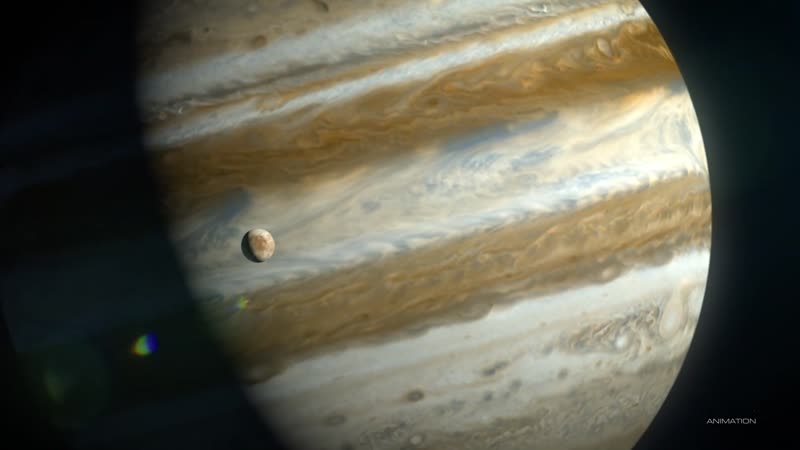
Our solar system has a number of worlds with water, but is Earth the only one with the right environment to support life? That’s the question NASA’s Europa Clipper aims to answer. Europa Clipper is the first mission dedicated to studying Jupiter’s moon Europa, which scientists believe has a salty ocean under its icy shell. While not designed to detect life, the spacecraft is equipped with nine science instruments and
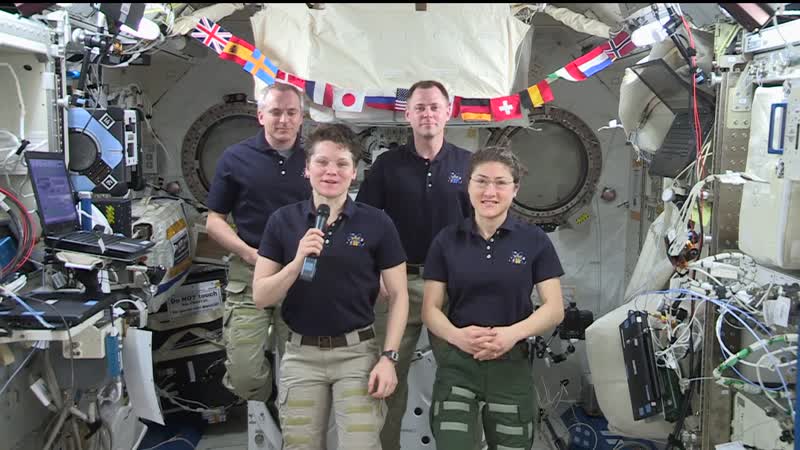
SPACE STATION CREW DISCUSSES THE LEGACY OF THE APOLLO PROGRAM WITH WESTWOOD ONE RADIO Aboard the International Space Station, Expedition 59 Flight Engineers Anne McClain, Christina Koch and Nick Hague of NASA and David Saint-Jacques of the Canadian Space Agency shared their thoughts on the impact of the Apollo lunar landing program and future endeavors in pushing forward to a return to the moon by 2024 in an in-fligh
Listen up! From long form interviews with astronauts and engineers to narrative shows that take you on a tour of the galaxy, NASA podcasts let you experience the thrill of space exploration without ever leaving Earth. Find your new favorite podcast at www.nasa.gov/podcasts. Producer/Editor: Lacey Young Music: Universal Music Production Credit: NASA
Have a science or technology idea? Flying experiments on the International Space Station is a unique opportunity to eliminate gravity as a variable, provide exposure to vacuum and radiation, and have a clear view of the Earth and universe. For more information on how you can conduct your research in microgravity, visit https://www.nasa.gov/stationopportunities
“How does NASA collect surface samples from the Moon? The answer may surprise you! Explore the challenges of designing the geology sampling equipment for the Artemis missions and how geology sampling technology has changed since Apollo missions.” 125%
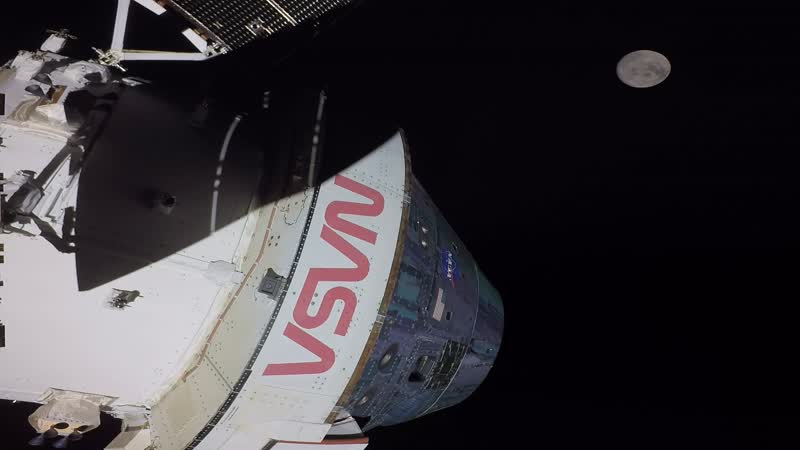
art001m1203372310 (Dec. 4, 2022) Orion captured this video of the Moon from a camera mounted on one of its solar arrays on the 19th day of the Artemis I mission. The spacecraft was over 220,000 miles away from Earth, and over 20,000 miles from the Moon.
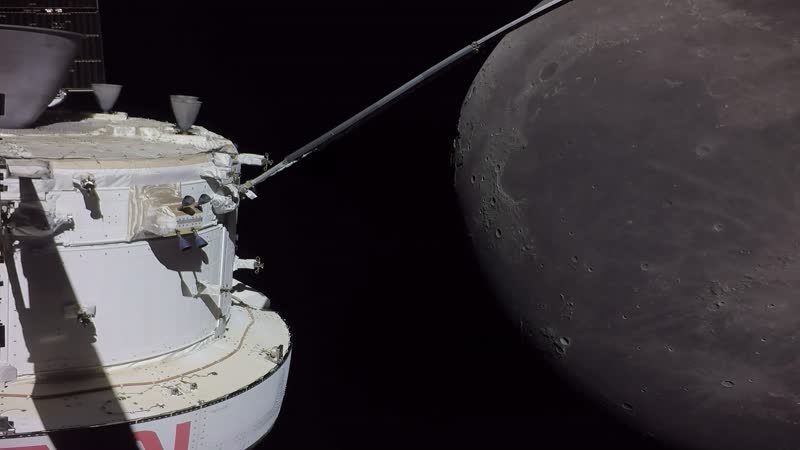
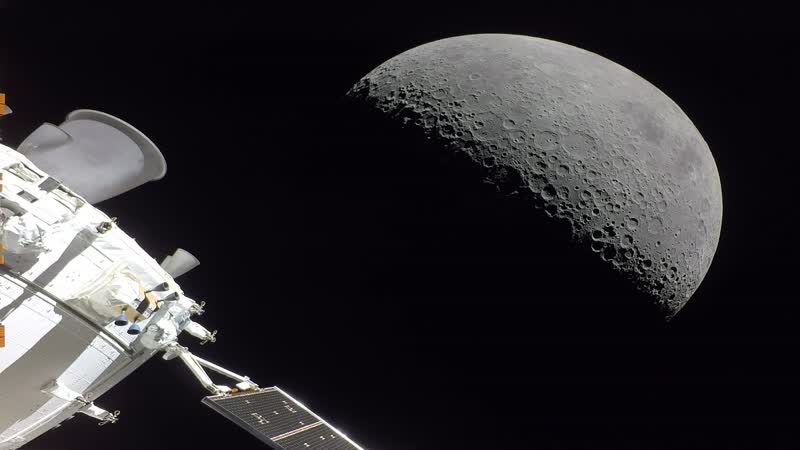
art001m1203391600 (Dec. 5, 2022) On flight day 20, Orion approached the Moon ahead of the return powered flyby burn that committed the spacecraft to splashdown on Sunday, Dec. 11.
art001m1203391755 (Dec. 5, 2022) On flight day 20, Orion approached the Moon ahead of the return powered flyby burn that committed the spacecraft to splashdown on Sunday, Dec. 11.
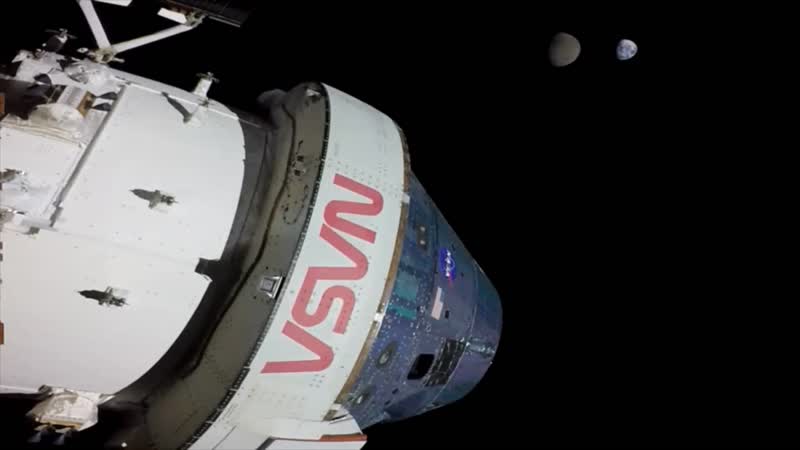
art001m1203322100 (Nov. 28, 2022) On flight day 13, Orion looked back at the Moon and Earth as the spacecraft continued into distant retrograde orbit around the Moon.
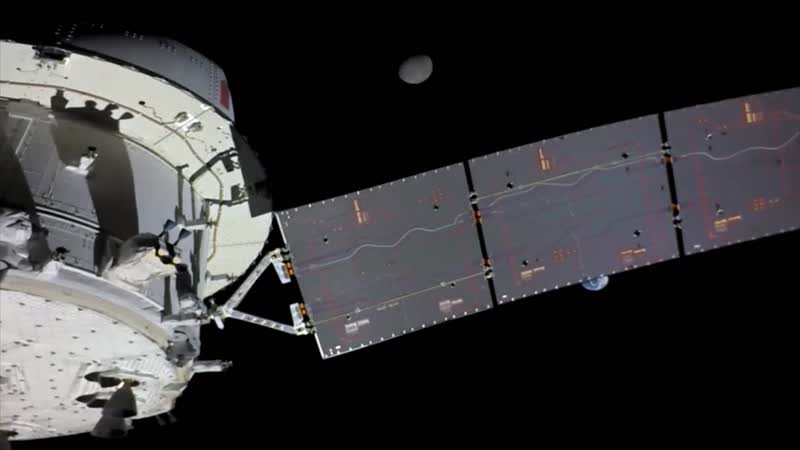
art001m1013331009 (Nov. 29, 2022) Orion’s solar arrays split the distance between Earth and the Moon on flight day 14 in this video captured by a camera on the tip of one of the spacecraft’s four solar arrays.
This video includes animation and shows work being completed to build, assemble and test NASA's new heavy-lift rocket, the Space Launch System (SLS) for the Artemis I mission to the Moon. All of the components being prepared for the first SLS mission are highlighted. SLS will be the most powerful rocket ever built, launching astronauts in NASA's Orion spacecraft on missions to the Moon, Mars and deep space. Two solid
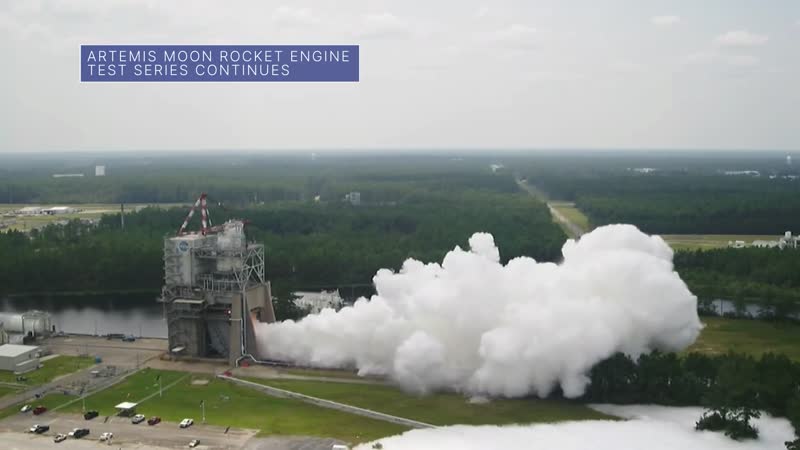
The engine for our Artemis Moon rocket is all fired up, final launch preparations for an historic mission, and how you can hear back billions of years into the past … a few of the stories to tell you about – This Week at NASA!
Firing up the rocket for the Artemis Moon missions, a nomination for NASA’s next administrator, and making room for the space station’s next crew … a few of the stories to tell you about – This Week at NASA!
Fun with surface tension in space! Surface tension describes a property of liquids in which molecules of one substance are more attracted to each other than molecules of another substance, causing them to “stick together”. Using microgravity to display the unique properties of liquids in space can reveal fundamental knowledge that can change our lives back on Earth. Microgravity experiments with fluids can give scien
art001m1023322023 (Nov. 29, 2022) In this video taken on flight day 14 of the 25.5 day Artemis I mission, Orion looks back at the Earth and the Moon after surpassing the maximum distance of any other spacecraft built for humans. Orion is continuing to orbit the Moon in a distant retrograde orbit and will splash down in the Pacific Ocean on December 11.



/Earthrise - A Conversation with Apollo 8 Astronaut Bill Anders (Official NASA Video)~large.jpg)




/February 2021 SLS Resource Reel(V2)~large.jpg)