English

NASA Image and Video Library

السجلات المفهرسة تحت NASA Image and Video Library مع المعرّفات والروابط وبيانات الحقوق الأصلية. هذه المواد المستوردة وليست كامل مقتنيات المؤسسة. تحقق من المؤسسة الأصلية عندما يكون المصدر مجمّعًا للبيانات.

4,093 سجلًا مطابقًا؛ الأوصاف والعناوين الأصلية محفوظة. البحث والمرشحات →

التحقق من الأدلة · توثيق المادة والمقطع · الحقوق

2013مكتبة صور وفيديو ناسا

LDCM Tower Rollback Timelapse

The Landsat Data Continuity Mission launched on February 11, 2013, from Vandenberg Air Force Base aboard an Atlas V-401 rocket. LDCM will be renamed Landsat 8 when operations are handed over to the US Geological Survey on May 30, 2013. NASA and the U.S. Department of the Interior through the U.S. Geological Survey (USGS) jointly manage Landsat, and the USGS preserves a 40-year archive of Landsat images that is freely

2013مكتبة صور وفيديو ناسا

Water on the Moon

Since the 1960’s, scientists have suspected that frozen water could survive in cold, dark craters at the Moon’s poles. While previous lunar missions have detected hints of water on the Moon, new data from the Lunar Reconnaissance Orbiter (LRO) pinpoints areas near the south pole where water is likely to exist. The key to this discovery is hydrogen, the main ingredient in water: LRO uses its Lunar Exploration Neutron

2013مكتبة صور وفيديو ناسا

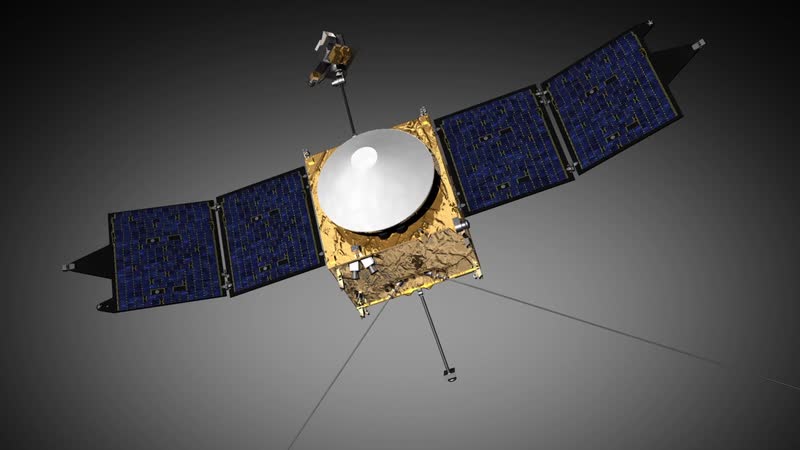
MAVEN Imaging Ultraviolet Spectrograph

The philosophy of NASA's Mars Program has been "Follow the water," but "Where did the atmosphere go?" is still a lingering question. Although fluvial features such as dry riverbeds are visible on Mars, the atmosphere today is too thin to support liquid water, implying that Mars once had a thicker atmosphere that was lost to space. NASA's Mars Atmosphere and Volatile EvolutioN Mission, or MAVEN, will test this hypothe

2013مكتبة صور وفيديو ناسا

Planetary Scientist Profile: Brent Garry

Studying volcanoes and lava flows on Earth are just a part of Brent Garry’s job. His work also takes him to the surface of the Moon and Mars. As a geologist at NASA Goddard Space Flight Center, Brent specializes in planetary volcanology, where he investigates volcanic activity throughout the solar system. His work demonstrates how geology is an exciting science that helps us to understand some of the most common and

2013مكتبة صور وفيديو ناسا

MAVEN Neutral Gas and Ion Mass Spectrometer

While NASA rovers, landers, and orbiters have scrutinized the surface of Mars for decades, a key question to understanding the Red Planet's ancient habitability has hitherto gone unanswered: what happened to its atmosphere? NASA's MAVEN spacecraft will fill in this gap in the history of Mars, thanks in part to its Neutral Gas and Ion Mass Spectrometer, or NGIMS instrument. By studying the interaction of neutral gases

2013مكتبة صور وفيديو ناسا

Propylene on Titan

With a thick atmosphere, clouds, a rain cycle and giant lakes, Saturn's large moon Titan is a surprisingly Earthlike place. But unlike on Earth, Titan's surface is far too cold for liquid water - instead, Titan's clouds, rain, and lakes consist of liquid hydrocarbons like methane and ethane (which exist as gases here on Earth). When these hydrocarbons evaporate and encounter ultraviolet radiation in Titan's upper atm

2013مكتبة صور وفيديو ناسا

MAVEN National Air and Space Museum Presentation

Ancient riverbeds, crater lakes and flood channels all attest to Mars's warm, watery past. So how did the Red Planet evolve from a once hospitable world into the cold, dry desert that we see today? One possibility is that Mars lost its early atmosphere, allowing its water to escape into space, and NASA's Mars Atmosphere and Volatile EvolutioN (MAVEN) spacecraft will investigate just that. On September 25, 2013, MAVEN

2024مكتبة صور وفيديو ناسا

NASA Science Live: Ingenuity Mars Helicopter Flies its Final Flight [Episode 52]

In April 2021, NASA’s Ingenuity Mars Helicopter became the first spacecraft to achieve powered, controlled flight on another world. With over 70 successful flights and more than 128 minutes of flying time, Ingenuity far surpassed its originally planned technology demonstration of up to five flights. On the helicopter’s last flight, the rotor blades were damaged and the mission came to a close. Join experts on NASA Sc

2024مكتبة صور وفيديو ناسا

NASA Science Live: Our First Commercial Science Delivery to the Moon [Episode 53]

For the first time in more than 50 years, new NASA science and technology instruments are operating on the Moon following the first successful delivery of the agency’s CLPS (Commercial Lunar Payload Services) initiative. From a guidance system that ultimately played a key role in aiding the successful landing to an instrument aimed at observing the Moon’s surface environment in radio frequencies, the six NASA payload

2024مكتبة صور وفيديو ناسا

NASA Science Live: Climate Edition - Rising Heat [Episode 56]

From soaring temperatures affecting agriculture and the ocean to the escalating frequency and intensity of heat waves, the challenges posed by rising temperatures across our planet’s interconnected systems have far reaching impacts. Join NASA Chief Scientist and Senior Climate Advisor Kate Calvin for this special edition of NASA Science Live where she will be joined by experts to delve into the connection between the

2026مكتبة صور وفيديو ناسا

Artemis II Fueling Operations

On April 1, 2026, ahead of the official launch broadcast, NASA aired its “tanking” show from L 11 through L 6. Hosted by NASA’s Antonia Jaramillo, the program provided step by step commentary and interviews as teams loaded propellant into the Space Launch System (SLS) rocket. Artemis II will send astronauts on a journey around the Moon, the first crewed lunar flyby in more than 50 years. This mission marks the first

2020مكتبة صور وفيديو ناسا

NASA Science Live: On Ice [Episode 16]

Join NASA ice experts as we discuss important science about Earth's icy regions, and how it can impact us here in warmer environments. NASA's IceSat-2 mission uses laser instruments on satellites to precisely measure ice and just released new findings about how Earth’s ice is changing. Scientists discovered that enough ice has melted from Antarctica and Greenland to rise sea level about half an inch over the last 16

2020مكتبة صور وفيديو ناسا

NASA Science Live: Asteroid Close Approach [Episode 15]

NASA’s Planetary Defense Coordination Office is in charge of finding, tracking and monitoring near-Earth objects and asteroids. They have discovered thousands of objects, and have determined there are no known threats to our planet. Watch this special Planetary Defense episode of NASA Science Live to learn more about how we plan to protect our planet from any future hazard and what this office does 24/7/365 to safegu

2020مكتبة صور وفيديو ناسا

NASA Science Live: Science in the Time of Coronavirus [Episode 18]

Our planet is facing an unprecedented crisis as we continue to wrestle with the impacts of coronavirus. With its unparalleled technical and scientific expertise, NASA has joined the fight against the pandemic. Watch this episode of #NASAScience Live to learn about the ideas and developments that NASA has contributed to confront this global health crisis. Talent: Marina Jurica, Host Dr. Marit Meyer, Research Aerospace

2020مكتبة صور وفيديو ناسا

OSIRIS-REx: Science Operations Center

This editor's resource page contains footage of the OSIRIS-REx Science Operations Center at the University of Arizona in Tucson. OSIRIS-REx is a NASA mission studying near-Earth asteroid Bennu. It will return a sample of Bennu to Earth in 2023. The OSIRIS-REx Science Operations Center (SOC) at the University of Arizona in Tucson. Data from the spacecraft are downlinked to the SOC for study by science team members. Fu

2020مكتبة صور وفيديو ناسا

OSIRIS-REx: Above and Beyond

Since arriving at asteroid Bennu in Dec. 2018, NASA’s OSIRIS-REx mission has achieved many feats – from setting a record-breaking orbit, to mapping the asteroid’s surface better than any planetary body. The mission is now preparing to collect a sample of Bennu, which will be the first time that NASA has gathered pieces of an asteroid. On Oct. 20, the OSIRIS-REx mission will perform the first attempt of its Touch-And-

2020مكتبة صور وفيديو ناسا

NASA Science Live: Rising Seas [Episode 24]

Sea levels across the globe are rising as a result of a changing climate — and the rate at which they are rising is accelerating. Watch NASA Science Live to meet NASA researchers studying these changes, and learn how the next mission launching to space will continue the nearly 30-year record of monitoring Earth’s ocean from space. Lauren Ward, Host Dr. Nacer Chahat, SWOT Payload System Engineer Lead, Parag Vaze, Proj

2021مكتبة صور وفيديو ناسا

NASA Science Live: Connected by Earth [Episode 31]

This year at NASA, Earth Day is about connections—to our planet and to each other. Our planet is home to over 7 billion people of diverse backgrounds and experiences, but we are all #ConnectedByEarth. Join NASA climate experts to learn about the connections between human activity and climate change. Tag your questions using #askNASA to have your questions answered live during our Earth Day episode of #NASAScience Liv

2021مكتبة صور وفيديو ناسا

NASA Science Live: Mars Helicopter and the Future of Extraterrestrial Flight [Episode 32]

On April 19, the Ingenuity Mars helicopter became the first spacecraft to achieve powered, controlled flight on another world. This historic flight on Mars has implications for how we will explore other worlds. Join experts from the Ingenuity Mars Helicopter team and upcoming Dragonfly mission to learn about the future of extraterrestrial flight. Have questions? Use #MarsHelicopter. Jia-Rui Cook, Host, Digital News &

2021مكتبة صور وفيديو ناسا

NASA Science Live: We’re Going to Venus [Episode 33]

Venus, our planetary neighbor, is a hot, hellish unforgiving world. Its toxic atmosphere and sweltering surface make it a challenging place to study, and it’s been over 3 decades since NASA visited Earth’s evil twin...until now! NASA is sending two bold new missions to study this inferno-like world: DAVINCI+ and VERITAS. Join Venus mission experts on this episode #NASAScience Live.------Karen Fox, Host & Senior Scien

2021مكتبة صور وفيديو ناسا

Landsat 9 Media Briefing

Landsat 9 Media Briefing August 31, 2021 Host: Tylar Greene - Earth Science Communications Lead, NASA Participants: Karen St. Germain - Earth Science Division Director, NASA Del Jenstrom - Landsat 9 Project Manager, NASA Jeff Masek – Landsat 9 Project Scientist, NASA Dave Applegate – Associate Director for Natural Hazards Exercising the Delegated Authority of the Director, USGS Birgit Peterson – Geographer, USGS Inba