Making hay in Russia
1 photograph : print ; mount 9 x 18 cm (stereograph format) Title from item. No. 2.
سجلات أرشيفية تحمل وسم روسيا في الفهرس. راجع دليل المكان لكل مادة؛ ارتباط الموضوع بالمكان لا يثبت موقع التصوير. تظل الأماكن غير المذكورة مجهولة.
492 سجلًا مطابقًا؛ الأوصاف والعناوين الأصلية محفوظة. البحث والمرشحات →
التحقق من الأدلة · توثيق المادة والمقطع · الحقوق
1 photograph : print ; mount 9 x 18 cm (stereograph format) Title from item. No. 2.
1 photograph : print ; mount 9 x 18 cm (stereograph format) Title from item.
1 photograph : print ; mount 9 x 18 cm (stereograph format) Title from item.
1 photograph : print ; mount 9 x 18 cm (stereograph format) Title from item. No. 2.
1 photograph : print ; mount 9 x 18 cm (stereograph format) Title from item. No. 3.
1 photograph : print ; mount 9 x 18 cm (stereograph format) Title transcribed from item. No. 19405.
1 photograph : print ; mount 9 x 18 cm (stereograph format) Title transcribed from item. No. 4849.
1 photograph : print ; mount 9 x 18 cm (stereograph format) Title transcribed from item. No. 7113.
1 photographic print on stereo card : stereograph. | Aerial view of Moscow River and bridgework with city in the background. H14091 U.S. Copyright Office. Copyright by H.C. White Co. No. 4768.
1 photographic print on stereo card : stereograph. | Nevsky Boulevard, St. Petersburg, Russia. H84266 U.S. Copyright Office. Copyright by United States Stereographic Co. No. B301.
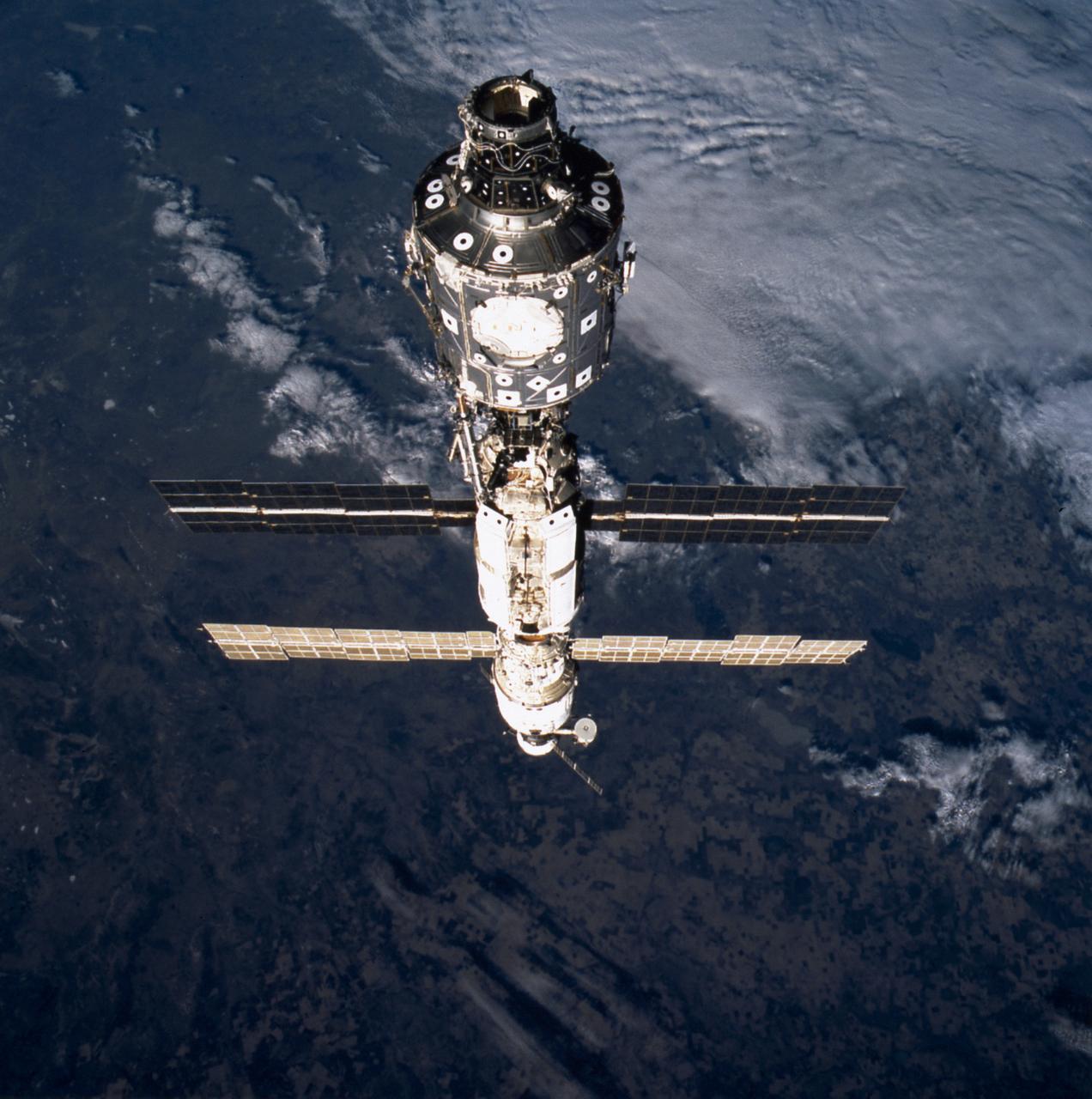
This image of the International Space Station (ISS) was taken during the STS-106 mission. The ISS component nearest the camera is the U.S. built Node 1 or Unity module, which cornected with the Russian built Functional Cargo Block (FGB) or Zarya. The FGB was linked with the Service Module or Zvezda. On the far end is the Russian Progress supply ship.
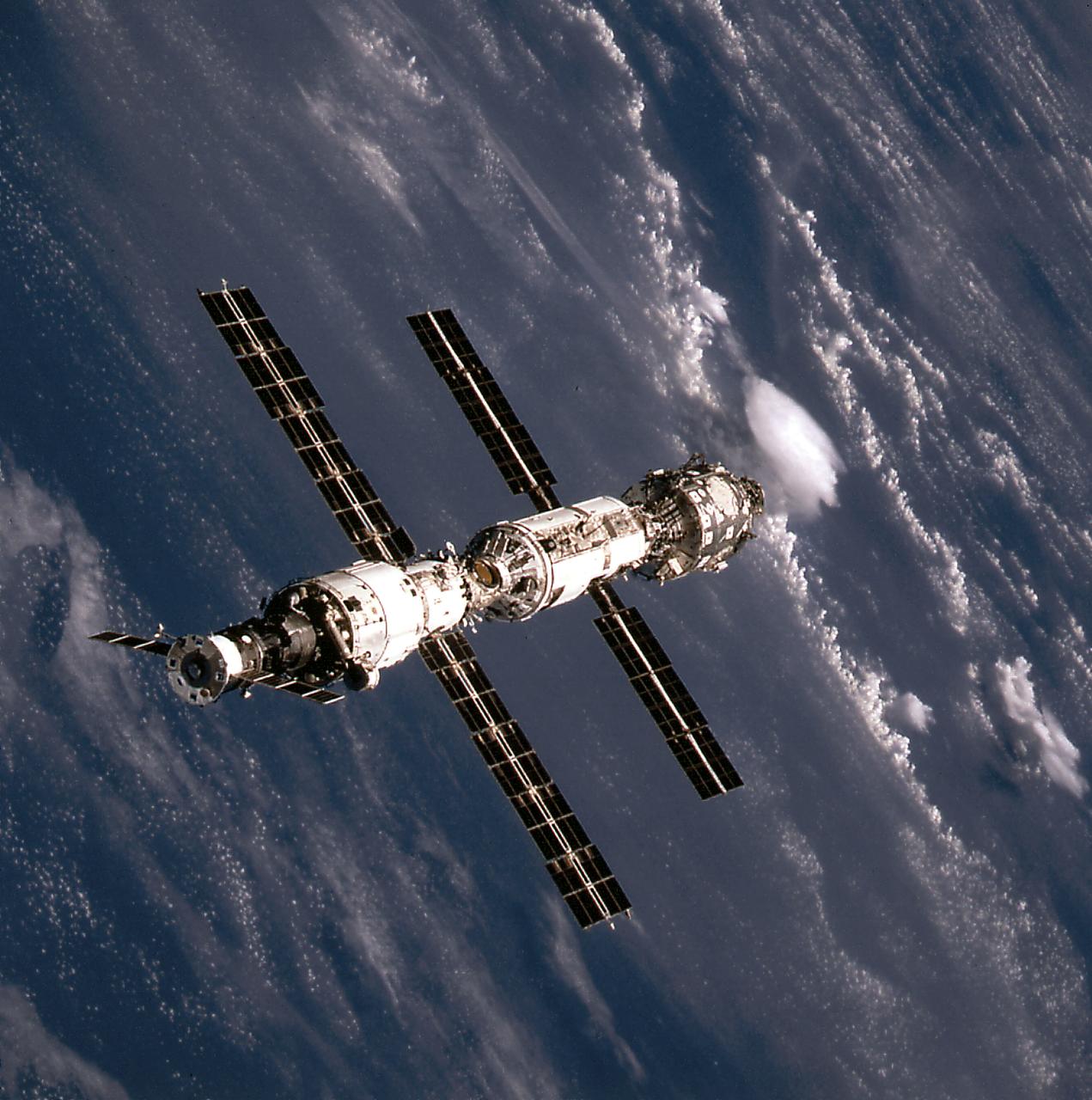
This image of the International Space Station (ISS) was taken when Space Shuttle Atlantis (STS-106 mission) approached the ISS for docking. At the top is the Russian Progress supply ship that is linked with the Russian built Service Module or Zvezda. The Zvezda is cornected with the Russian built Functional Cargo Block (FGB) or Zarya. The U.S. built Node 1 or Unity module is seen at the bottom.
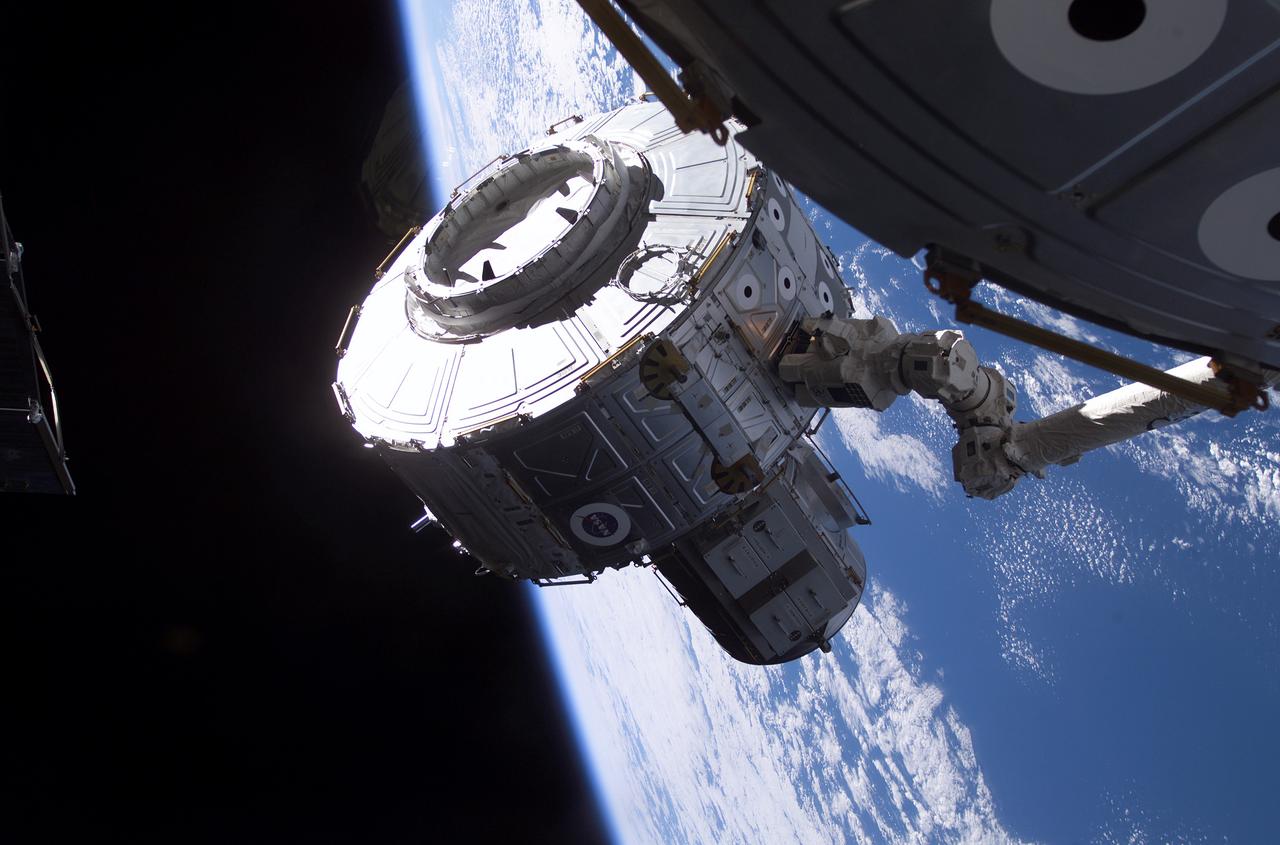
The Quest Airlock is in the process of being installed onto the starboard side of the Unity Node 1 of the International Space Station (ISS). Astronaut Susan J. Helms, Expedition Two flight engineer, used controls onboard the station to maneuver the Airlock into place with the Canadarm2, or Space Station Remote Manipulator System (SSRMS). The Joint Airlock is a pressurized flight element consisting of two cylindrical
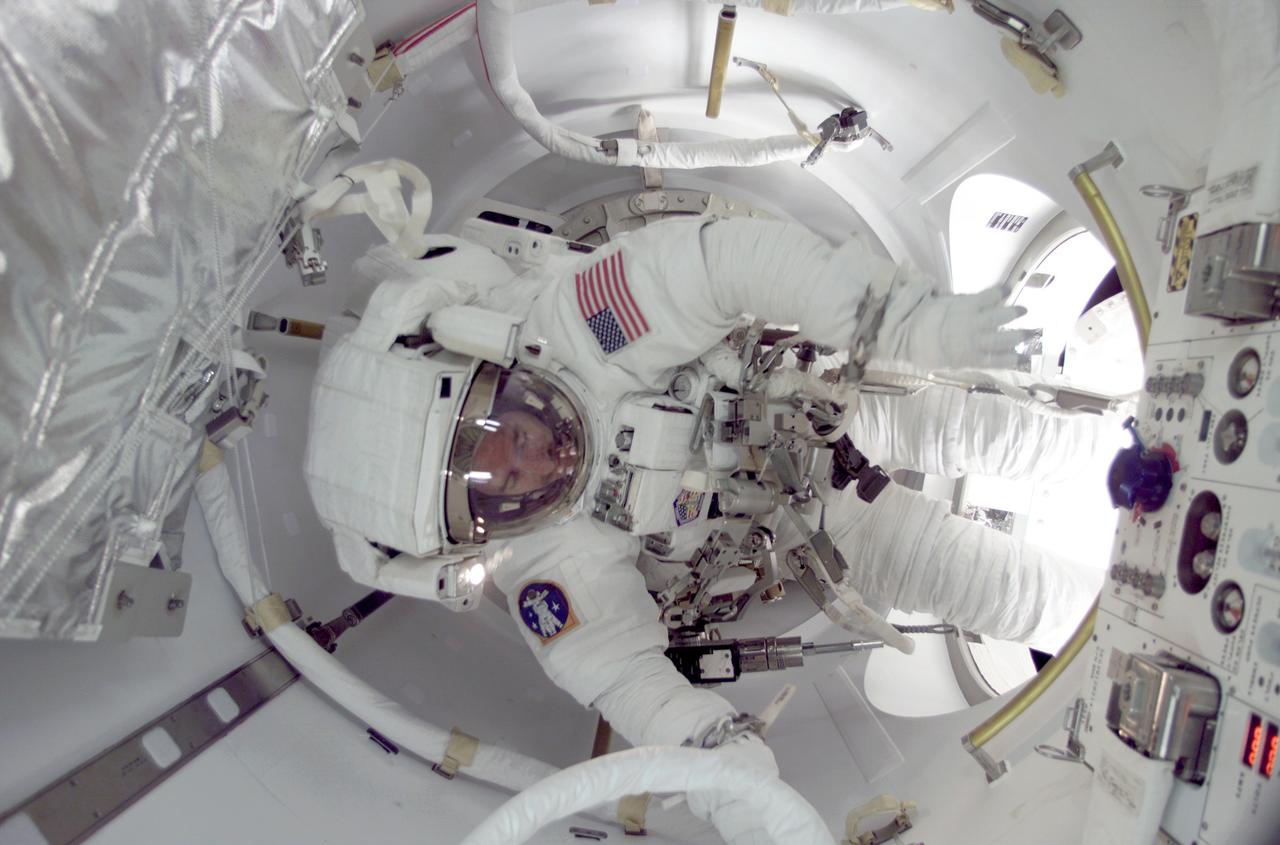
Astronaut James F. Reilly participated in the first ever space walk to egress from the International Space Station (ISS) by utilizing the newly-installed Joint Airlock Quest. The Joint Airlock is a pressurized flight element consisting of two cylindrical chambers attached end-to-end by a cornecting bulkhead and hatch. Once installed and activated, the ISS Airlock becomes the primary path for ISS space walk entry and
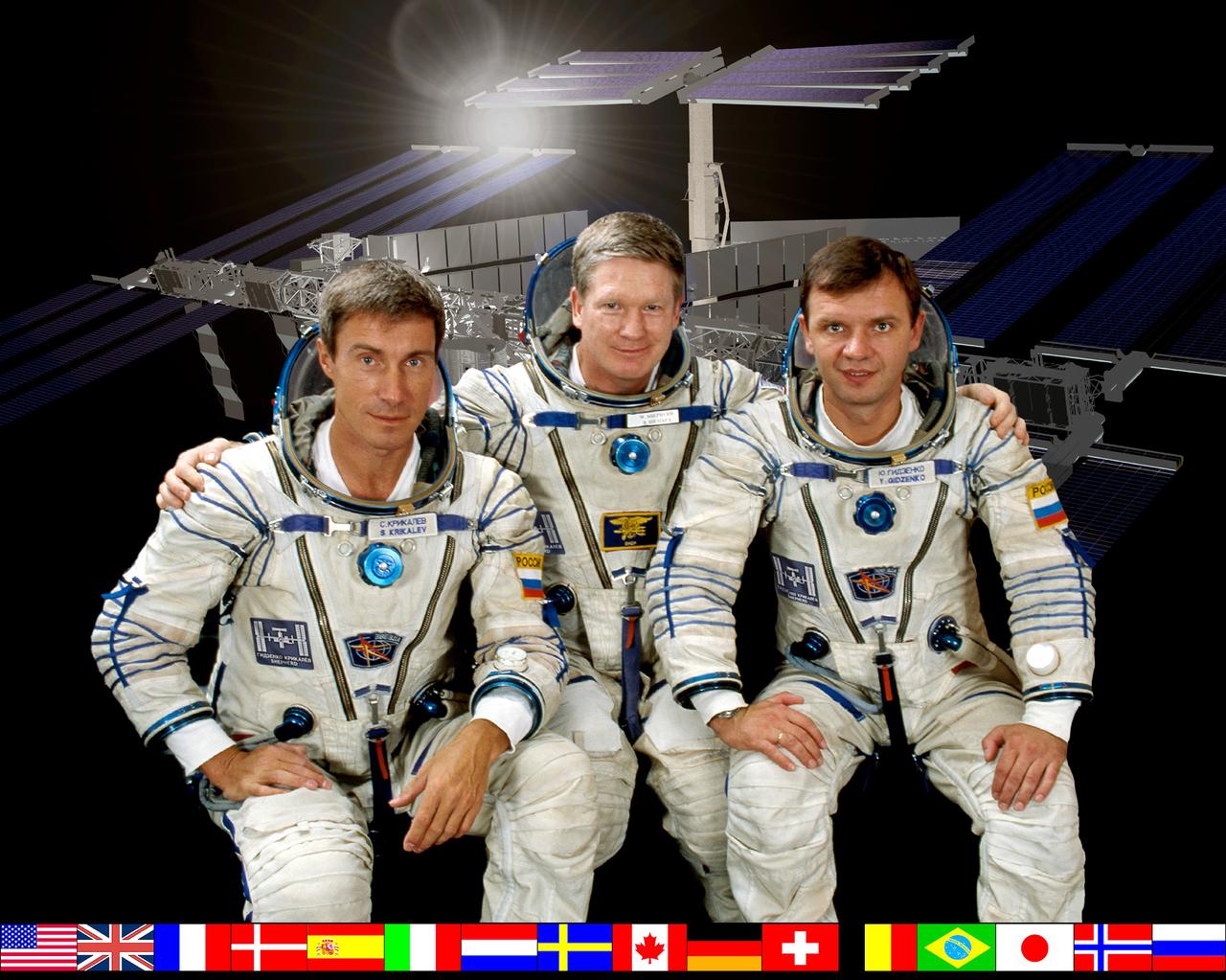
This is a crew portrait of the International Space Station (ISS) Expedition One. Left to right are flight engineer Sergei K. Krikalev, commander William M. (Bill) Shepherd, and Soyuz commander Yuri P. Gidzenko. They are wearing the Russian Sokol space suits. The Russian Soyuz rocket carrying the Expedition One crew was launched from the Baikonur Cosmodrome, Kazakhstan on October 31, 2000. The crew returned to the Ken
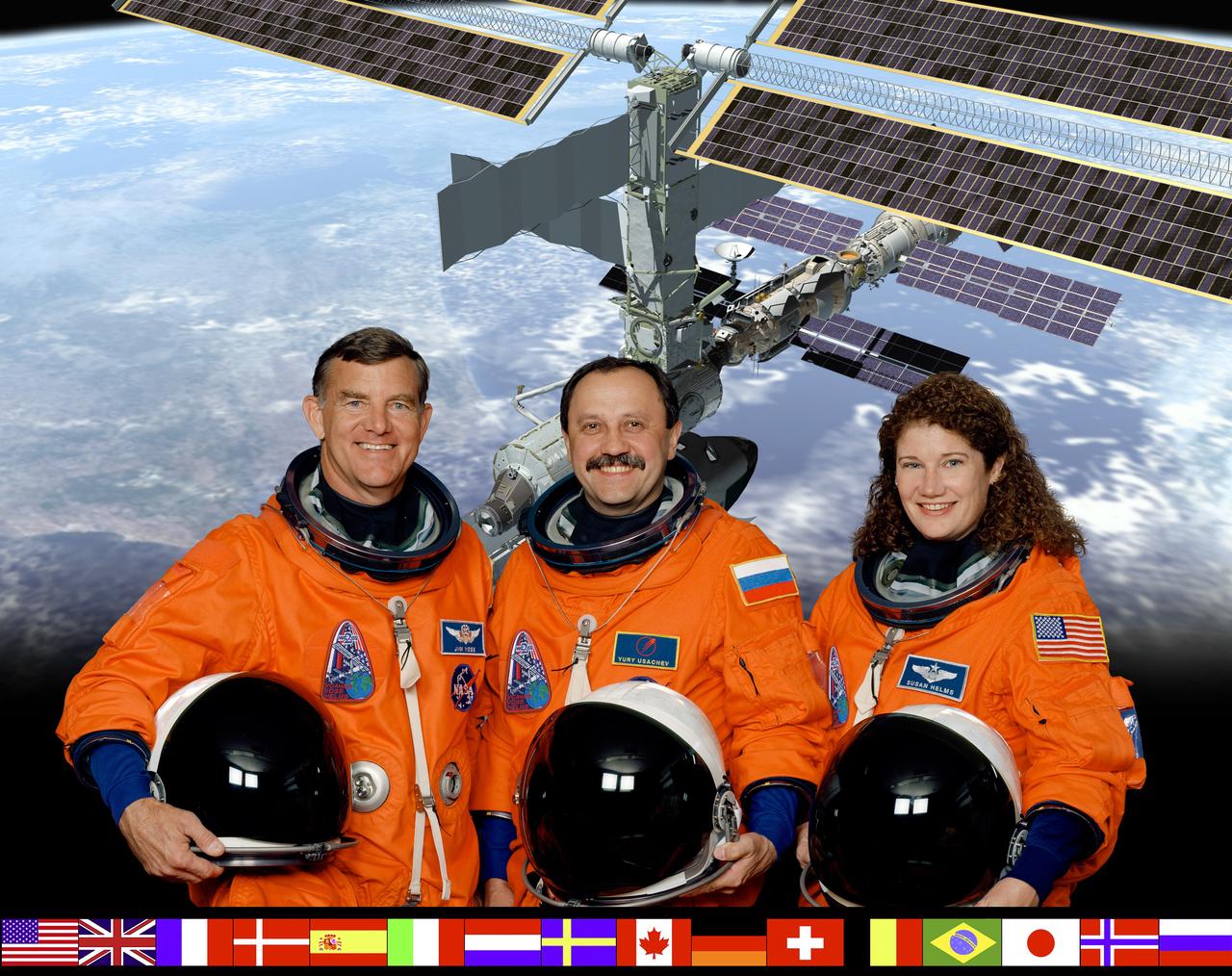
This is a crew portrait of the International Space Station (ISS) Expedition Two. Left to right are Astronaut James S. Voss, flight engineer; Cosmonaut Yury V. Usachev, commander; and Astronaut Susan J. Helms, flight engineer. The crew was launched on March 8, 2001 aboard the STS-102 mission Space Shuttle Orbiter Discovery for an extended stay on the ISS. After living and working on the ISS for the duration of 165 day
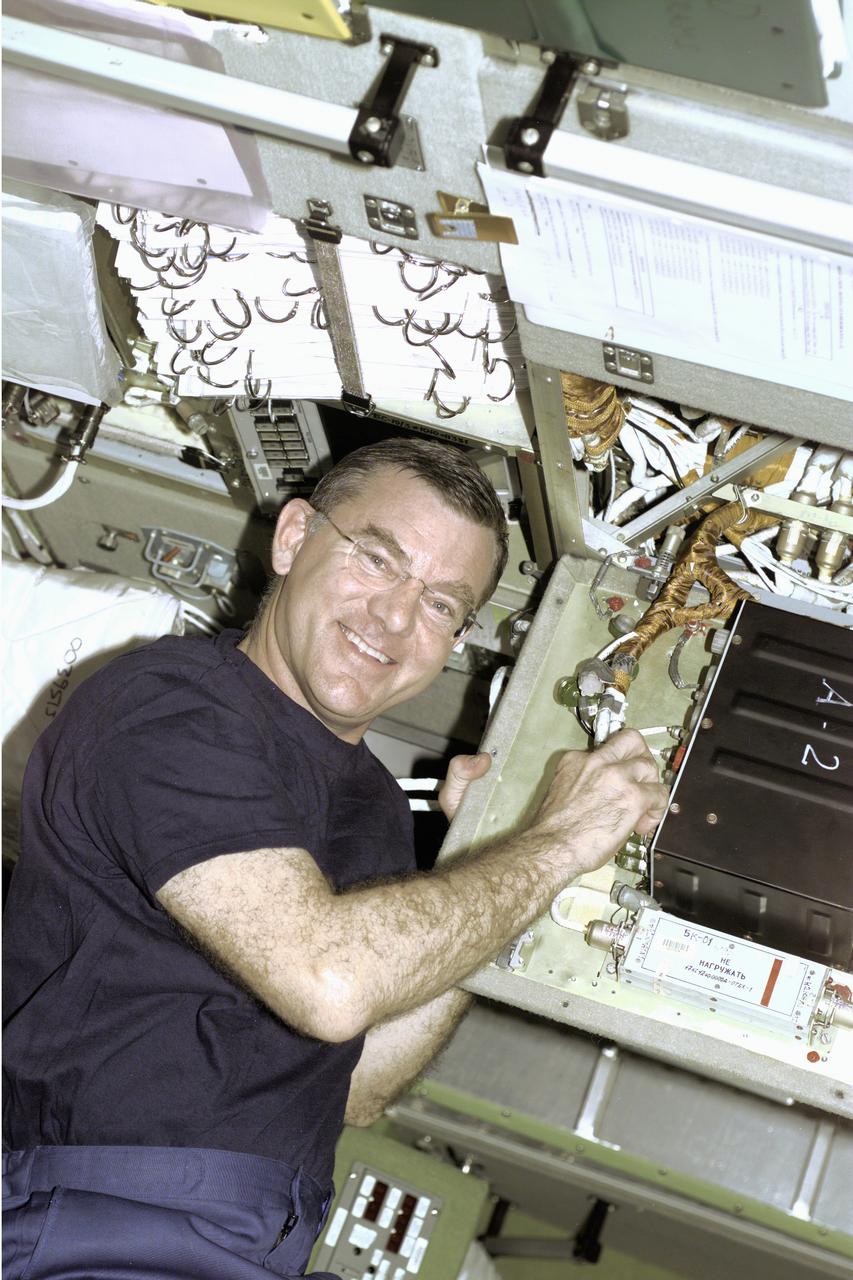
Astronaut James S. Voss, Expedition Two flight engineer, performs an electronics task in the Russian Zvezda Service Module on the International Space Station (ISS). Zvezda is linked to the Russian-built Functional Cargo Block (FGB), or Zarya, the first component of the ISS. Zarya was launched on a Russian Proton rocket prior to the launch of Unity, the first U.S.-built component to the ISS. Zvezda (Russian word for s
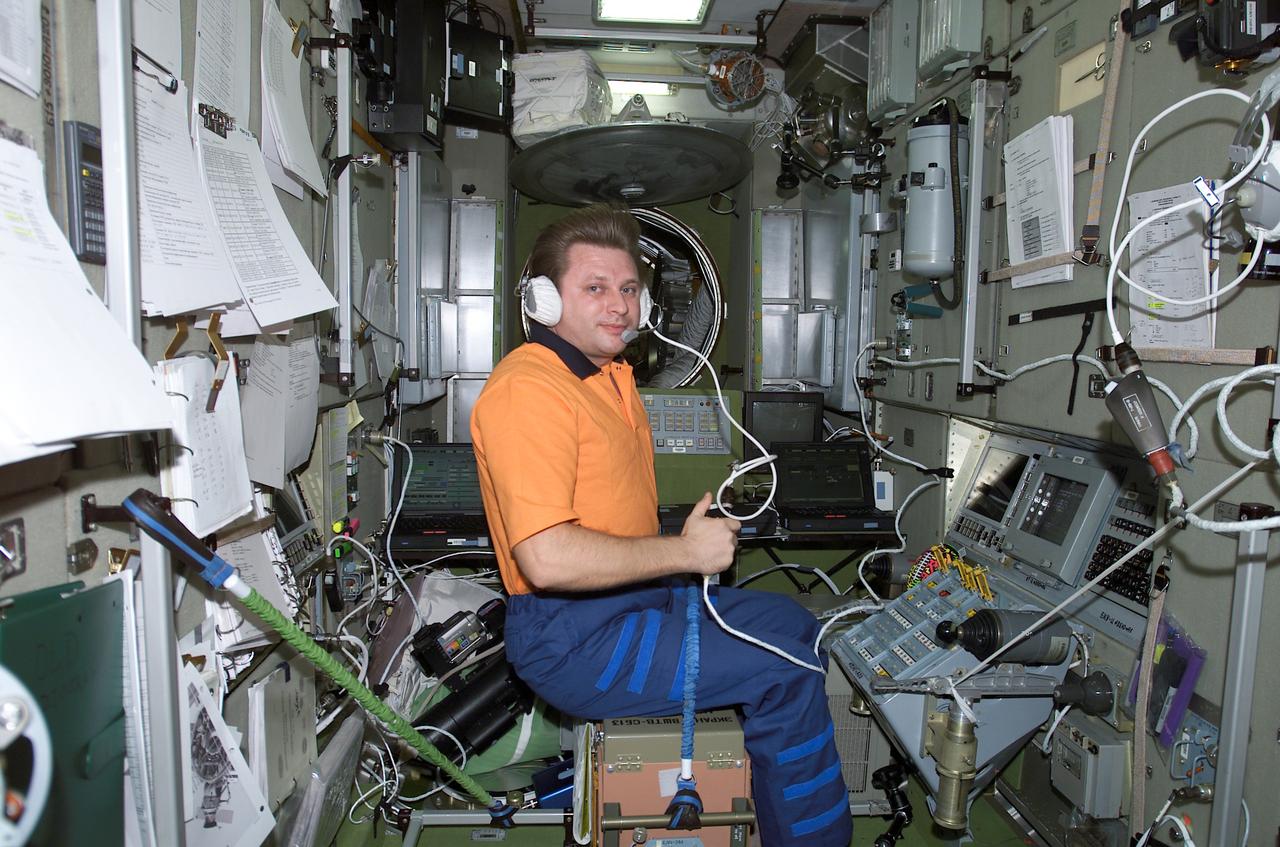
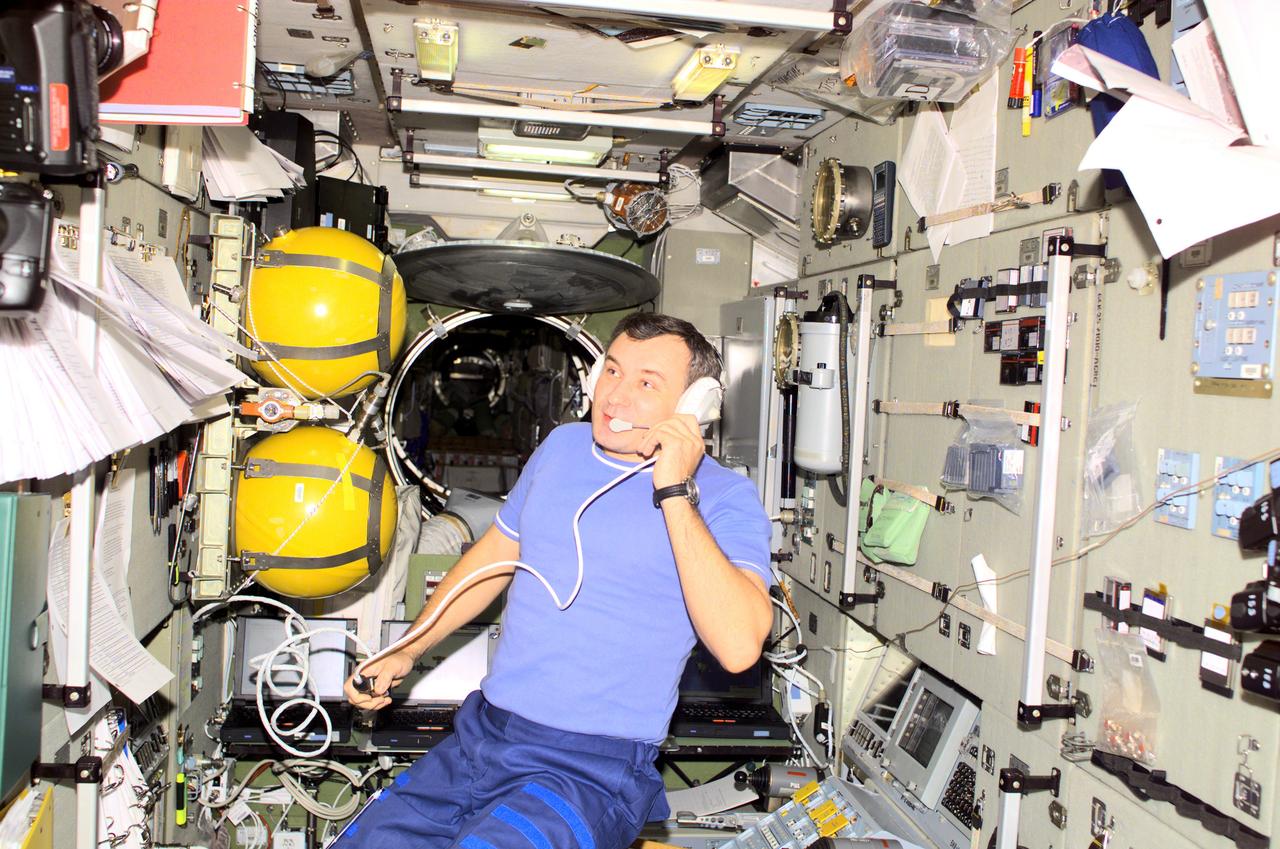
Cosmonaut Yury I. Onufrienko, Expedition Four mission commander, uses a communication system in the Russian Zvezda Service Module on the International Space Station (ISS). The Zvezda is linked to the Russian-built Functional Cargo Block (FGB) or Zarya, the first component of the ISS. Zarya was launched on a Russian Proton rocket prior to the launch of Unity. The third component of the ISS, Zvezda (Russian word for st
Aboard the International Space Station (ISS), Cosmonaut and Expedition Three flight engineer Vladimir N. Dezhurov, representing Rosaviakosmos, talks with flight controllers from the Zvezda Service Module. Russian-built Zvezda is linked to the Functional Cargo Block (FGB), or Zarya, the first component of the ISS. Zarya was launched on a Russian Proton rocket prior to the launch of Unity. The third component of the IS
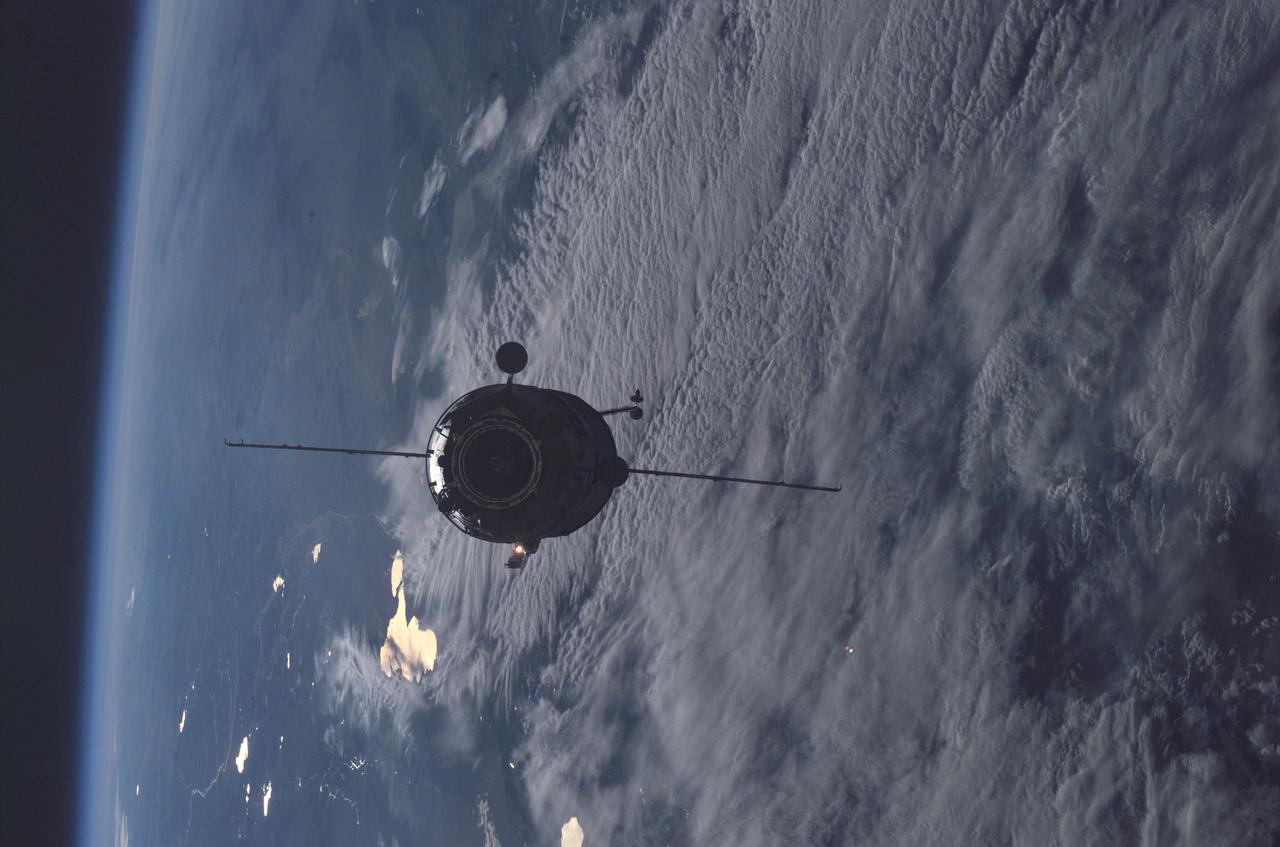
Enroute for docking, the 16-foot-long Russian docking compartment Pirs (the Russian word for pier) approaches the International Space Station (ISS). Pirs will provide a docking port for future Russian Soyuz or Progress craft, as well as an airlock for extravehicular activities. Pirs was launched September 14, 2001 from Baikonur in Russia.
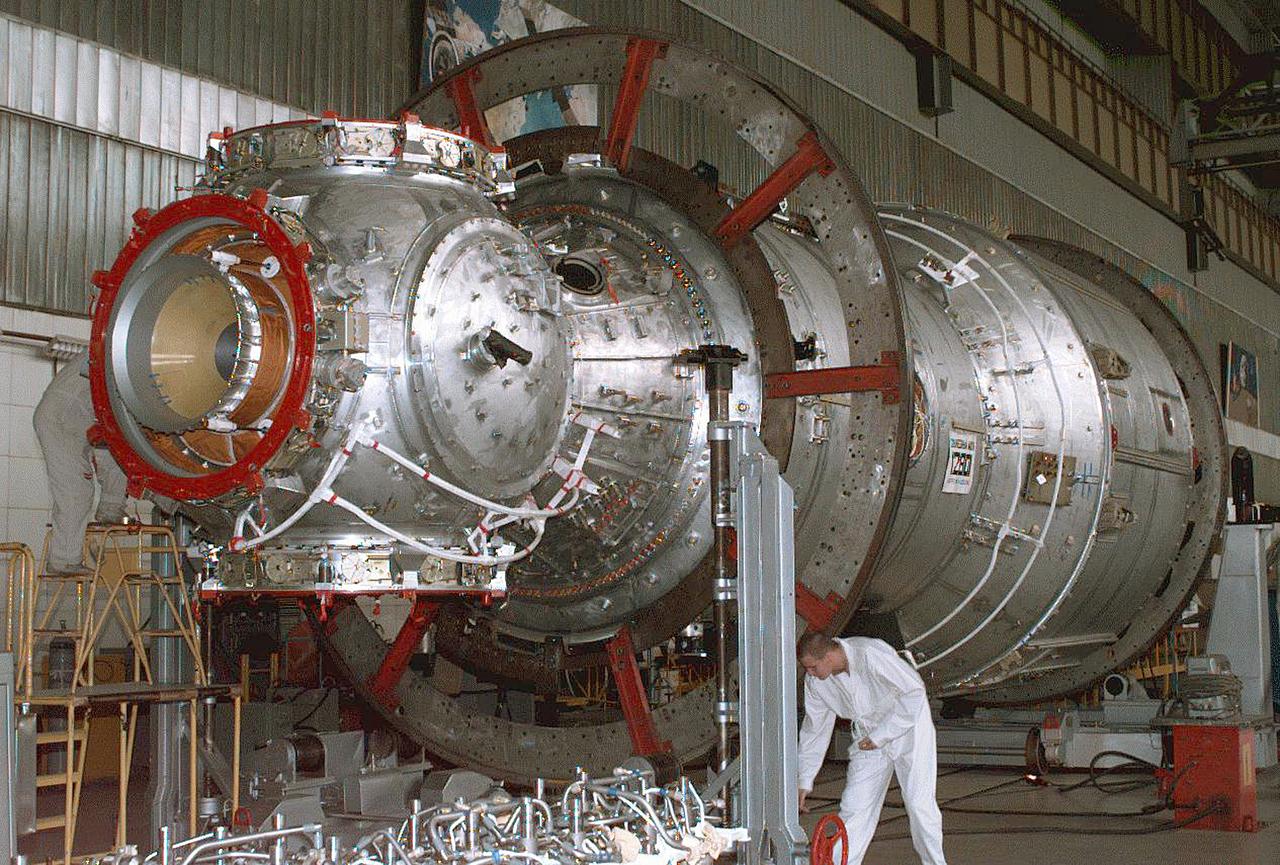
The Zvezda Service Module, the first Russian contribution and third element to the International Space Station (ISS), is shown under construction in the Krunichev State Research and Production Facility (KhSC) in Moscow. Russian technicians work on the module shortly after it completed a pressurization test. In the foreground is the forward portion of the module, including the spherical transfer compartment and its th
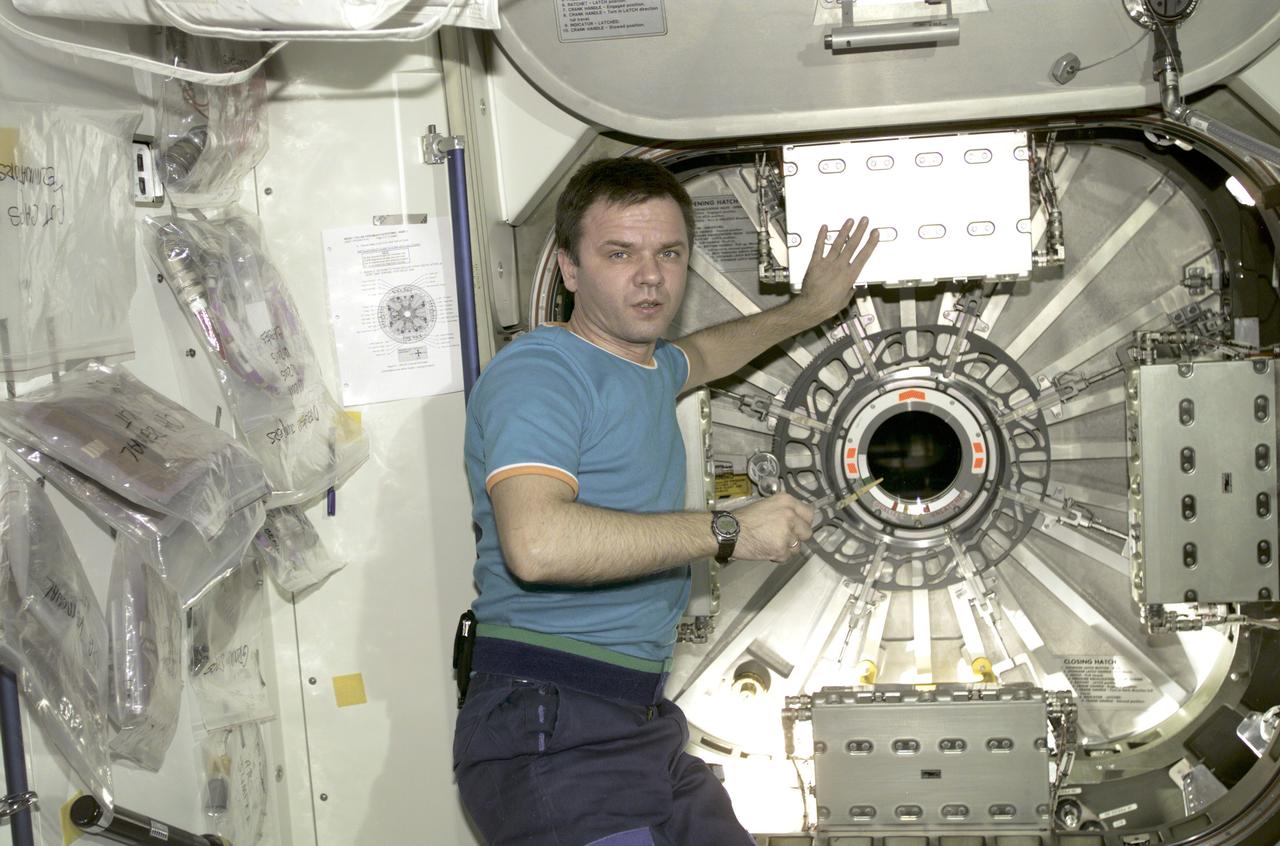
Cosmonaut Yuri P. Gidzenko, Expedition One Soyuz commander, stands near the hatch leading from the Unity node into the newly-attached Destiny laboratory aboard the International Space Station (ISS). The Node 1, or Unity, serves as a cornecting passageway to Space Station modules. The U.S.-built Unity module was launched aboard the Orbiter Endeavour (STS-88 mission) on December 4, 1998, and connected to Zarya, the Rus
This image of the Space Shuttle Orbiter Atlantis, with cargo bay doors open showing Spacelab Module for the Spacelab Life Science and the docking port, was photographed from the Russian Mir Space Station during STS-71 mission. The STS-71 mission performed the first docking with the Russian Mir Space Station to exchange crews. The Mir 19 crew, cosmonauts Anatoly Solovyev and Nikolai Budarin, replaced the Mir 18 crew,
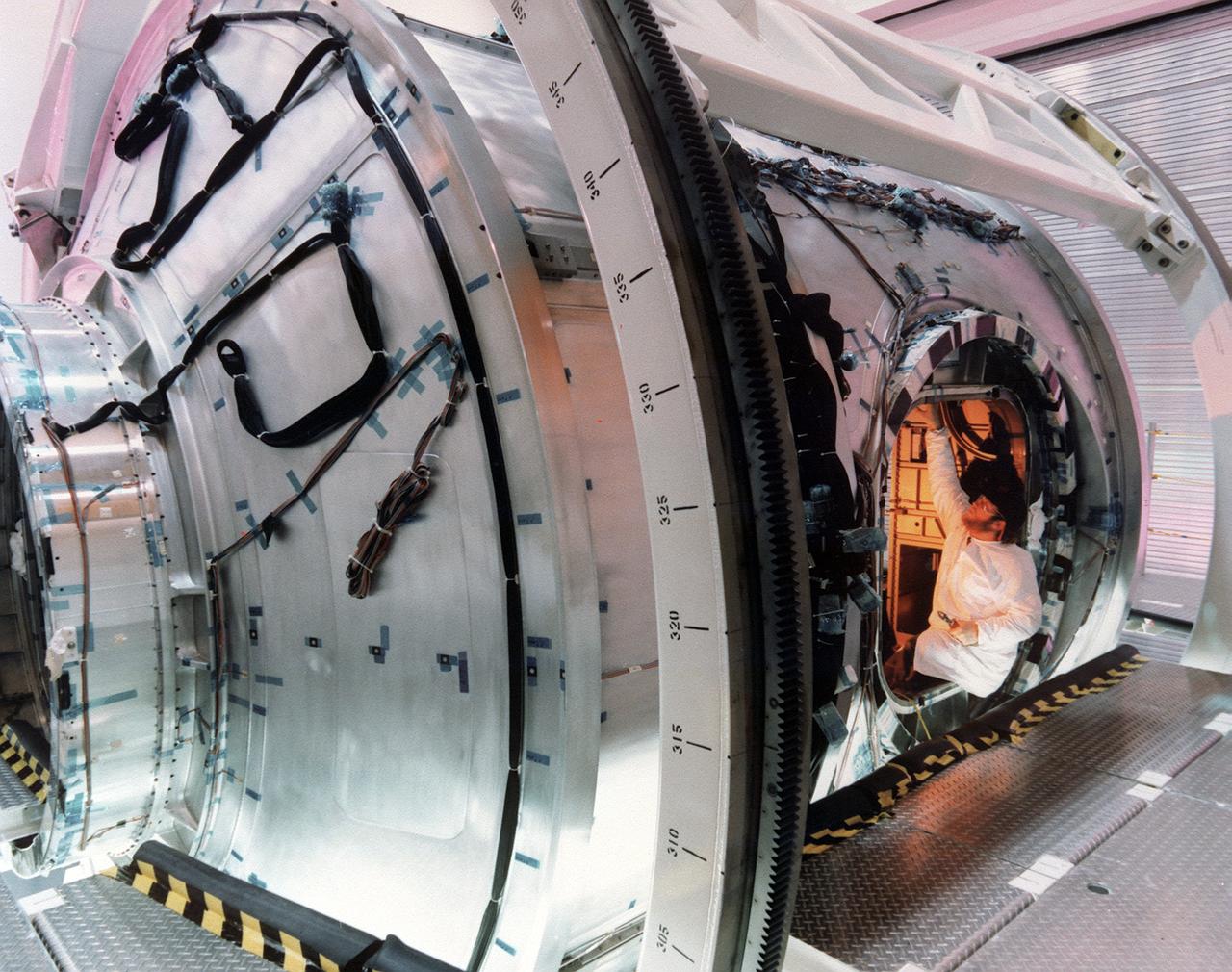
This photograph, taken by the Boeing Company,shows Boeing technicians preparing to install one of six hatches or doors to the Node 1 (also called Unity), the first U.S. Module for the International Space Station (ISS). The Node 1, or Unity, serves as a cornecting passageway to Space Station modules and was manufactured by the Boeing Company at the Marshall Space Flight Center from 1994 to 1997. The U.S. built Unity m